

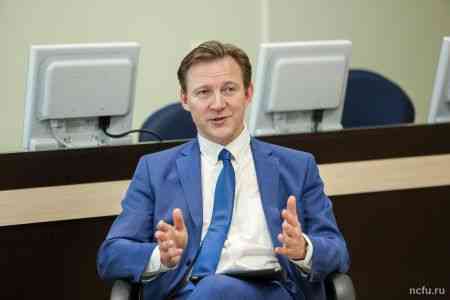
ArmInfo. The EAEU, like any other integration union, cannot be a full-fledged without a single energy strategy and, accordingly, infrastructure. Alexey Gromyko, Chairman of the Gromyko Association for Foreign Policy Studies (AFPS) and Director of the Institute of Europe of the Russian Academy of Sciences expressed a similar opinion to ArmIn fo.
"Much has been achieved and is already being done in the direction of creating a single electric energy market within the EAEU. Knowing full well all the difficulties on the way to harmonizing the energy legislation of all the countries of the association, nevertheless, it is necessary to state the impossibility of the full establishment of the EAEU in the absence of a single energy strategy," he said.
Among the main problems on the path to the formation of a single energy market, Gromyko indicated the need for considerable investments by all EAEU countries in creating a unified infrastructure, as well as constant fluctuations in the prices of energy products. In any case, the expert, at the same time, is convinced of the need to overcome all the differences and difficulties on the way to its formation.
According to the agreement on the formation of the EAEU common electricity market, signed in May last year, it is planned to complete the formation of a common electricity market by January 1, 2025. It should be noted that Armenia and Belarus expect the application of the principles specified in this agreement to apply to all energy products in the EAEU without exception.
"Even in the European Union, which has existed for several decades, a unified internal energy infrastructure is still not completely formed. The Eurasian Economic Union was created 5 years ago, but we do not have time for development that the EU had. In this light, we are simply obliged to work faster. Such promptness proceeds from the common interests of all our countries," Gromyko concluded.