

ArmInfo.S&P predicts a 2% drop in GDP in Armenia in 2020, against an actual growth of 7.6% in 2019. And in 2021, according to S&P expectations, Armenia's GDP will grow by 4.9%.
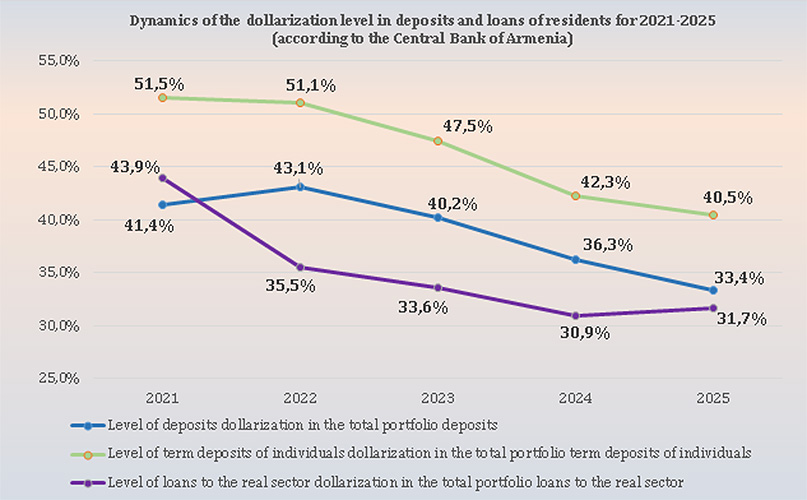
This was noted in the S&P report "Armenia: Macroeconomic Prospects in a Period of Uncertainty", which outlines key factors of sovereign analysis. The report indicated that global growth will slow in 2020 due to the effects of the COVID-19 pandemic. So, for 2020 S&P predicts: in Russia - a decline in GDP by 4.8%; in China - a slowdown in GDP growth to 1.2%; in the Eurozone - a 7.3% decline in GDP; in the USA - a 5.2% decline in GDP. And in terms of global GDP, S&P expects a decline of 2.4%. This is against the actual GDP growth in 2019: in Russia - by 1.3%; in the Eurozone - by 1.2%; in the USA - by 2.3%; in China - by 6.1%; and global GDP - by 2.9%. Banking sector of Armenia in a period of uncertainty S&P notes three risks. The first is the spread of COVID-19. The second is a high level of dollarization of the banking sector. The third is high dependence on external debt financing.
State support in % of GDP
Armenia - 3%, Georgia - 4%, Azerbaijan - 3%, Russia - 3-6%, Ukraine - 2-3%, Kazakhstan and Uzbekistan - 9% each.
Key rate
Armenia - 5% (decrease by 50 basis points), Georgia - 8.5% (decrease by 50 basis points), Azerbaijan - 7.25% (unchanged), Russia - 5.5% (decrease by 50 basis points) , Ukraine - 8% (decrease by 200 basis points), Belarus - 8.75% (unchanged), Kazakhstan - 9.5% (decrease by 250 basis points) and Uzbekistan - 15% (decrease by 100 basis points).
Credit holidays
- Armenia: for individuals - 2-3 months (interest payments and the main loan amount), and for legal entities - 3-6 months (on individual conditions). - Georgia: for individuals - 3 months, and for legal entities - 4 months, and in both cases we are talking about deferring interest payments and the principal amount of the loan. - Azerbaijan: for individuals - individual conditions, and for legal entities - a delay of 3-6 months (with an individual approach). - Russia: for individuals it is applicable individually if income decreases by 30%, and for legal entities - a delay of 3-6 months (with an individual approach). - Ukraine: for individuals and for legal entities - on individual conditions. - Belarus: each bank applies the deferral individually for both individuals and legal entities. - Kazakhstan: for individuals and for legal entities (SMEs) - 3 months (interest payments and principal loan amount). - Uzbekistan: the deferment of interest payments and the principal amount of the loan is applied both to individuals and legal entities (SMEs and entrepreneurs) - until October 1, 2020.
Key problems of corporate sector
S&P notes three risks. The first is that commodity prices are falling. The second is impact of COVID-19. The third is unsustainable access to capital markets. The price of Brent crude oil is forecasted to reach $ 30 per barrel for 2020, and will rise to $ 50 per barrel in 2021. The price of gold in 2020 will be $ 1,500 per ounce, aluminum - $ 1,700 per tonne, copper - $ 5,800 per tonne, nickel - $ 13,000 per tonne, zinc - $ 2,100 per tonne, iron ore - $ 75 per tonne, coking coal (coal coke) - $ 150 per ton. Most of these metals are expected to rise in price in 2021, with the exception of gold and iron ore, with gold forecasting a price decline of $ 1,400 per ounce and further to $ 1,300 per ounce in 2022.
S&P draws attention to five key points: 1) An unprecedented double shock, firstly, from strict isolation due to Covid-19, and secondly, from falling commodity prices; 2) Conservative financial mitigation policies; 3) The main thing is liquidity; 4) Volatile access to capital markets for issuers of the sub-investment class; 5) Unhedged currency risk is a risk.
It should be noted that the WB predicts a slowdown in GDP growth in Armenia in 2020 to 1.7% (according to the baseline scenario), but does not exclude a more significant slowdown until the recession. The IMF predicts a 1.5% drop in GDP in Armenia in 2020. Fitch predicts a slowdown in GDP growth in Armenia to 0.5% in 2020. In the state budget of Armenia for 2020, the incorporated dynamics of GDP was revised downward by 2% (instead of the previously approved growth of 4.9%). The Central Bank of Armenia predicts for 2020 a slowdown in GDP growth to a stagnant 0.7%.