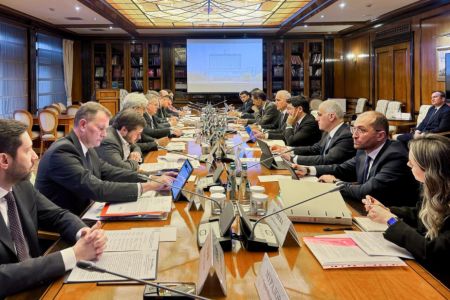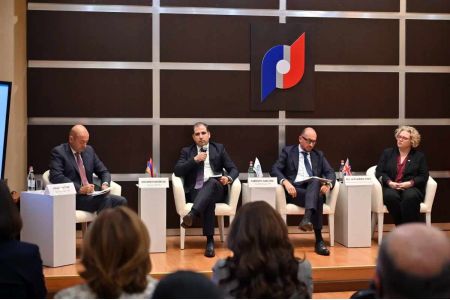


ArmInfo.The International Monetary Fund (IMF) has improved its GDP growth forecast for Armenia for 2022 from the previous 1.5% to an updated 5%. This is evidenced by the Fund's press release received by ArmInfo. The current revised forecast is presented following the visit of an International Monetary Fund (IMF) team, led by Iva Petrova to Armenia during June 20-24, 2022.
According to the source, the team's discussions with the authorities covered recent developments, the economic outlook, and the authorities' policy priorities that could underlie a future IMF-supported program. At the end of the visit, Ms. Petrova issued the following statement:
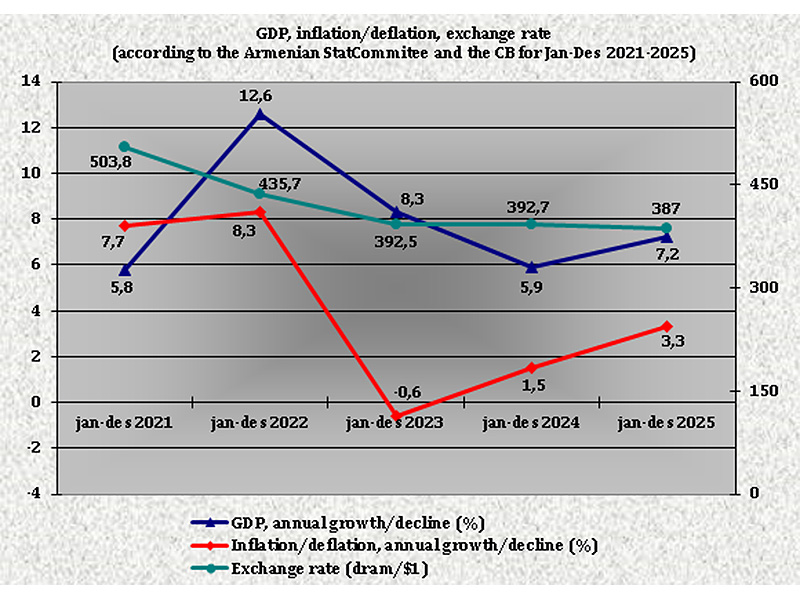
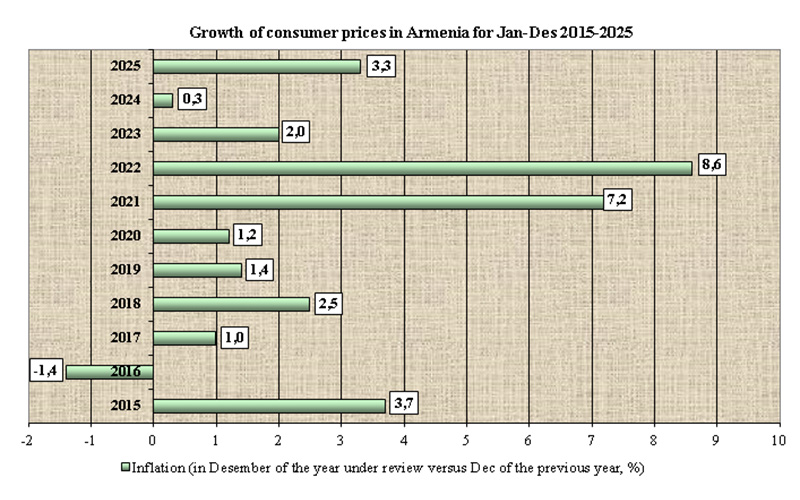
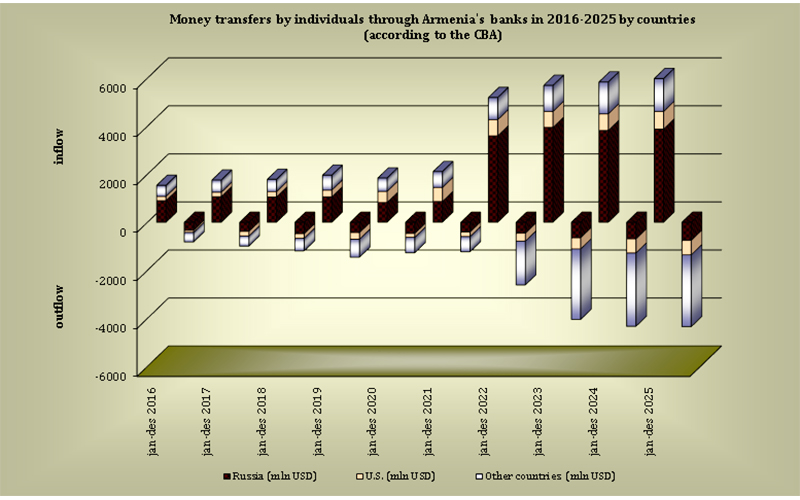
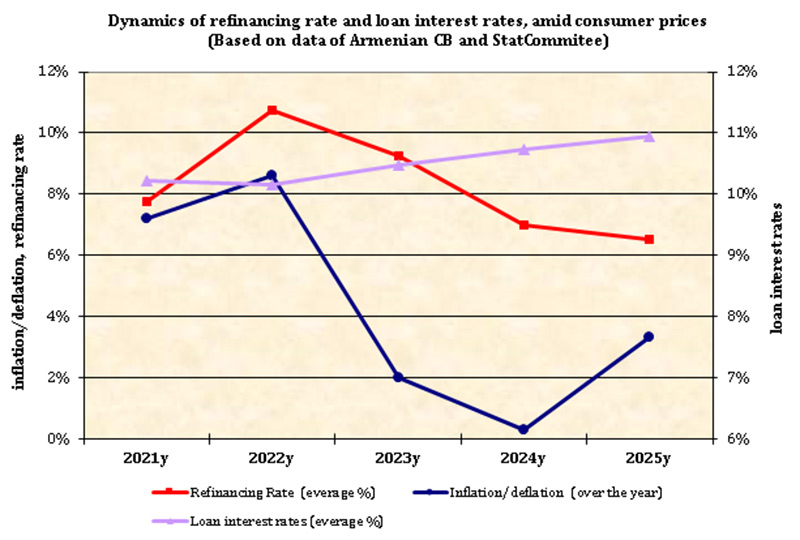
"Armenia's economic activity grew by 9.4 percent (YoY) in the first four months of 2022 driven by domestic consumption and investment, supported by the construction, tourism, financial, real-estate, and IT sectors, and boosted by a large inflow of external income and capital. Inflation accelerated to 9 percent in May (YoY) due to buoyant domestic demand, supply constraints, and an increase in global food and fuel prices. The overall budget position was in surplus in the first quarter of 2022 owing to strong revenue collection in line with economic activity and an under-execution of expenditures. The banking system remained solid, and the dram appreciated against the US dollar.
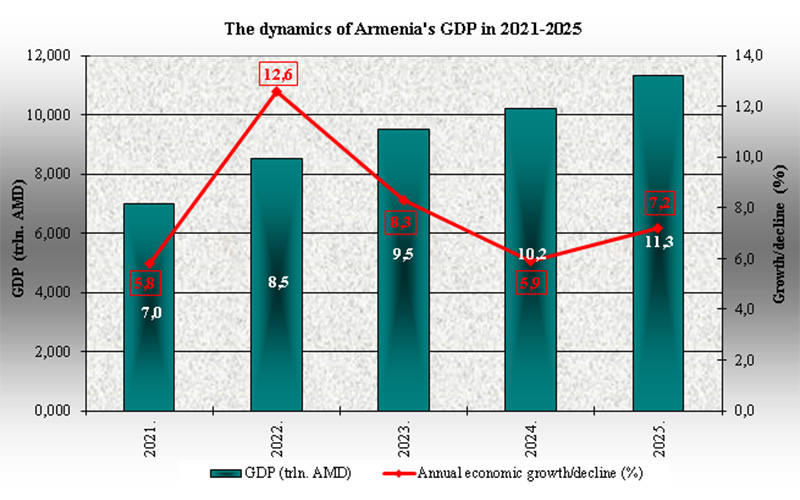
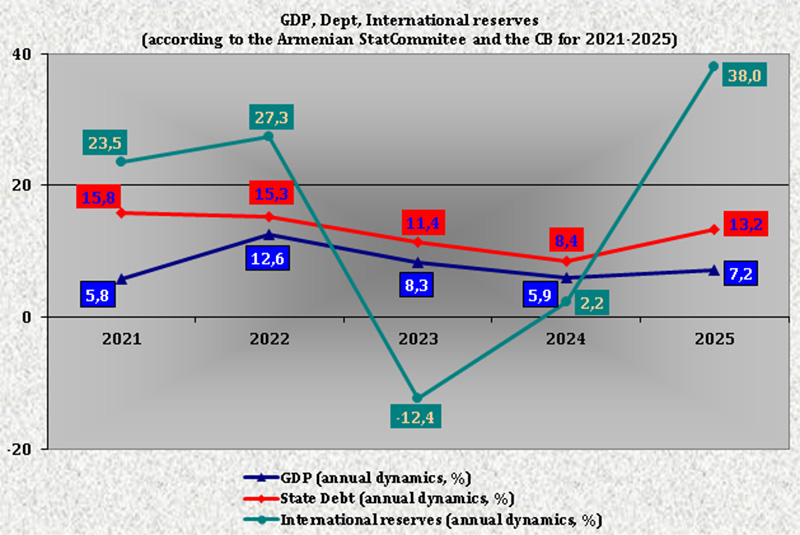
"IMF staff projects real GDP to grow by about 5 percent in 2022, driven by domestic demand and benefiting from the strong economic momentum in the first four months of the year. Inflation is expected to increase temporarily before moderating by the end of the year, when past monetary policy actions and the passthrough of the recent dram appreciation have their full impact. The Central Bank of Armenia should stand ready to adjust its monetary policy stance as necessary, while allowing the exchange rate to be a shock absorber. Nonetheless, the risk that the recent inflow of external income and capital to Armenia could face an abrupt reversal calls for re-building greater foreign reserve buffers. As the economy is operating near capacity, it does not require additional fiscal stimulus, and the authorities should save the revenue overperformance, else inflationary pressures could persist.
"It is important to maintain macro-fiscal-financial stability amid the war in Ukraine, sanctions on Russia, and increased global financial market volatility; steer inflation toward the CBA target of 4 percent; and restore fiscal buffers through growth-friendly and inclusive policies. Structural policies should focus on building economic resilience, including against climate change; developing capital markets; pursuing digitalization and public administration reforms; improving governance, transparency, and fiscal risk management; fully operationalizing the PIM/PPP (personal identification number (PIN)/ purchasing power parity (PPP)) framework, and facilitating an investment-driven, knowledge-based, and export-led growth. The authorities' emphasis on building human capital through health and education reforms is welcome. The pace of these reforms should be fiscally prudent and consistent with the fiscal rules. The increase in minimum and average pensions should be gradually phased in alongside measures that foster labor force participation and preserve the Pillar II component of the system.
"Discussions on a new IMF-supported program are expected to commence in September. "The IMF team thanks the Armenian authorities, development partners, and diplomatic community for fruitful discussions and cooperation," the Fund's press release reports.
It should be noted that the World Bank revised its forecast for 2022 in early June, improving the expected GDP growth rate in Armenia from the previous 1.2% to the updated 3.5%. In the middle of June of this year, the Central Bank of Armenia also revised its forecast for 2022, indicating a more optimistic GDP growth of 4.9% (against the previously forecasted 1.6%). According to actual statistics, Armenia's GDP in 2021 reached a 5.7% growth (from a 7.2% decline in 2020), while in pre-Covid 2019, growth of 7.6% was recorded.
In January-May 2022, economic activity in Armenia increased to 10.2% (against 4.3% growth a year earlier), and in May 2022, compared to May 2021, growth accelerated to 13% (from 10.9% a year previously). The official (statistical committee) y-o-y inflation in May 2022 reached 9%, and the core (Central Bank of the Republic of Armenia) y-o-y inflation was 8.4%, against the y-o-y inflation rates of 5.9% (official) and 7.4% (core) in May 2021, respectively.