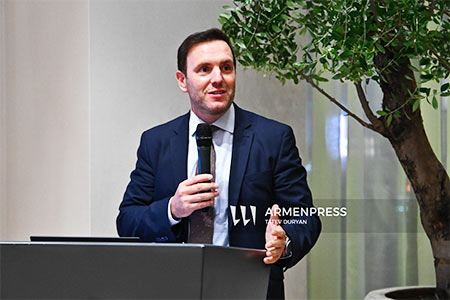


ArmInfo. Lea Hakim, Senior Economist in the World Bank's Global Macro and Debt Analytics team and Program Manager of the Debt Management Facility, posted the following message on her LinkedIn account:
How can Armenia achieve its development goals and promote inclusive and sustainable growth?
This week we launched "Beyond Boundaries: Unlocking Potential for a Sustainable Tomorrow." In this Systematic Country Diagnostic for Armenia, we find that since 2017:
1. Armenia is facing greater vulnerability from shocks (fragility and conflict, climate change and natural hazards, and economic shocks due to lack of diversification);
2. While growth has been high in some periods, the economy is vulnerable to exogenous shocks and has not been generating enough jobs;
3. Jobs are the main driver of poverty reduction, and have become increasingly so.
We thus identify 11 priorities Armenia needs to focus on to accelerate progress towards inclusive and sustainable growth. Priority interventions relate to:
1. Strengthening resilience to shocks from fragility and conflict, economic causes, and climate change and natural disasters;
2. Spurring the economy and private sector to be more competitive and productive to generate more and better quality jobs;
3. Advancing of human capital accumulation, focusing on improving the quality and relevance of education and access and affordability of healthcare to enhance people's human capital and readiness to capitalize on job opportunities.
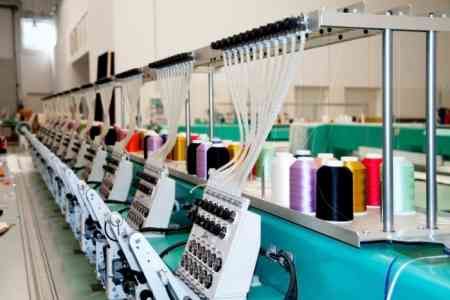
According to the report entitled "Beyond Boundaries: Unlocking Potential for a Sustainable Tomorrow," co-authored by Ms Hakim, "Armenia is only exporting a small share of its potential and stands to gain from increased trade from full effective implementation of the WTO Trade Facilitation Agreement. Currently, Armenia's integration in global value chains is limited to some participation in light manufacturing. While Armenia has scored large improvements in logistics service quality, tracking and tracing, and customs, poor infrastructure within the country constrains access to goods, services, and labor markets. This contributes to spatial disparities and hinders basic public service delivery, inputs for productive activities among firms, and the household accumulation of human capital. Although digital connectivity is high overall, digital adoption in rural areas is constrained by affordability, service quality, access to digital devices, and lack of digital skills and awareness.
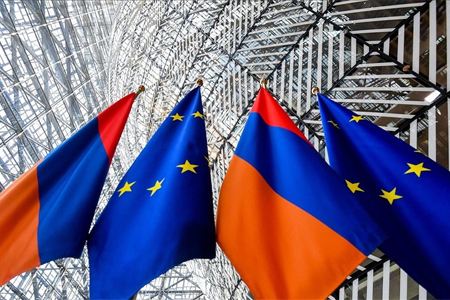
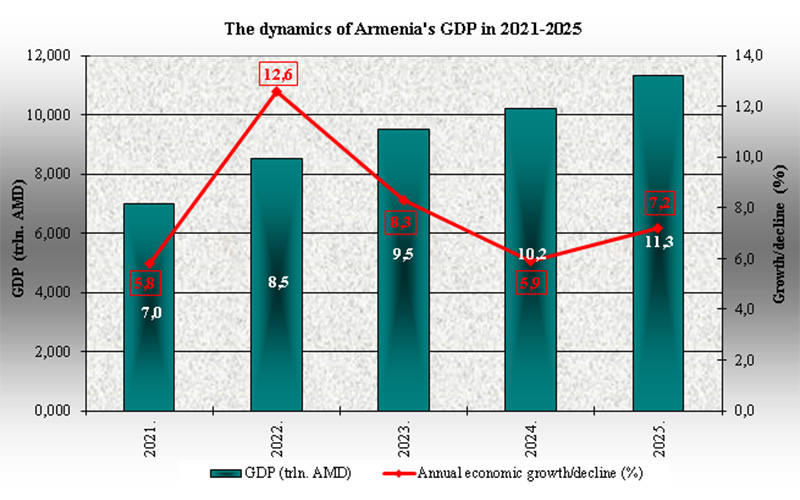
"Despite growth averaging 6.2 percent over 2000-22, this period was punctuated by two large slowdowns in growth in 2009 and 2016, largely due to Armenia's economic structure, its exposure to commodity price fluctuations, and its limited number of trading partners. More than two-thirds of Armenia's exports are to Russia, the European Union, China, and Switzerland. Primary products from mining-namely copper, molybdenum, and gold-have grown to about 30 percent of exports, both limiting the complexity of Armenia's exports and exposing Armenia to commodity price shocks. Armenia's imports are also heavily concentrated. For example, energy supply from gas relies exclusively on imports from Russia, and the high dependence on basic food items poses a risk to food security."
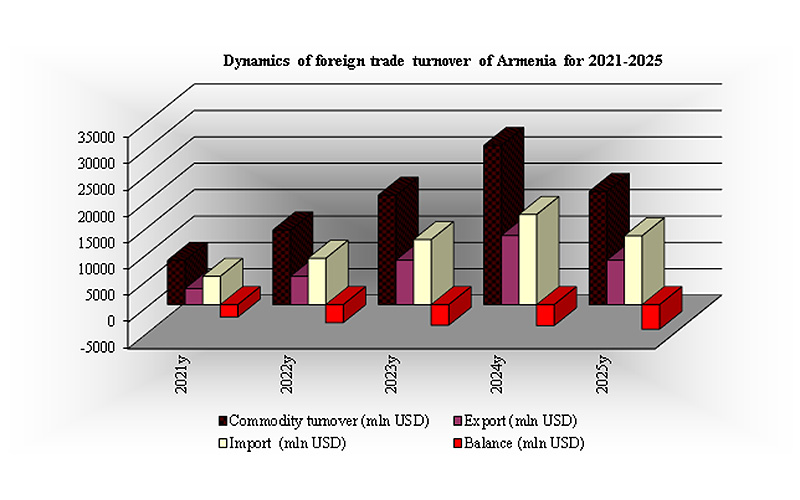
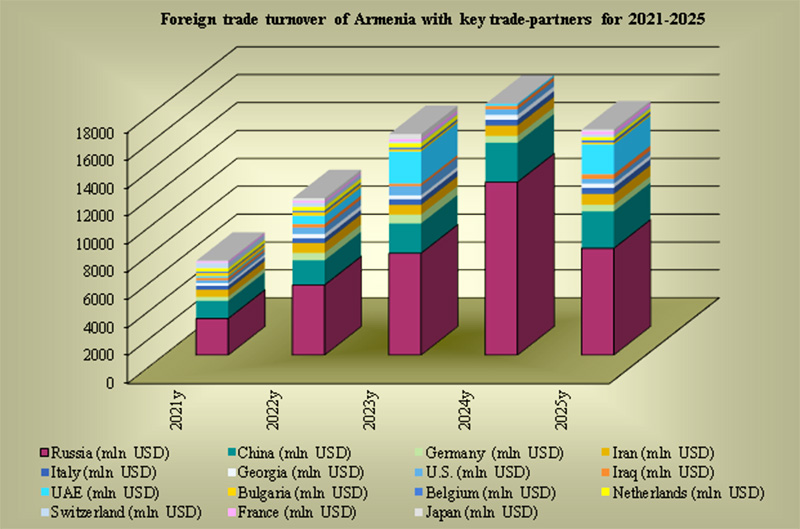
According to the Statistics Committee of Armenia, Russia continues to hold the leadership in foreign trade turnover in general, and in exports and imports in particular. In particular, the foreign trade turnover between Russia and Armenia at the end of 2023 exceeded $7.3 billion, with annual growth slowing from 91.7% to 43.3%. Exports of goods from Armenia to Russia significantly slowed down annual growth from 2.9 times to 38.8% to $3.4 billion, with a slight acceleration in the increasing rate of imports of goods from Russia to Armenia from 46.9% to 47.4%, ensuring volumes of level of $3.9 billion. Russia's share in Armenia's foreign trade turnover decreased slightly year-on-year - from 35.9% to 35.3%.
The full report "Beyond Boundaries: Unlocking Potential for a Sustainable Tomorrow" is available here: https://documents1.worldbank.org/curated/en/099518004292423713/pdf/IDU17c11ce211 8c6e149001b5b818ce6ca203b19.pdf