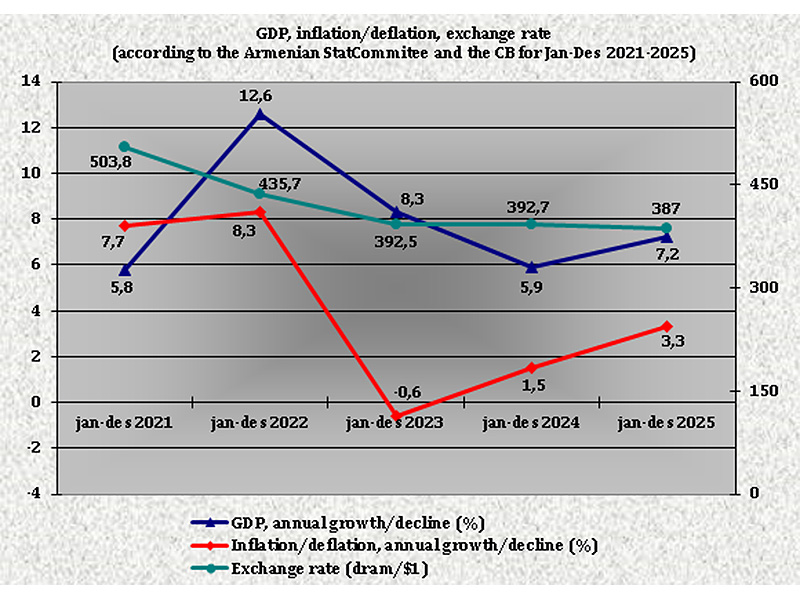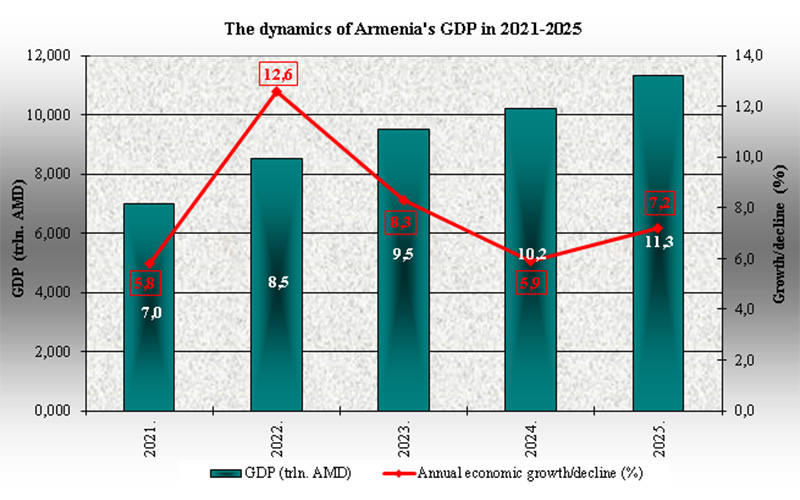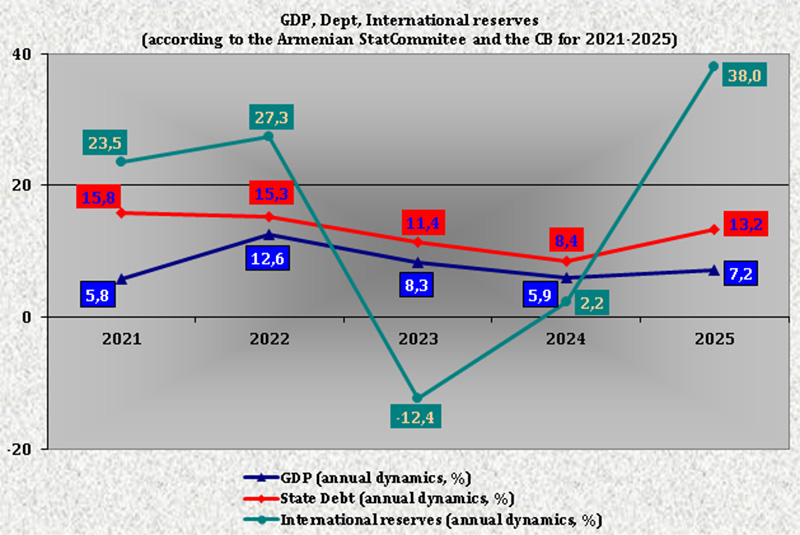



ArmInfo.In 2024, the growth of the Armenian economy will slow down slightly, but will remain at a high level of 6.3%. This is stated in the regional economic review of the Eurasian Fund for Stabilization and Development (EFSD) for the summer of 2024.
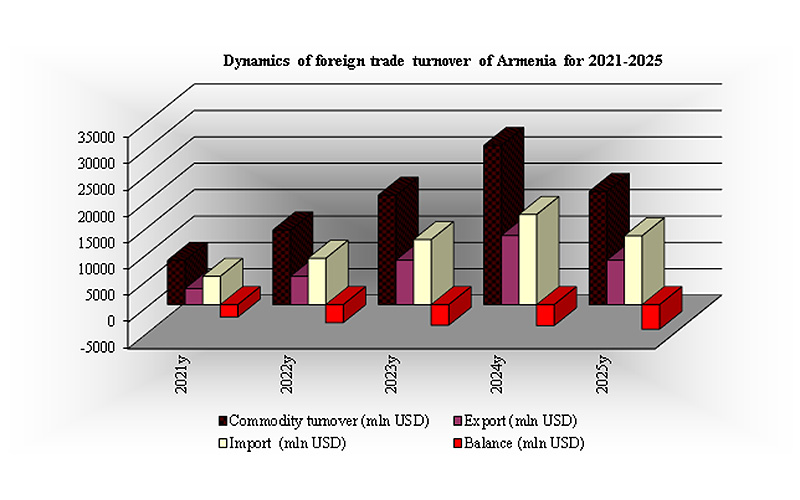
According to the source, despite the high economic growth recorded in the first quarter of 2024, the GDP forecast for 2024 remained unchanged due to the significant structural changes currently observed. The pace of the main growth drivers has slowed significantly, with the exception of net exports (gold re- exports).
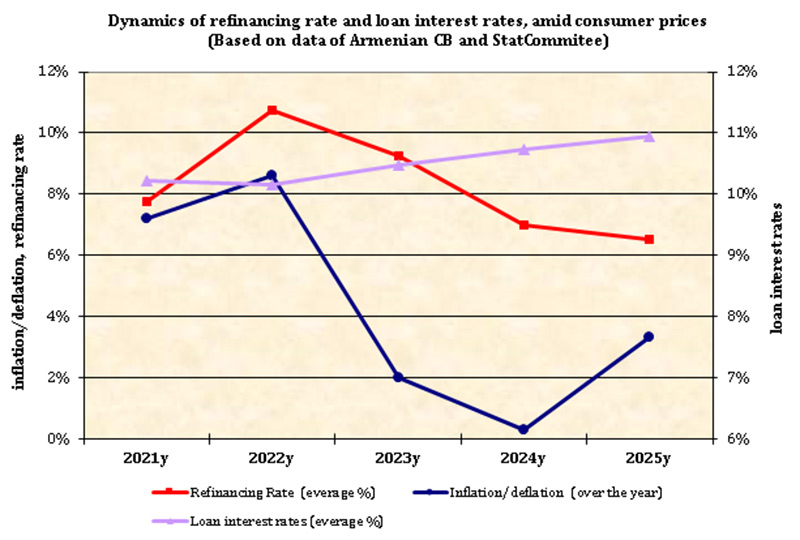
The budget deficit for 2026 increased by 0.6 percentage points. due to the planned increase in budget expenditures. Prices are returning from the deflationary zone more slowly than expected, which led to a decrease of 0.2 percentage points. 12-month inflation forecast for 2024.
As EFSD analysts note, from the second half of 2024, the growth of exports of goods and services will slow down against the backdrop of a slowdown in gold re-exports. Despite the fact that the largest contribution to GDP growth in the first quarter of 2024 was made by net exports, it is expected that from the second half of 2024 the growth of exports of goods and services will slow down against the backdrop of a slowdown in gold re-exports and the continued overvaluation of the Armenian dram.
Consumer and investment demand will remain the main drivers of growth in the Armenian economy. Consumer demand will be supported by continued growth in consumer lending and wages. At the same time, the growth rate of real wages will slow down somewhat. Increased investment demand will be driven by further growth in government investment and housing construction.
In the medium term, economic growth rates will be around 5.6% in 2025-2026. Monetary policy will be aimed at returning inflation within the target corridor (4+1.5%).
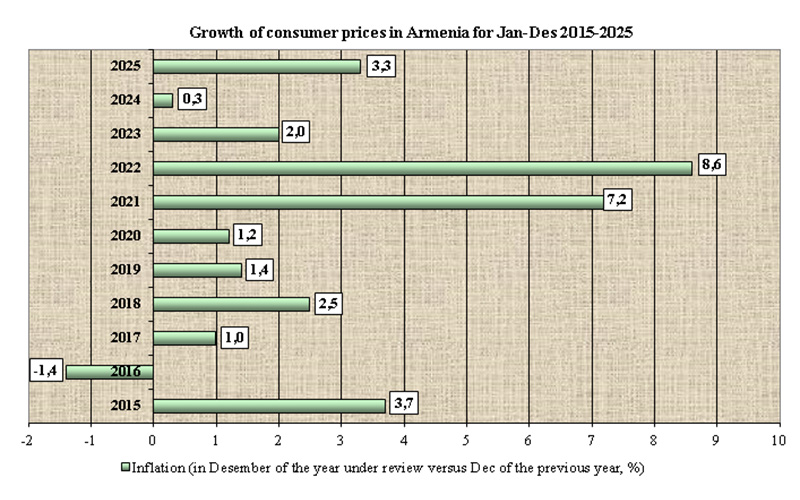
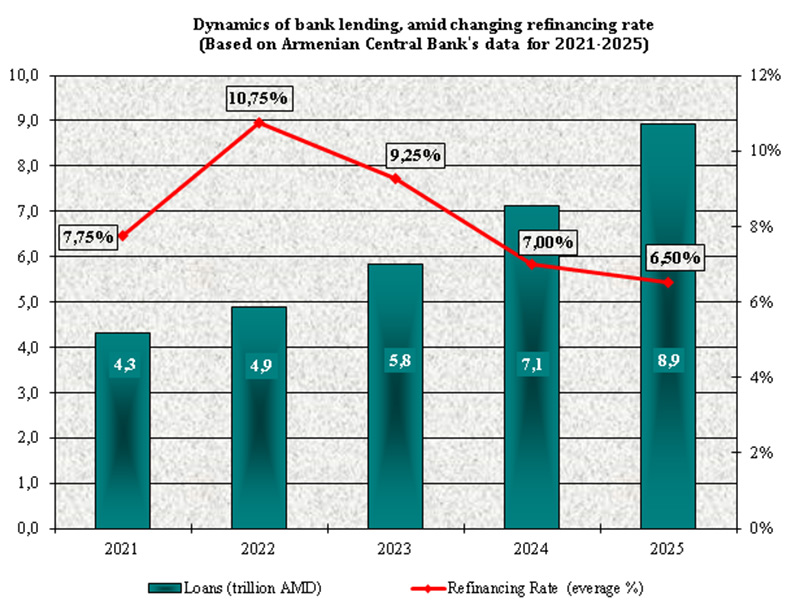
According to EFSD analysts, 12-month inflation in December 2024 will be 3.0% (y/y) against the backdrop of a gradual normalization of monetary conditions - a reduction in the refinancing rate and a weakening of the Armenian dram. In the medium term, inflation will remain close to its target values. The increase in budget expenditures is expected to reach 30.3% of GDP, driven by an increase in current and capital expenditures. Against the backdrop of growing social spending, current spending will increase from 21.8% of GDP (2023) to 23.5% of GDP. A significant increase in capital spending is also expected, as provided for in the medium-term government spending program for 2024-2026.
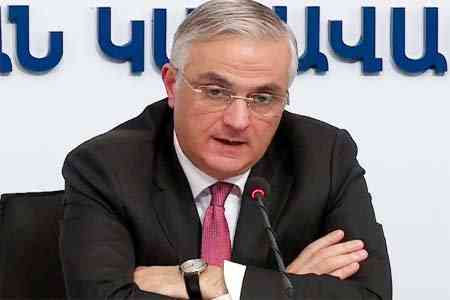
As Sergei Ulatov, Deputy Executive Director and Chief Economist of the EFSD, said at an online conference on the occasion of the release of the report, there are quite serious budget risks in Armenia, including those associated with high government spending, including those associated with political factors. <The budget deficit, according to our forecasts, will be about 5% in 2024 and 4.1% in 2026. That is, the budget deficit will remain at a fairly high level and our estimates indicate that expenses will increase, which means budget risks will persist," he noted.
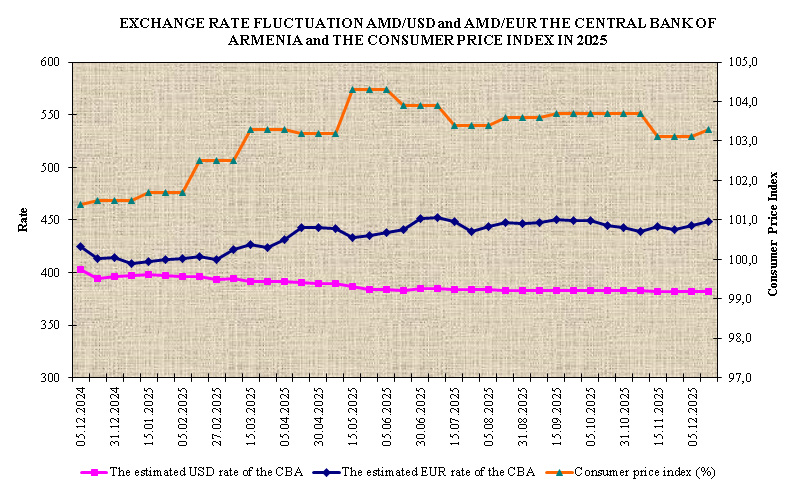
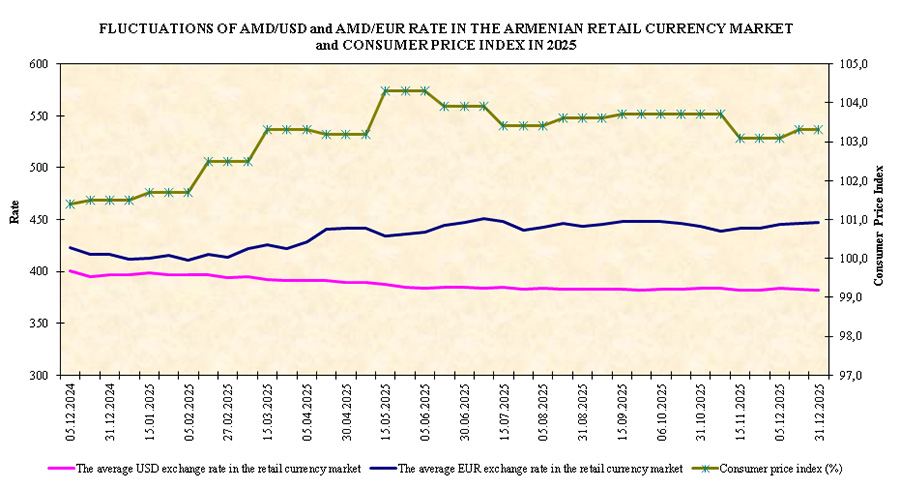
Another imbalance that has formed, Ulatov believes, is a serious strengthening of the dram in 2022. Now there is a gradual normalization of the exchange rate, but we still believe that the exchange rate is overvalued and the risks of devaluation remain if foreign economic conditions change sharply.
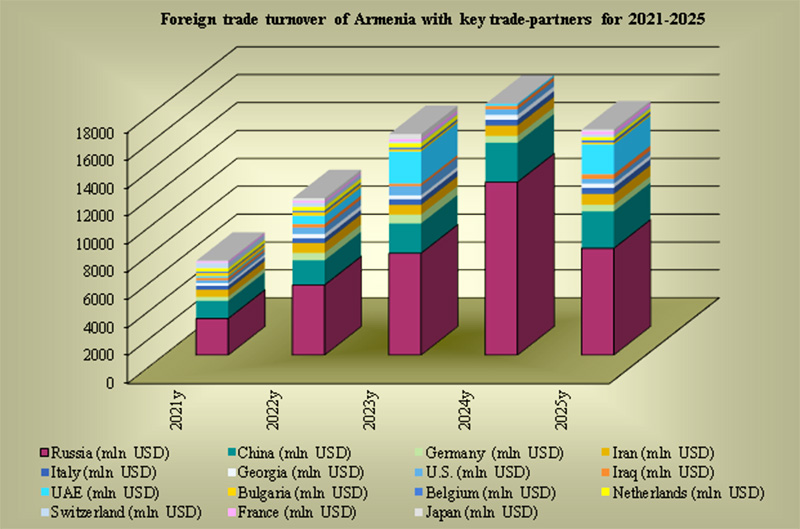
According to him, if we talk about our research, and this is typical not only for Armenia, then there is an increase in political tension, and when assessing it is necessary to take into account the influence of the Russian factor and Russian impact on economic growth in countries, including Armenia. According to the Fund's experts, the influence of Russian capital on Armenia amounted to about 4% of economic growth, and there are risks that this influence, the influence of this factor, will decrease.
The expert called it "unusual" that deflation occurred within the framework of very high consumption and consumer activity in Armenia, which rather indicates the influence of non-monetary external factors affecting food prices in Armenia. This in turn suggests that macroeconomic management in these countries, including Armenia, is very vulnerable to the influence of external shocks. <There was a positive shock here, but it could also be a negative one. It can be seen that external shocks are very quickly transmitted to Armenia both through economic growth and inflation, so we are keeping our finger on the pulse, taking care of how to timely support Armenia from the possible negative impacts of external shocks," Ulatov concluded.