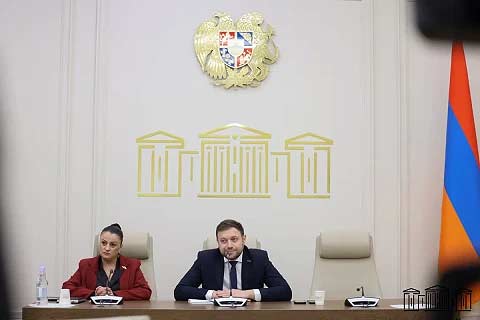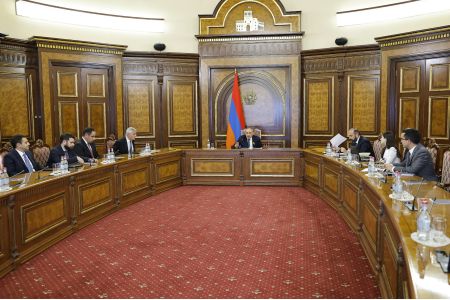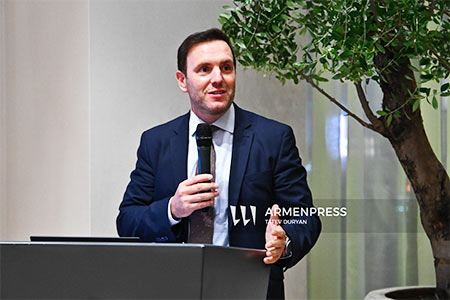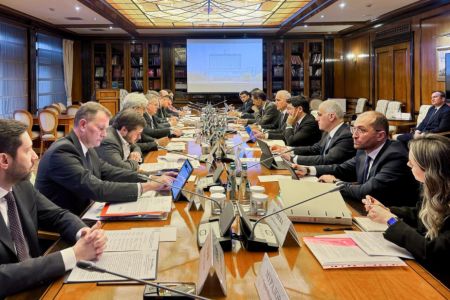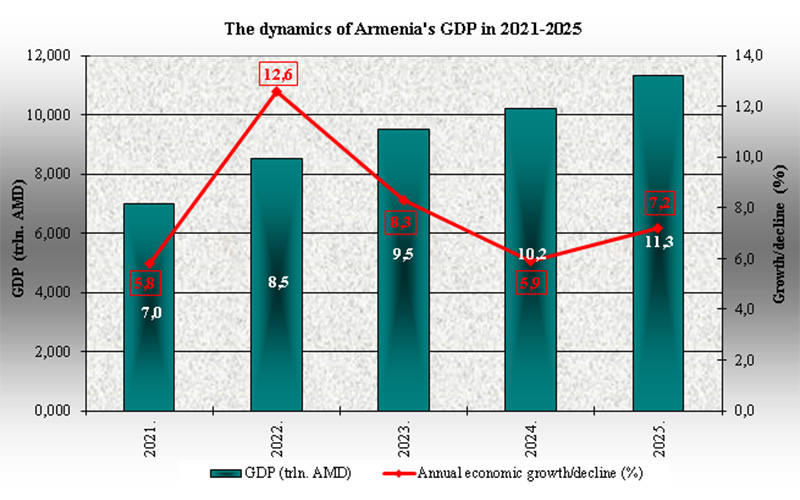


ArmInfo. The finding for science in Armenia is planned to increase to 1% of GDP by 2030. Zhanna Andreasyan, Minister of Education, Science, Culture, and Sports, announced this at a government sesssion on January 29, while presenting the Strategic Program for the Development of the Scientific Sector of the Republic of Armenia for 2026-2030, the schedule of activities for its implementation, and the priority directions for the development of the scientific and technical sector for 2026-2030.
As stated in the explanatory note to the document, the volume of state funding for scientific and technical activities has demonstrated positive growth dynamics since 2010. From 2015 to 2018, sector funding reached 13-14 billion drams, accounting for 0.24%-0.28% of GDP. In 2019-2021, public funds allocated to the sector increased from 16.7 billion drams to 19.8 billion drams, equivalent to 0.25-0.28% of GDP.
It is noted that a qualitative turning point in development was recorded in 2022, when, as part of the Armenian government's 2021-2026 program, a process of sharply increasing sectoral research and development funding was launched across a number of target areas. In 2022 alone, approximately 29.78 billion drams were allocated, which is more than the previous year and constitutes 0.38% of GDP. In 2023- 2024, the trend of growth in state investments continued, including within the framework of capital investment measures. In 2025, the volume of funds allocated to the scientific sector increased approximately 2.8 times compared to 2018, reaching 181%.
Despite this, the share of funding allocated to the scientific sector in GDP remains at 0.36%, which, compared to the indicators of similar Eastern European countries, is insufficient in the context of target 9.5 of UN Sustainable Development Goal 9 (industry, innovation, and infrastructure).
In this regard, it is noted that the adoption of the draft resolution aims to establish an effectively managed and internationally competitive scientific system by 2030, which will function in accordance with the requirements of the European Research Area (ERA), relying on highly qualified scientific personnel, a developed and optimal research infrastructure, and international research excellence. It will serve the development of research and human potential in modern and progressive areas, the training of highly qualified specialists capable of creating added value r to increase the competitiveness and defense capability of the country, the implementation of applied research and development arising from the needs of the country, as well as the awakening of curiosity in public life and raising awareness of modern human achievements.
Furthermore, the scientific field will be effectively integrated into the higher education system, ensuring the effective and systematic involvement of young specialists in all types of research, facilitating the development of new personnel, and effectively supporting the implementation of competitive research arising from government needs or with commercialization prospects, technology transfer, and will meet the imperative of maximum impact.
The Strategy includes a total of 94 planned activities. Specifically, by 2030, it is envisaged that at least 400 researchers in Armenia will establish research groups, at least 1,000 scientific personnel will undergo advanced training courses at leading scientific centers abroad. A program will be implemented to attract approximately 150 full-time employees to Armenia. Among the invited specialists, the participation of at least five world-class scientists is planned. Furthermore, the creation of a public-private investment fund is envisaged to finance research with a high level of economic risk. At least 20 research programs will be launched under state orders, oriented toward the needs of various industries. Cooperation between business, universities, and scientific institutions will be strengthened. "Most importantly, we plan to increase science funding to 1% of GDP by 2030, of which 0.75% will come from the public sector, and the remaining part from private investments," the head of the Ministry of Education, Science, and Culture stated.