


ArmInfo. Armenia has a real opportunity to become a regional electricity hub. UN National Energy Expert Ara Marjanyan stated this in an interview with ArmInfo, commenting on the opportunities and risks of integrating the country's power system with Azerbaijan's.
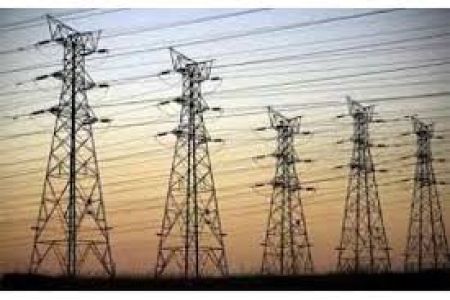
On January 29, at a briefing, Armenian Prime Minister Nikol Pashinyan announced that synchronizing the power systems of Armenia and Azerbaijan would enable Armenia to access new electricity export markets and increase supply volumes. Just 24 hours after this announcement, Azerbaijan's national operator, Azerenergy, announced the start of construction of a power transmission line in the direction of Nakhichevan through Armenia. Construction is underway on a double-circuit, high-voltage 330 kV power line with a capacity of up to 1,000 MW. Azerenergy emphasized that work is underway simultaneously in the mainland and in Nakhichevan, where sections of the line are being laid, 74 and 105 kilometers long, respectively. The next stage of the project plans to build an additional 44-kilometer line in Armenia. The company also noted that the construction of the transmission line is part of the project to create the Azerbaijan-Turkey-Europe international energy corridor. As part of this project, a 230-kilometer transmission line will be built from Nakhichevan to the Turkish border.
In this regard, Marjanyan noted, the unification of the two countries' electricity systems is a very promising project, offering a number of advantages for the development of both Armenia and Azerbaijan's potential. The expert continued, electricity is one area of the energy sector in which Armenia has clear advantages over its neighbors. Only Armenia has a certain surplus of generating capacity, which will allow Yerevan to quickly increase electricity exports to its neighbors and other countries.
"Neither Georgia, nor Azerbaijan, nor Turkey, nor Iran are capable of significantly increasing their export volumes. Over the past two to three years, Armenia's annual electricity exports have been comparable to Turkey's. It's worth noting that our country's population is approximately 30 times smaller than Turkey's. Therefore, Armenia's export potential is clear. Connecting the electricity systems of Armenia and Azerbaijan, and potentially Turkey, will allow Yerevan to establish itself as a regional hub where electricity flows can be regulated, thereby restoring its importance as an electricity exporter," Marjanyan said. He added that the project's implementation will lead to the development of Armenia's electricity sector and its integration into the regional electricity system.
The expert also noted that the scale of the emerging opportunities significantly outweighs the potential risks. "If, for example, we compare electric power with other sectors, such as gas or petroleum products, the risks are minimal, since the country produces neither. Therefore, there is no threat of Armenia becoming overly dependent on electricity imports. The risk here is this: the integration of the two countries' systems, and potentially Turkey's as well, must occur in such a way that the republic becomes a true hub, controlling the flows, and this requires substations at the input and output. It is simply not advantageous for the country to simply have a high-voltage power line running through its territory; substations are needed to develop its energy potential," Marjanyan noted.
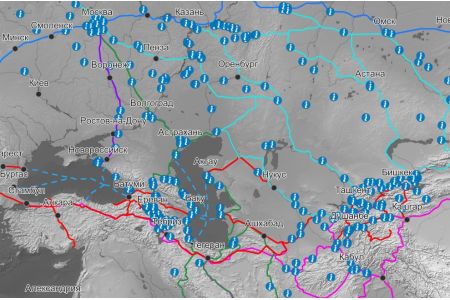
According to ArmInfo experts, the implementation of this project could ultimately lead to the closure of another program-the construction of the North-South Energy Corridor (Iran- Armenia-Georgia-Russia power line), particularly on the Armenia-Georgia section. The project proposed by the Azerbaijani side, at first glance, appears less costly, both financially and technically, but it essentially continues the US policy of completely ousting Russia from the region.
Commenting on this development, the UN national expert recalled that back in 2009, a project to create an Azerbaijan-Georgia-Turkey energy bridge was implemented. During its implementation, Armenia was ousted from the region's infrastructure. At the time, official Yerevan publicly declared the program doomed, as neither Baku nor Tbilisi possessed export potential, which, in reality, transpired over the following decade. Now, as Marjanyan emphasized, following the changing geopolitical situation, particularly following the conclusion of the Armenian-American agreements in Washington last August, opportunities for cooperation within a more rational framework have emerged. This essentially involves presenting Armenia as a potential electricity exporter. At the same time, Yerevan should not limit itself to simply connecting the energy systems of Armenia and Azerbaijan. "The TRIPP project should not impact the North-South program, particularly in the Iranian direction," the expert emphasized.
He recalled that Yerevan and Tehran had previously reached an agreement to exchange Iranian gas for electricity. Currently, these volumes are insignificant: Iran annually supplies Armenia with 300 million cubic meters of gas, receiving approximately 1 billion kWh of electricity in return. "After the completion of the third Iran-Armenia power transmission line, these volumes could increase to 1 billion cubic meters of gas and 3 billion kWh of electricity, respectively. True, as of now, the third power transmission line's construction volume is only 30% complete, but in any case, one should not impede the other," Ara Marjanyan concluded.
As a reminder, a trilateral meeting of the leaders of the United States, Armenia, and Azerbaijan took place at the White House on August 8. During this meeting, Armenian Prime Minister Nikol Pashinyan, US President Donald Trump, and Azerbaijani President Ilham Aliyev signed a joint declaration aimed at resolving the conflict between Yerevan and Baku.