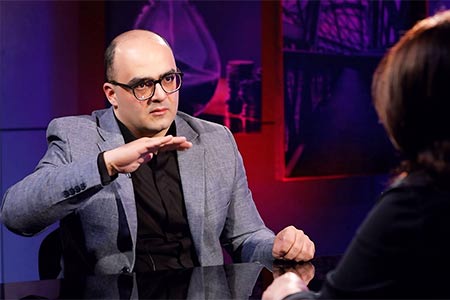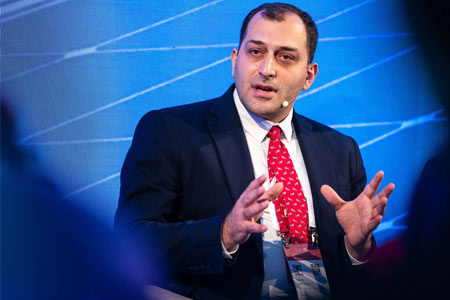


ArmInfo. The introduction of a universal health insurance system in Armenia is another way to replenish the budget at the expense of the country's citizens. Economist Hrayr Kamendatyan wrote about this on his Facebook page, presenting the results of his analysis.
As Kamendatyan explained, they developed a list of questions that will allow everyone to put aside political slogans and evaluate whether the law proposed by the Armenian authorities will serve the interests of the people or is simply another way to replenish the budget.
In this vein, the expert, based on his analysis, presented five points whose absence from the legal provisions of the law indicates yet another money-laundering scam. First, the economist urged the question of whether a universal health insurance system allows for freedom of choice, specifically, does a citizen have the right to visit any hospital-public or private-with their insurance policy? "If the state requires visits only to certain medical institutions, then this is not insurance, but a redistribution of the budget between 'its' hospitals," Kamendatyan explained. The expert further emphasized the importance of establishing a maximum waiting period for surgery. "After all, if the time limit isn't specified, the situation with 'grandmothers' will remain an exception, while other patients will wait for years," the economist asserted. Kamendatyan believes another sign of the inevitability of corruption in the system is the lack of information about how much of the tax money citizens pay goes into their healthcare accounts and how much is spent on their treatment. Furthermore, the economist continued, it's important to understand whether insurance covers outpatient medications. "If the surgery is 'free,' but then you have to spend 100,000 drams a month on medications, that means the system is flawed," the expert explained. Kamendatyan concluded by citing independent oversight and the possibility of appeal. This, the expert explained, means citizens knowing where they can file a complaint if a doctor has treated poorly or demanded additional funds.
"If a complaint is sent to the same Ministry that manages the finances, there can be no talk of fairness," the economist emphasized.
In summary, the expert explained the questions one should ask to avoid manipulation. "When you see advertising on television or social media, ask yourself the following questions: 'What is the maximum waiting period according to the law?' and 'Can I see the money spent on my phone?' This will help avoid manipulation," Kamendatyan concluded.
As a reminder, compulsory medical insurance envisages a phased implementation of the system over three years. The first stage began on January 1, 2026. The system covers children under 18, individuals aged 65 and older (even if they are employed), disabled individuals aged 18 to 65, members of socially vulnerable families, and citizens earning over 200,000 drams. The base cost of an insurance policy in 2026 will be 129,600 drams (10,800 drams per month). Part of this amount will be reimbursed from payments to the Zinapa Military Insurance Fund. These payments, increased in 2021, are now returning to their previous level of 1,000 drams, regardless of salary. The remaining portion will be reimbursed to beneficiaries upon filing their annual personal income tax return. However, in 2026, these amounts will be reimbursed monthly by the state budget.
The insurance payment will be made by a tax agent, meaning it will be withheld from wages in the same way as income tax, social security payments, and other payments. This year, individual entrepreneurs will also benefit from the system and will be required to pay their own insurance premiums. Overall, health insurance will cover approximately 1.6 million people in 2026.
A state fund has been created to manage the system. It will operate under temporary management for three months, after which a state competition committee will form its board of directors, which, as stated in the Concept for the Implementation of Compulsory Health Insurance, will be chaired by the Minister of Health.
According to the ACSES analytical review, the current model of Universal Health Insurance is a serious deviation from the principles of a market economy, creating risks for the long-term investment attractiveness of the sector.
In particular, financial calculations show that a system implemented in 2026 would, at best, account for approximately 23% of healthcare expenditures, which is lower than the indicators of the countries examined in the document (the lowest indicator is in Greece at 32%). Furthermore, international experience shows that, given the proposed model, healthcare infrastructure, and low levels of funding, patient satisfaction in Armenia is likely to be lower than the average for the countries examined, which could overshadow the reform. Setting actual prices and maximum compensation/compensation prices can, in some cases, also lead to increased shadow trade, particularly when the actual price is twice the established compensation amount, and the citizen is forced to pay the difference in cash.