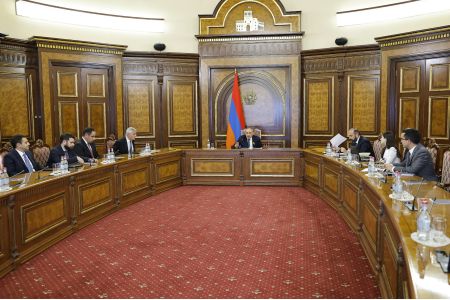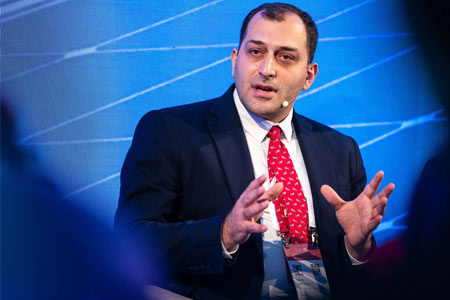


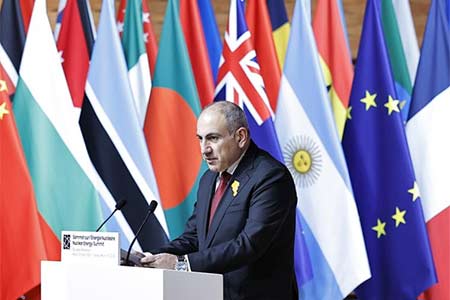
ArmInfo.Small modular reactor (SMR) technology offers promising prospects, as stated Armenian Prime Minister Nikol Pashinyan, when addressing the second Nuclear Energy Summit in Paris.
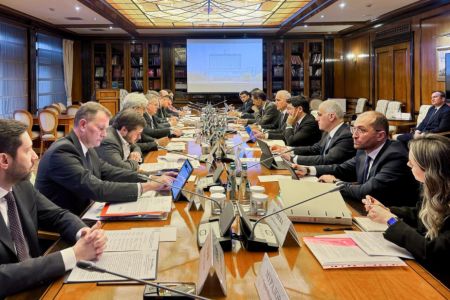
According to the press service of the Armenian Prime Minister, the high-ranking guests of the event were welcomed by French President Emmanuel Macron and Director General of the International Atomic Energy Agency Rafael Grossi. European Commission President Ursula von der Leyen, the prime ministers of Slovakia and Croatia, as well as heads of government and representatives of several other countries were present at the summit.
In his speech, Pashinyan expressed confidence that the second summit in Paris will foster cooperation among countries committed to developing civilian nuclear capacity and will contribute to finding tangible solutions to achieve the shared goals of decarbonization and energy sovereignty. "These goals, coupled with growing global energy demand, have led to a reassessing of the competitiveness of nuclear energy, and many countries now recognize that nuclear energy, as a regulated, low-carbon energy source, can complement renewable energy, rather than compete with it.
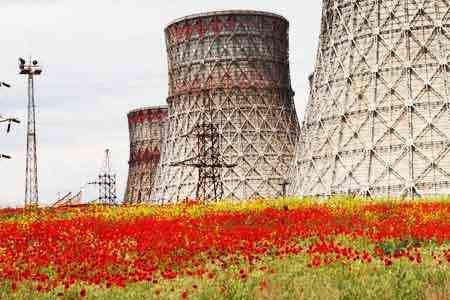
Guided by this conviction, Armenia was one of the first countries to fully support the COP28 declaration to triple nuclear energy by 2050, and we welcome the First Global Assessment of Progress in Line with the Goals of the Paris Agreement. The Armenian government has also adopted a policy of preserving nuclear energy as a critical factor in Armenia's energy security and a key component of its electricity supply," he said. Pashinyan noted that, along with the development of safety technologies, extending the lifespan of existing nuclear reactors provides a timely and cost-effective path to achieving net-zero emissions. In this context, Armenia, like many countries represented at the summit, has launched a program to extend the lifespan of the Armenian Nuclear Power Plant (NPP) until 2036. This extension will lay a solid foundation for a successful and safe transition to a new nuclear power unit, he added.
"In this regard, our attention is focused on innovations in civil nuclear energy, in particular small modular reactor (SMR) technologies, which offer promising prospects. Growing demand is prompting leading companies to develop safer and more flexible solutions with shorter construction times and scalable capacity that can better meet the needs of the national energy system. Given these circumstances, Armenia has decided to pursue small modular reactor technology. We are currently thoroughly studying these technologies and evaluating proposals from international partners. The selection process will prioritize reliability, long-term sustainability and adherence to the highest standards of nuclear safety, security and non-proliferation," he said.
According to him, by 2050, a skilled workforce will form the backbone of the nuclear sector, spanning the development of nuclear energy, from design and construction to safe operation, maintenance, and ultimately decommissioning. Implementing training and advanced training programs is essential to ensuring the availability of the necessary workforce. In this regard, Armenia highly values international cooperation, both bilaterally and multilaterally, the Prime Minister emphasized.
"I am pleased to note that thanks to these efforts and the dedicated work of Armenian specialists, not a single incident related to nuclear or radiation safety has occurred during the entire operation of the Armenian Nuclear Power Plant.
In conclusion, I would like to emphasize the importance of the responsible management of radioactive waste and spent nuclear fuel, which is crucial for both current and future generations. Protecting human health and the environment must be our guiding principle," the Armenian Prime Minister concluded, expressing confidence that the current summit will contribute to the development of initiatives and partnerships between countries.
Recall, the second power unit of the Armenian Nuclear Power Plant (ANPP) is currently undergoing a second program to extend its service life by 10 years, until 2036. By that time, a new nuclear power unit is scheduled to be built in the country.
Armenia has not decided on the design of the new power unit yet. Negotiations are underway with potential technology suppliers. Countries such as the United States, Russia, South Korea, and China have expressed interest in building a new NPP in Armenia. Back in July 2023, the Armenian government sent a working group to the United States to familiarize itself with American nuclear technologies, small modular reactors, and their developments. Pashinyan has repeatedly stated that a strategic decision has been made to build a small modular nuclear power plant. "One important reason is that, as experts explained to us, accidents at modular NPPs are considered emergencies of local significance, meaning that in the event of an accident at a NPP, there will be no threat beyond 500 meters," Pashinyan stated.