


ArmInfo. Since 2019, the trend of employment redistribution toward the service sector has intensified in Armenia (from 54% in 2019 to 58% in 2024), according to the March Macroeconomic Review prepared by EDB specialists.
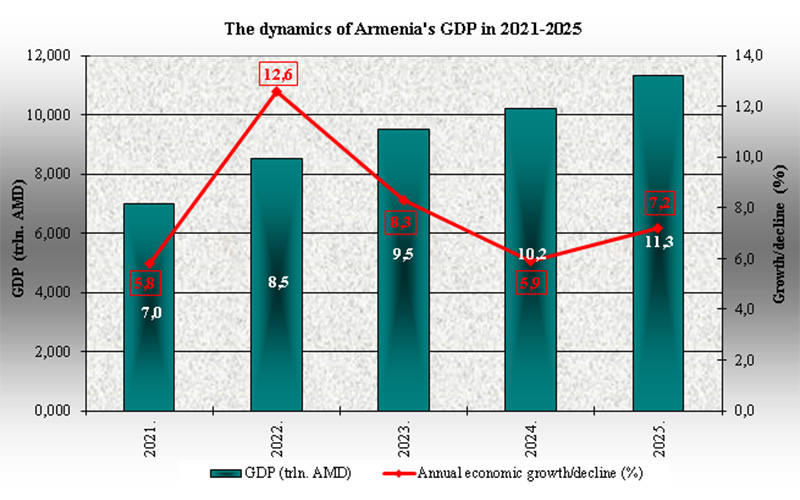
Consequently, the share of agriculture in the employment structure has decreased from 22% to 18%, and industry from 14% to 13%. Meanwhile, sectors such as trade, IT, hospitality, and finance are expanding their role in the workforce. The most significant growth was recorded in the IT sector, with employment increasing from 2.9% in 2019 to 3.7% in 2024. This growth, according to the bank's specialists, is partly due to business relocation: 13,000 enterprises relocated to Armenia in 2022-2023. Another contributing factor is the increased demand for digital services, reflecting a partial economic transition to more productive activities. However, analysts believe the transformation is still incomplete: agriculture continues to provide a significant share of employment while contributing relatively little to GDP growth (0.1 percentage points out of 5.9% economic growth in 2024).
The report notes that the wage gap between Armenia and Russia has somewhat narrowed in recent years, reducing incentives for labor migration to the Russian Federation. Other factors contributing to this trend included the rapid growth of the construction sector and infrastructure investments initiated by the government in 2021-2026.
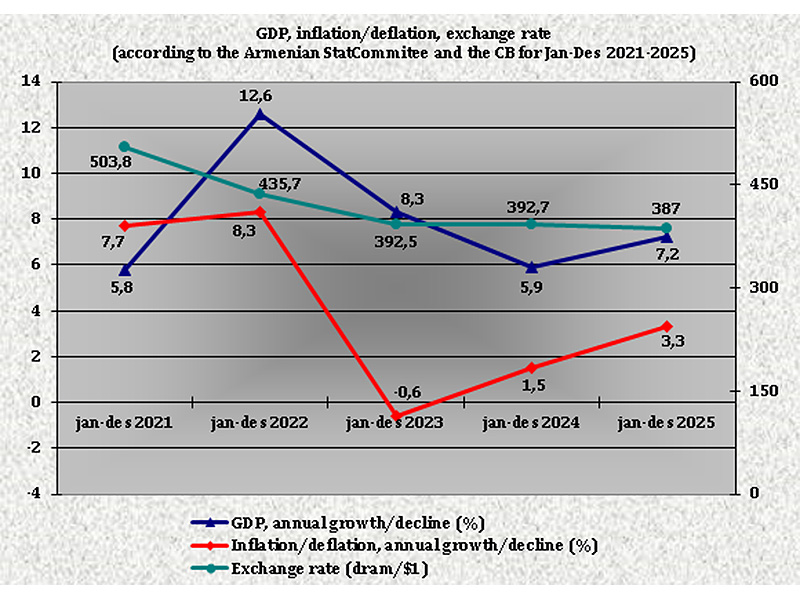
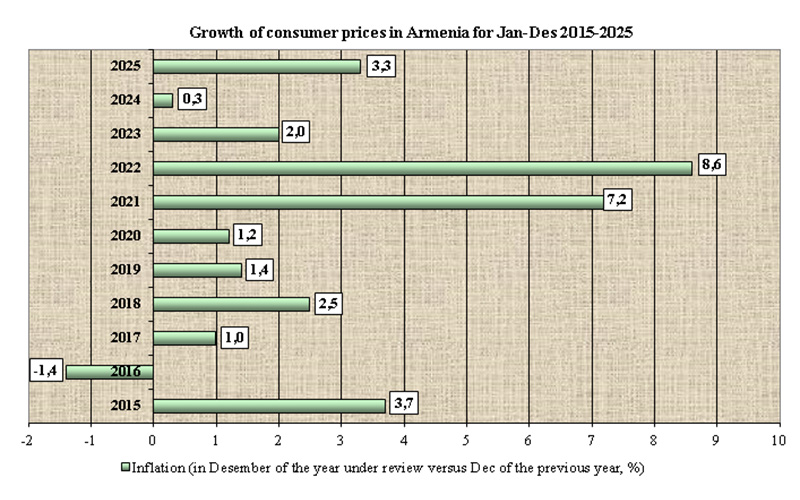
According to the report, Armenia saw a significant increase of nominal wages after 2022 (from 215,000 drams per month in 2021 to 327,000 drams in 2025), especially in highly skilled sectors. Average wages in the IT and financial services sectors significantly exceeded national averages (increasing from 574,000 drams per month in 2021 to 894,000 drams in 2025 and from 430,000 to 960,000 drams, respectively). Despite a surge in inflation in 2022, the strengthening of the dram and the slowdown in inflation in 2023- 2024 helped to ensure growth in real incomes. The rapid growth in wages can be attributed to the influx of highly qualified specialists and companies, which has increased demand for skilled labor. This has resulted in localized labor shortages and wage growth in the relevant sectors. However, wage growth in agriculture and other low-productivity sectors is lagging, widening the income gap. Furthermore, the Macroeconomic Review emphasizes that Armenia's aging population and the decline in the working-age population limit labor supply in the long term.
It is worth noting that, according to Armenia's Minister of Labor and Social Affairs, Arsen Torosyan, as of the end of 2025, there were 300,000 vacant jobs in Armenia and approximately 30,000 officially unemployed people. According to the Statistical Committee of the Republic of Armenia, the unemployment rate in Armenia decreased to 11.8% in the third quarter of 2025 from 13.3% in the same period of 2024. At the same time, the employment rate in annual terms decreased slightly - from 52.2% in the third quarter of 2024 to 52.1% in the third quarter of 2025 (compared to 51.2% in the second quarter of 2025). In particular, the number of employed people amounted to 1.210 million people, which is 0.1% lower than the figure for the previous year. The number of unemployed decreased by 13.1% over the year, amounting to 161.3 thousand people. Over the quarter, the number of unemployed decreased by 3%.