

ArmInfo. The Armenian authorities are initiating a major revision of tender rules. Amendments to the Law "On Procurement" will be discussed in the first reading at the plenary session of the National Assembly of the Republic of Armenia on March 24.
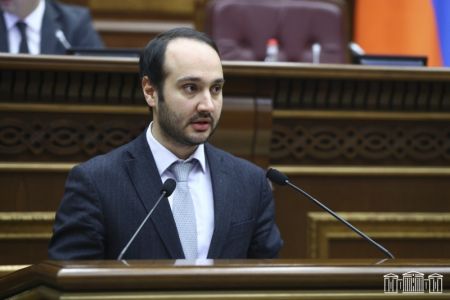
Presenting the draft, Deputy Minister of Finance Avag Avanesyan explained that the key goal of the amendment is to eliminate corruption risks and conflicts of interest: from now on, companies affiliated with high-ranking officials and their family members will face strict restrictions or a complete ban on participating in public procurement.
The new model is based on a gradation of officials according to three levels of influence. The strictest measures will apply to the highest echelon of power - the first level of influence. This category includes the President of the Republic, the Speaker of Parliament, the Prime Minister, deputy prime ministers, as well as the Minister of Finance and his deputy. Organizations associated with these individuals or their relatives will be completely prohibited from participating in any public procurement processes, regardless of the contracting agency. The law defines related individuals as spouses, children, parents, siblings, and individuals who share a household with the official. A company is considered affiliated if these individuals own more than half of the authorized capital or have the power to influence the company's decisions.
Local restrictions apply to second- and third-level officials. The second level includes individuals holding political and administrative positions, as well as senior officials of the prosecutor's office and investigative bodies. They and their relatives are prohibited from participating in tenders organized directly by the agency where they work or by its subordinate structures. A similar principle applies to the third level, which includes representatives of independent and autonomous government agencies, including the leadership of the Central Bank and the Ombudsman's Office: their affiliated companies are denied access to procurement procedures conducted by their own agencies.
The Commission for the Prevention of Corruption will oversee this process. Currently, the mechanism requires that a legal entity declare no conflict of interest when submitting a bid. If it is subsequently discovered that the winning bidder concealed ties to an official, the contract will be immediately terminated, and 20% of the transaction amount will be refunded to the budget.