


ArmInfo. The pyramidal approach to developing financial markets relies on a clear hierarchical order. Development should start with short-term instruments, particularly those in the money market. Once this segment is well established, focus can shift to the foreign exchange market. Only after consolidating these areas should attention turn to long-term instruments, including government debt and corporate securities.
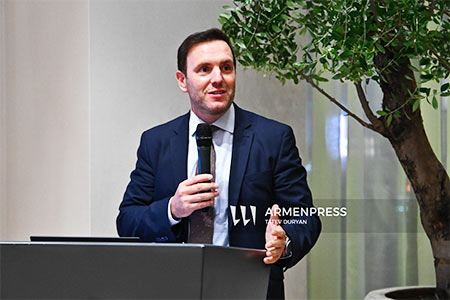
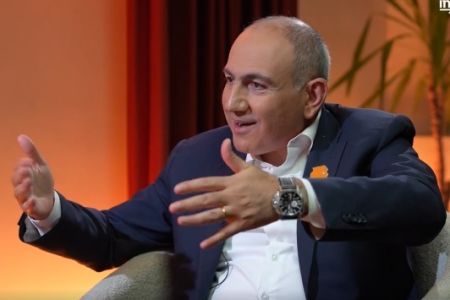
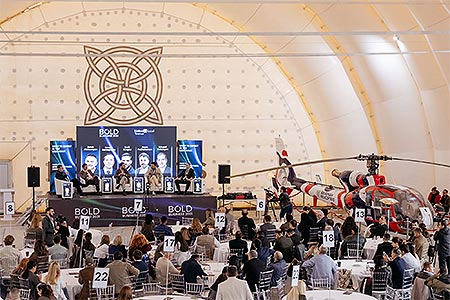
When sufficient depth and liquidity have been achieved, the development program can expand to more advanced segments, such as derivatives markets, as stated by CBA Governor Martin Galstyan. He made these remarks in his keynote speech at the opening of the international conference on capital market development, "25 Years of Excellence, Growth, and Global Integration," which marks the 25th anniversary of the Armenian Securities Exchange (AMX).
According to him, special attention is being paid to the development and strengthening of the money market because the price formed there becomes the benchmark price for the entire financial system. "Simply put, the money market is where the short-term, low-risk, or so-called 'risk-free' interest rate is formed. Subsequently, the pricing of longer-term and riskier capital market instruments is structured on the basis of this benchmark rate by adding an appropriate risk premium," he noted. On a global scale, the money market benchmark rate is typically formulated in accordance with IOSCO principles (International Organization of Securities Commissions – Editor's Note). It is based on secured overnight transactions. Consequently, overnight transactions collateralized by government securities are considered the closest instrument to a risk-free money market rate.
Therefore, as Galstyan noted, the Regulator's primary goal is to promote the overnight transaction market. Several important steps have already been taken in this direction, which need to be further reinforced. In this context, he emphasized that a new exchange-traded platform for overnight transactions has been launched on the AMX to incentivize the transition from bilateral over-the-counter (OTC) deals to exchange trading. This is intended to help centralize order books, attract more participants, increase trading volumes, and support the formation of a reliable benchmark rate.
"Alternatively, we are considering the possibility of centralizing information on all interbank overnight repo operations, including OTC transactions, in a single repository to support the calculation of the benchmark," he stated. "We have also introduced standardized international repo agreements (GMRA and ISDA SFTP – key international standards for framework agreements for financial markets) into the Armenian legal system. This reform should improve the comparability of repo rates and support benchmark formation. Further measures will be needed to encourage wider adoption of these agreements in the marketplace, either through regulation or other incentive mechanisms."
In this context, the head of the Central Bank also outlined measures to ensure the depth of Armenia's foreign exchange market, which is also crucial for the development of the capital market. "While we often discuss the development of local currency bond and equity markets, attracting foreign investors and ensuring sufficient demand from buyers also depends on how easily investors can enter and exit local currency positions. If investors are unsure of their ability to convert large positions into AMD if necessary, they are much less likely to invest in the local currency capital market," the country's top banker believes.
He noted that the Armenian foreign exchange market remains relatively small: in developing countries such as Poland or Kazakhstan, currency spreads are around 0.007-0.008%, while in Armenia they are around 1%, a significant difference. BIS (Bank for International Settlements - Ed.) data on average daily currency turnover in emerging markets also show that liquidity in Armenia's foreign exchange market remains relatively low. As a result, the market may struggle to absorb large positions, and significant transactions can cause significant price fluctuations. Therefore, the regulator's primary objective is to ensure continuous liquidity and fair pricing in the foreign exchange market. Among the measures, the head of the Central Bank cited expanding the Central Bank's participation in the existing AMX currency exchange platform to facilitate the market's absorption of large positions. Secondly, it is important to develop the institution of market makers to ensure continuous two-way quotations. Incentives for activities that maintain market liquidity, such as regulatory incentives or discounts on trading platform commissions, should be considered. He also emphasized the requirement that large foreign exchange transactions be executed through brokerage channels rather than dealers. This will reduce conflicts of interest, increase pricing transparency, and strengthen trust among international investors.