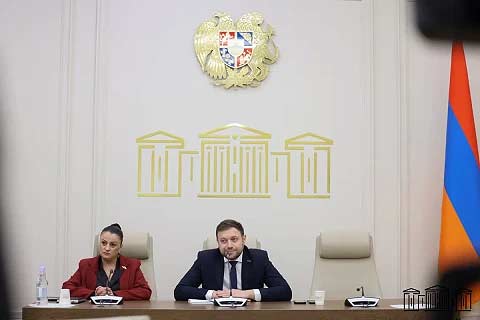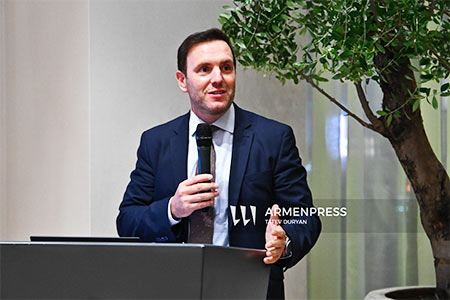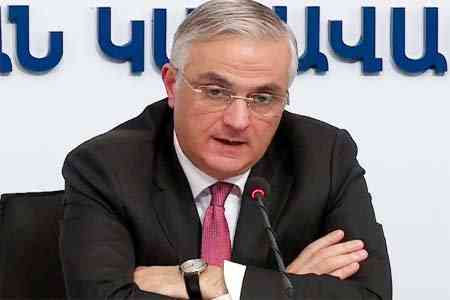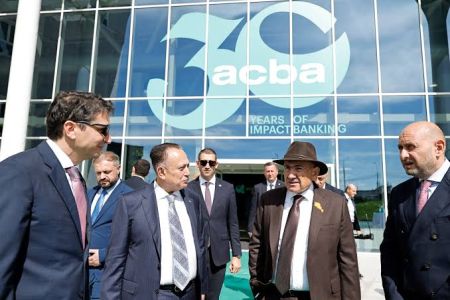


ArmInfo. "We aim to increase exports to the EU by 4-5 times by the end of the year," Armenian Economy Minister Gevorg Papoyan told reporters on June 1 during a campaign event.
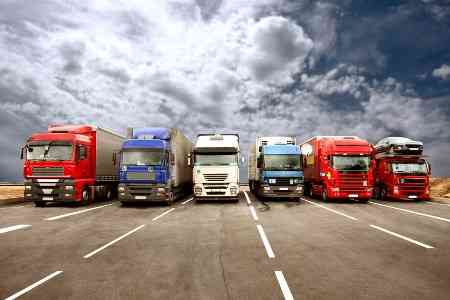
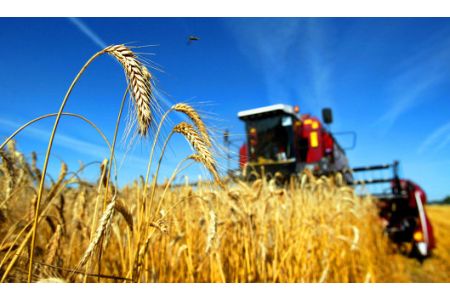
He assured that fruit and vegetable crops exported from Armenia are Global G.A.P. certified, which is recognized as one of the most recognized standards for agricultural producers worldwide. "In the past, it was said that we were joining the EAEU because our fruits and vegetables were only purchased in the Russian Federation. That hasn't been the case for a long time. Our products meet the highest standards," the Minister emphasized. Papoyan clarified that when exporting to the EU, the primary barrier is not quality, but rather high transport costs and customs duties.
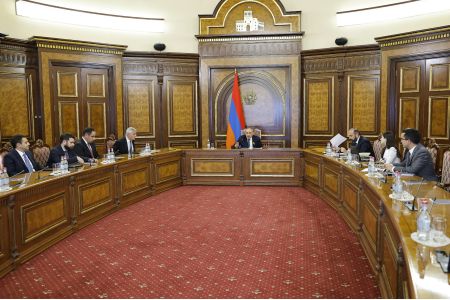
In this regard, he announced that a program to subsidize transportation expenses was presented to the government today. "This is so our producers can offer competitive prices to European consumers," the head of the Ministry of Economy noted.
At the same time, the Minister assured that restrictions on agricultural exports to the Russian Federation would be resolved one by one after the elections. "For the most part, these are routine, technical issues," the head of the department said. Furthermore, Papoyan noted that Armenia has never had such good relations with Russia as it does now, nor has it ever seen such high volumes of mutual trade.
Recall, Rosselkhoznadzor (Federal Service for Veterinary and Phytosanitary Surveillance) imposed temporary restrictions on the import of fresh tomatoes, cucumbers, peppers, green vegetables, and strawberries originating and shipped from Armenia on May 30 due to identified violations. The agency explained that the agricultural products supplied by Armenia did not comply with EAEU and Russian standards.
Also, Rospotrebnadzor suspended the sale of 64.5 million units of Jermuk mineral natural medicinal table carbonated drinking water in the Russian Federation on May 28. It was based on the manufacturer's violations of mandatory technical regulation requirements. Excessive levels of bicarbonate ion, chlorides, and sulfates were detected in the water.
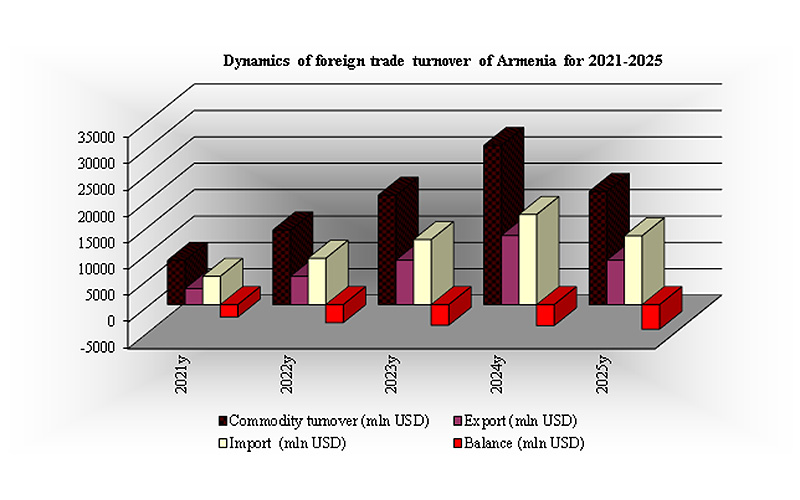
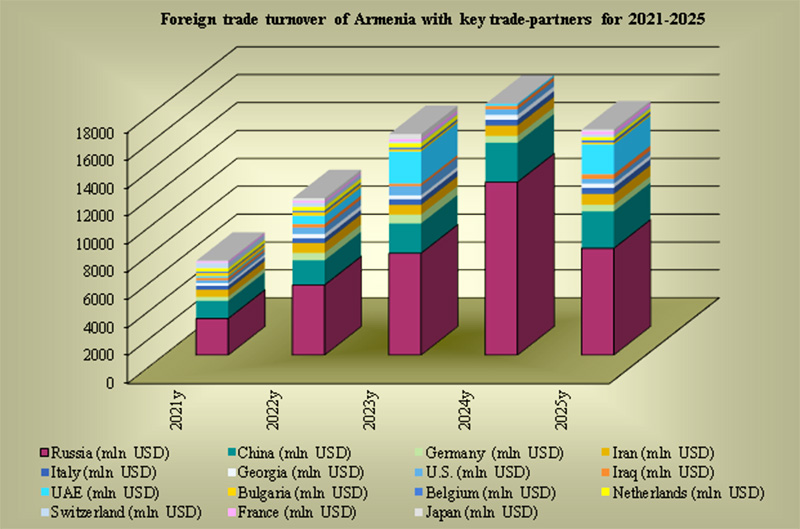
In 2025, Armenia exported 146,500 tons of fresh fruits and vegetables, exceeding the 2024 figure by 1.4%. Of this volume, approximately 90% went to the Russian market. It should be noted that, according to the Statistical Committee of the Republic of Armenia, mutual trade with Russia in 2025 showed a 38.3% decline, amounting to $7.6 billion. Exports declined by 6.9% to $2.9 billion, while imports fell by 49.2% to $4.7 billion.
In the first quarter of this year, volumes decreased by 17.2% to $1.3 billion. Exports amounted to $639.3 million, a 7.1% year-on-year decline, while imports amounted to $690.3 million, a 14.8% year-on-year decline. Meanwhile, trade turnover with EU countries increased by 7.2% in 2025, amounting to $2.5 billion (or 11.7% of total trade). Export deliveries increased by 9% to $666.8 million, against the backdrop of an increase in imports by 6.5% to $1.8 billion. In Q1 2026, mutual trade with EU countries increased by 54.3%, amounting to $763.2 million. At the same time, exports demonstrated growth of 89.8% to $248.7 million, against the backdrop of an increase in imports by 41.5% to $514.5 million.