


ArmInfo. Armenian authorities will provide financial assistance to companies exporting fresh fruit, bottled grape wine, brandy, and mineral water from the republic. The decision was made at a government meeting on June 11.
As Deputy Minister of Economy Arman Khojoyan noted in his speech, the government previously adopted a financial support program for greenhouse farms affected by export difficulties. The state allocated approximately 2 billion drams to partially compensate for the cost of exported products (tomatoes, peppers, strawberries, and flowers) from June 1 to 30. This measure is aimed at diversifying supply chains and creating new markets. A similar program aimed at supporting the export of fresh fruit, bottled grape wine, brandy, and mineral water is now being proposed.
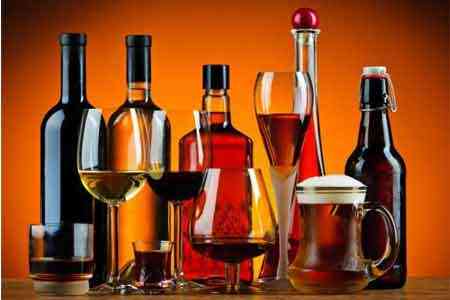
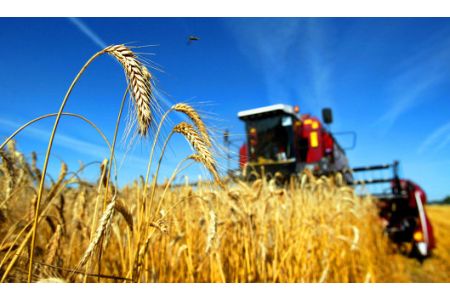
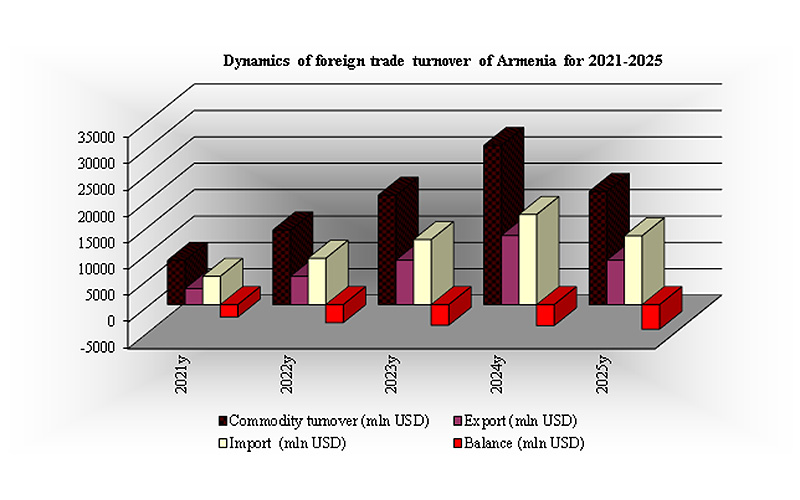
The program proposes compensating exporters' costs. Specifically, compensation will be paid in the amount of 200 drams per kilogram of apricots, 250 drams per kilogram of plums, peaches, and nectarines, 400 drams per kilogram of cherries, 350 drams per liter of bottled grape wine, 830 drams per liter of pure brandy, and 150 drams per liter of bottled mineral water. The compensation process is initiated by the business entity, which submits an application to the Ministry of Economy in electronic or paper form, along with a copy of the completed transit declaration and invoice. It should be noted that the decision was based on restrictions imposed by the Russian Federation on the import of virtually all types of agricultural products, mineral water, alcoholic beverages from certain manufacturers, and flowers. Exports of fresh fruit, bottled grape wine, brandy, and mineral water from the Republic of Armenia in 2025 amounted to 106.1 billion drams. Approximately 80.7% of the total export volume went to the Russian Federation.
An analysis of export dynamics shows that in June 2026, the volume of fruit to be exported under the program will be approximately 11,500 tons, including 7,000 tons of apricots, 2,000 tons of cherries, 2,000 tons of plums, 500 tons of peaches and nectarines, 290,000 liters of bottled grape wine, 800,000 liters of brandy, and 2,000,000 liters of mineral water.
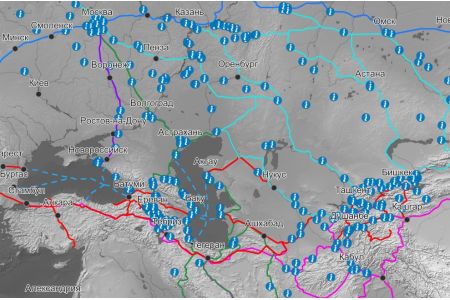
In connection with the presented document, RA Prime Minister Nikol Pashinyan inquired whether this would lead to a shortage of fruits and vegetables in the domestic market, to which Khojoyan pointed out the seasonal nature of the draft decision. In this regard, Pashinyan again drew attention to the issue of product standards for domestic producers. He also pointed to new transportation opportunities associated with the launch of the Akhalkalaki-Kars railway. The Prime Minister recalled that he had held talks on this issue with the leaders of Georgia and Turkey, who confirmed the openness of this route for Armenia. The Prime Minister also expressed hope for the rapid opening of the Armenian-Turkish railway.