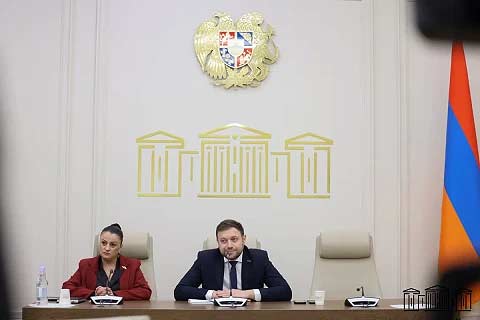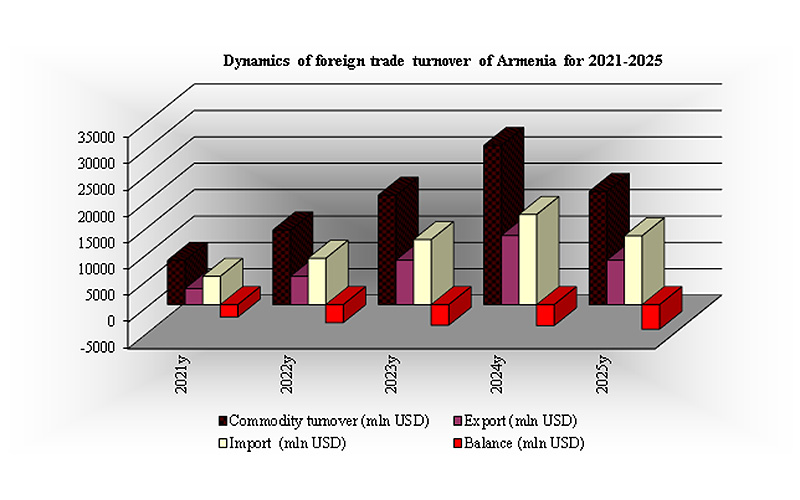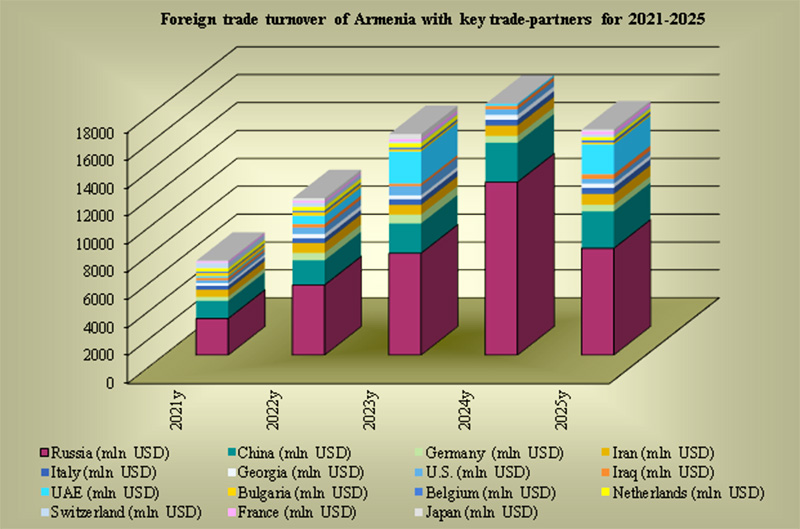



ArmInfo.A meeting chaired by RA Prime Minister Nikol Pashinyan was held to discuss current trends and future steps in the export sector. As reported by the government press service the discussion focused on export volumes of agricultural and other products, as well as measures being taken to diversify export destinations. Participants reviewed export support programs for European Union member states and other countries, alongside the implementation of new tools and mechanisms to assist farming enterprises.
Prime Minister Pashinyan emphasized the necessity of maintaining constant contact with producers to refine export promotion policies, identify existing challenges, and find necessary solutions. In this context, the Prime Minister highlighted the importance of consistently implementing measures aimed at economic diversification and fostering close cooperation between the state and the private sector.
It should be noted that a trade conflict between Russia and Armenia regarding the supply of fruit and vegetable products has escalated into a comprehensive ban. Effective June 12, 2026, Russia imposed an embargo on the import and transit of all regulated agricultural goods (fruits, vegetables, berries, nuts) from Armenia, citing the detection of pests and concerns regarding phytosanitary controls.
The ban encompasses all vegetables (including tomatoes and cucumbers), fruits (apricots, peaches, cherries, grapes), berries, leafy greens, as well as dried fruits and nuts. Rosselkhoznadzor (the Russian Federal Service for Veterinary and Phytosanitary Surveillance) reported systematic violations and the detection of the Khapra beetle—a dangerous pest—in shipments of dried fruits and tomatoes, claiming it poses a threat to Russian agriculture. In response to these developments, Armenia has begun actively seeking new markets for its exports.