

ArmInfo. The Armenian government is proposing a revision of excise tax rates for the upcoming three-year period. On July 2, during an extraordinary session of the National Assembly, the government presented amendments to the Tax Code for a first-reading debate.
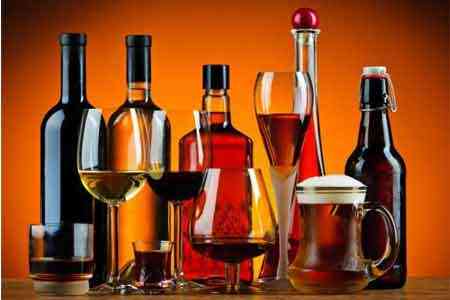
Arman Poghosyan, Deputy Minister of Finance, emphasized that the government aims to maintain a predictable tax environment for manufacturers, importers, and consumers. Since current rates are set to expire at the end of 2026, the proposed amendments establish new rates for the 2027–2029 period. According to Poghosyan, this initiative seeks to balance revenue with broader economic goals. In parallel with the resolution of this tax, three important objectives are being addressed. First of all, excise tax rates are proposed to be reduced for two types of goods: Armenian cognac produced in the country, which will lead to an increase in grape production. The excise tax rate here will be reduced by 6-7 times. Excise tax rates on fruit and pilaf vodka will also be reduced by more than 60 percent. Three years ago, the rate for these products was equal to that of other vodka products.
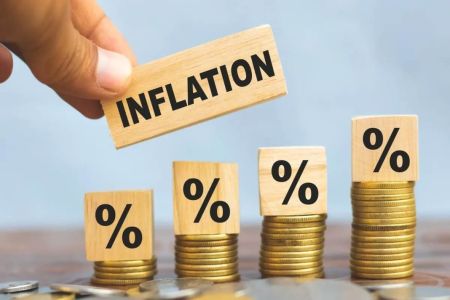
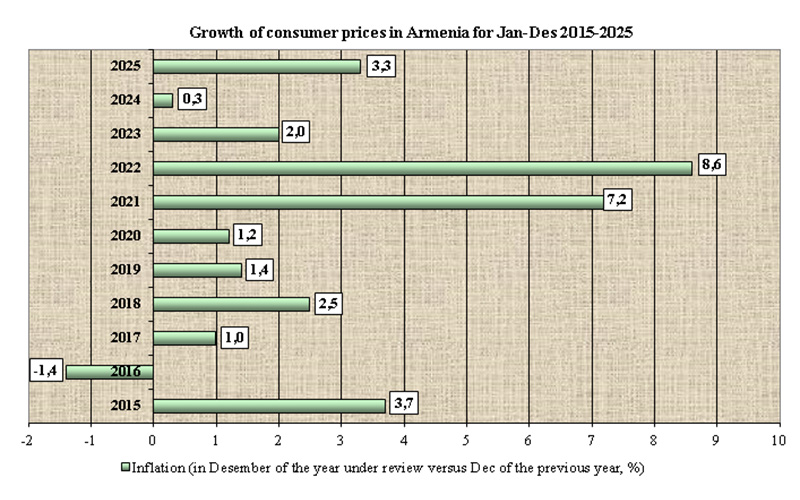
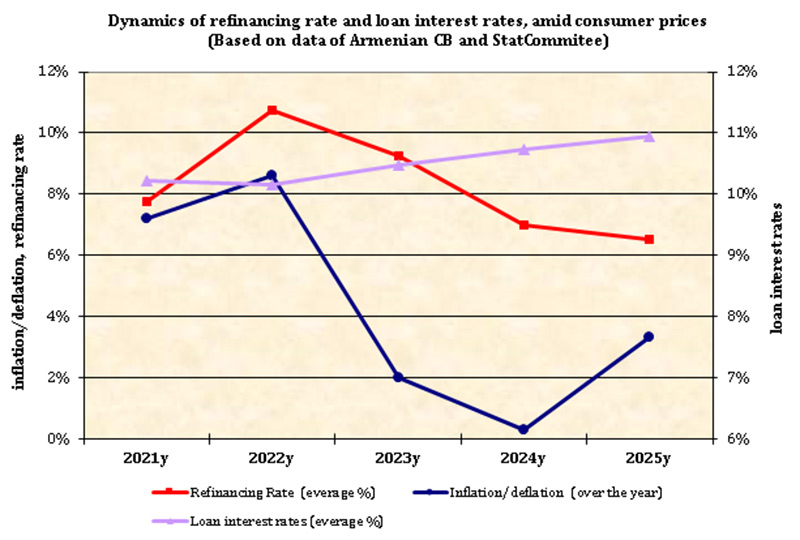
Poghosyan also announced that excise tax rates for other excisable products will increase in line with inflation. While three years ago, the plan was to compensate for excise tax rates at an inflation rate of 8 percent, now the plan is to reduce them to 3 percent. Regarding tobacco products, the deputy minister noted that the income tax rate on them will be in line with the similar rate within the Eurasian Economic Union.
It should be noted that, according to the justification for the draft law, it is planned to increase the excise tax on tobacco products by 7% annually over three years, on heated tobacco by 30% annually, on electronic cigarettes by 100% in the first year, then by 25% and 20% in the following two years, and on hookah tobacco by 40% in the first year and then by 30% annually for two years. It is also proposed to impose an excise tax on products with the TN VED code 2404 91 000, setting the rate at 2,800 drams in the first year, with subsequent annual increases of 30% over two years. To stimulate the production of fruit vodka, mitigate high production costs due to the cost of raw materials, and develop the sector, the current excise tax rate on fruit vodka will be reduced by 33 percent, and the excise tax rate for brandy production will be set at 4,000 drams per liter, regardless of age.
The excise tax rate on gasoline and diesel fuel will be increased by 3 percent annually. The provision for compensation of excise tax amounts will be abolished, and in this case, support will be provided to business entities as needed within the budgetary framework.