


ArmInfo. Artificial intelligence is developing at a breakneck speed, outpacing existing regulatory mechanisms. This was stated by UN Secretary-General Antonio Guterres at the official opening of the high-level Global Dialogue for AI Governance.
He emphasized that the main challenge today is the choice between consciously managing AI and its uncontrolled evolution, citing the technology's ability to act autonomously, the spread of disinformation, and the excessive concentration of resources as key risks.
To address these challenges, the UN Secretary-General proposed four key priorities. Specifically, he called for the adoption of a "Child Safety Commitment," which would mandate system security testing, establish a zero-tolerance policy for the dissemination of images of child abuse, and ensure children have access to quality human support in crisis situations.
Guterres also emphasized the need to adhere to "red lines," noting that the final decision-making power in justice, healthcare, and other areas of high responsibility must remain with individuals.
Concluding his speech, he stated that the current generation is likely the last one capable of defining the rules of coexistence between humans and machines. He called for a future of AI that is created by humanity, in collaboration with humanity, and serves the benefit of all humanity.
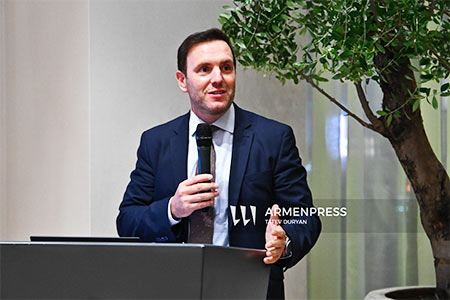
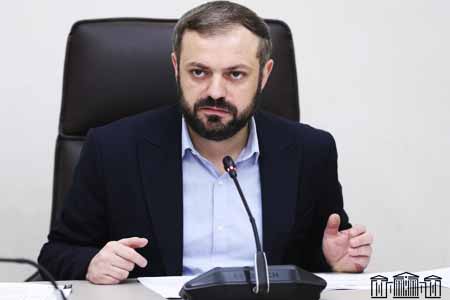
Gevorg Mantashyan, Deputy Minister of High-Tech Industry of Armenia, also spoke at the plenary session of the governmental segment of the high-level Global Dialogue for AI Governance. He focused on Armenia's strategic priorities in the development, regulation, and application of artificial intelligence.
The Deputy Minister emphasized the importance of responsible AI governance, noting that technological innovations must be accompanied by strengthened cybersecurity, data protection, and be based on international human rights standards and human content control.
Gevorg Mantashyan highlighted key areas for the industry's development, citing investments in infrastructure, human capital development, and strengthening responsible international partnerships.
He also presented several major strategic projects being implemented in Armenia to foster a comprehensive artificial intelligence ecosystem. Specifically, Mantashyan highlighted one of the Ministry of High-Tech Industry's strategic initiatives, the "Virtual AI Institute," which provides developers, the technology community, and scientists with a platform with access to advanced cloud infrastructure and computing resources for collaboration and the creation of AI solutions.
According to the Deputy Minister, the vision of transforming Armenia into a "Garden of AI Factories" is already being realized with the launch of the Eleveight AI and Firebird AI projects. Mantashyan emphasized that effectively managing the future of AI requires close international cooperation and inclusive dialogue between the government, academia, and the private sector.
In conclusion, he reaffirmed Armenia's readiness to work closely with international partners for the sake of sustainable development, global security, and universal well-being.
The Deputy Minister of High-Tech Industry of Armenia also participated in the High-Level Dialogue at the AI for Good 2026 Global Summit and the World Summit on the Information Society (WSIS) Forum 2026. These global platforms, held under the auspices of the UN, bring together representatives of government agencies, international organizations, the private sector, academia, and civil society. The events are taking place from July 6 to 8 in Geneva, Switzerland.