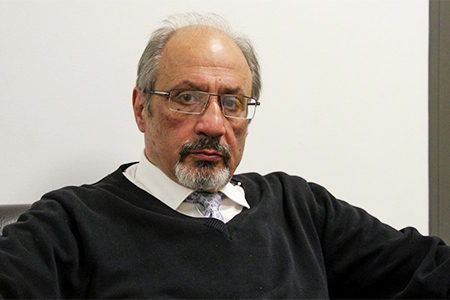


ArmInfo. The economic consequences of the state privatization of businessman Gagik Tsarukyan's Araratcement plant will clearly not be limited to the fate of one enterprise and will negatively impact the country's investment climate, according to Vahe Davtyan, Senior Researcher at the Caucasus Studies Sector of the Institute of Geophysical Analysis and Surface Materials of the Russian Academy of Sciences and Doctor of Political Sciences.
According to him, Armenian Prime Minister Nikol Pashinyan's announcement of the upcoming transfer of the Araratcement plant to state ownership continues a process that began back in May, when the authorities announced their intention to nationalize the plant and appoint an interim manager. In June, the Prosecutor General's Office filed a lawsuit, citing violations committed during the plant's privatization.
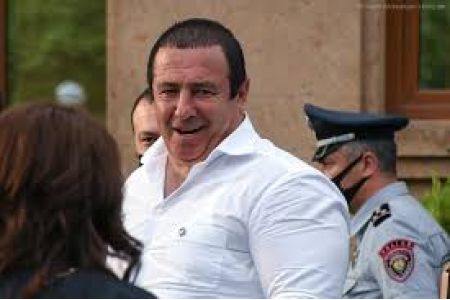
"The political backdrop deserves special attention. Two days before the Prime Minister's announcement, the court arrested Gagik Tsarukyan, the owner of Ararat Cement, president of Multi Group, and leader of the Prosperous Armenia Party. Investigators accuse him of large-scale fraud and money laundering. Tsarukyan denies the charges, calling them politically motivated. This is one of the country's key industrial enterprises," the expert recalled.
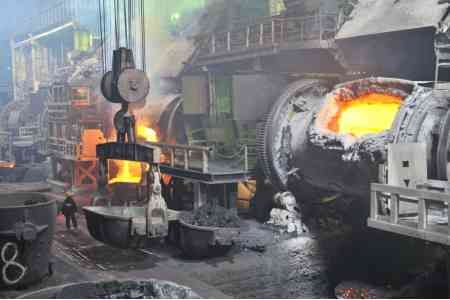
According to him, Ararat Cement, founded in 1927, is one of two Portland cement producers in Armenia. Davtyan added that the plant was state-owned until 2002, after which it was privatized and incorporated into Multi Group. The expert noted that after privatization, the enterprise underwent extensive modernization: significant investments were made, production facilities were upgraded, modern technologies and international quality standards were introduced.
"Today, the plant remains one of the main suppliers of cement for Armenia's construction sector and infrastructure projects. The economic consequences of this story are clearly not limited to the fate of one enterprise. Revisiting the privatization results after more than twenty years raises questions about the security of private property and the stability of the institutional environment. Even if the state acts within the law, such decisions can negatively impact the country's investment climate," Davtyan asserted.
Furthermore, the expert believes that expanding state control over large industrial assets is at odds with Yerevan's stated policy of economic liberalization and reduces the predictability of market rules. "As a result, both foreign and domestic investors may become increasingly cautious when implementing new projects," he concluded.
On July 6, law enforcement officers conducted searches at the home of party leader Gagik Tsarukyan, as well as at more than 70 other addresses, including companies belonging to the Multi Group concern. Following the completion of the investigation, Tsarukyan was detained and taken to the Investigative Committee of Armenia. He was charged with alleged fraud and money laundering on an especially large scale. On the same day, a court ordered Tsarukyan's pretrial detention for two months. Tsarukyan denies the charges, claiming that the ongoing events are politically motivated pressure from the ruling authorities.
In the parliamentary elections on June 7, 2026, the Prosperous Armenia Party, led by Gagik Tsarukyan, received 3.9893% of the vote. According to the official version, the political force was approximately 150 votes short of entering parliament, where the threshold for parties is set at 4%. The opposition, however, believes that the Prosperous Armenia Party entered parliament, but that due to the illegal actions of the head of the Central Election Commission, the party's parliamentary votes were stolen.