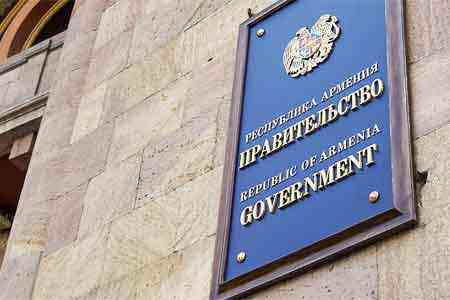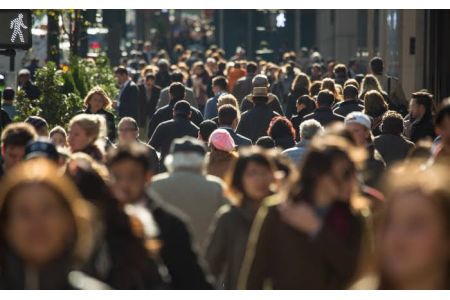


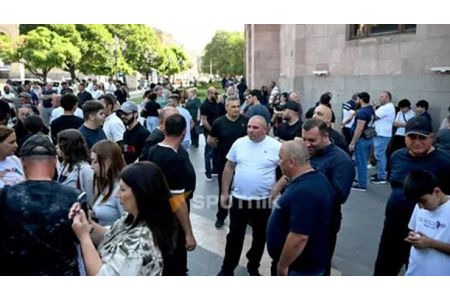
ArmInfo. Armenian fish farmers are holding a protest in front of the Armenian government building, demanding that the government implement support programs amid the suspension of fish exports to the Russian market.
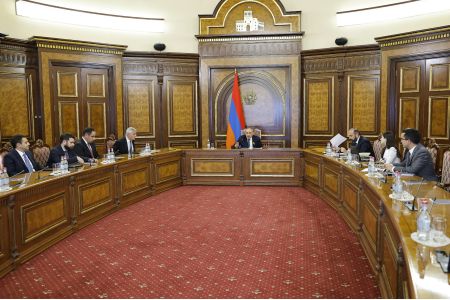
Protesters stated that they are looking forward to a meeting with the Deputy Prime Minister of Armenia to present their demands and receive answers to their concerns. However, the protesters emphasized that they do not want to meet with Armenian Economy Minister Gevorg Papoyan, as previous negotiations have failed to resolve the issue.
They noted that they expect the government to implement a support program for the fish farming industry. One protester recalled that the government has previously implemented two programs, but, according to him, they have proven ineffective. The protesters believe this was an attempt to create the impression among the public that the problem has been solved. However, they believe that neither organizing exports of these products to Europe nor providing subsidies for their export are capable of resolving the issue. "We've already said this and we'll say it again - the European market is still inaccessible to us. Moreover, the volumes of products we have today cannot be sold immediately on the European market. We're talking about 15 tons of live fish. Furthermore, we must consider the products stored in cold storage after returning from the Russian border. Exports there have been closed since May 15," noted one of the protesters.
He recalled that the entry of these products into the Russian market was the result of 30 years of work. "And if the annual export volume initially amounted to approximately 60 tons, today it has reached 13,000 tons. And now, with one decision, they want to redirect this volume to the European market in just one or two months. This is simply impossible. We are not against exports to Europe, but we must remember that we are dealing with live fish, the maintenance of which requires additional resources. The Minister of Economy promised to develop support programs for their maintenance, but in two months, nothing has been done," the protester added.
Reacting to Papoyan's statements, one of the protesters explained that the reference was to the government's decision of July 17, which merely approved the procedure for exporting fish products to the European market. However, he argued, this is not enough. "Because producers still need to explore and find markets. They can't simply come to Europe.
Entering new markets requires extensive work-they need to be explored," the protester explained.
The protesters also expressed dissatisfaction with the fact that the Ministry of Economy met with only one economic entity, after which they claimed to have discussed the problems of the entire industry. They believe such issues cannot be discussed with just one representative of the industry. They are convinced that there is currently no clear mechanism for resolving the current situation. As a result, they say, they find themselves on the brink of a serious financial crisis, but in response they are hearing statements that, in their opinion, only delay the solution. "It seems they don't know what they're doing. It's impossible to go three months without finding a solution to this problem. No other country has this. We demand support programs that will allow the industry to continue to exist until new markets are explored and developed," the protesters stated.
It's worth noting that Armenian fish farmers have been permitted to export fish and fish products to EU markets since 2025, although the list of requirements for producers was only approved at the 2026 Armenian government meeting.
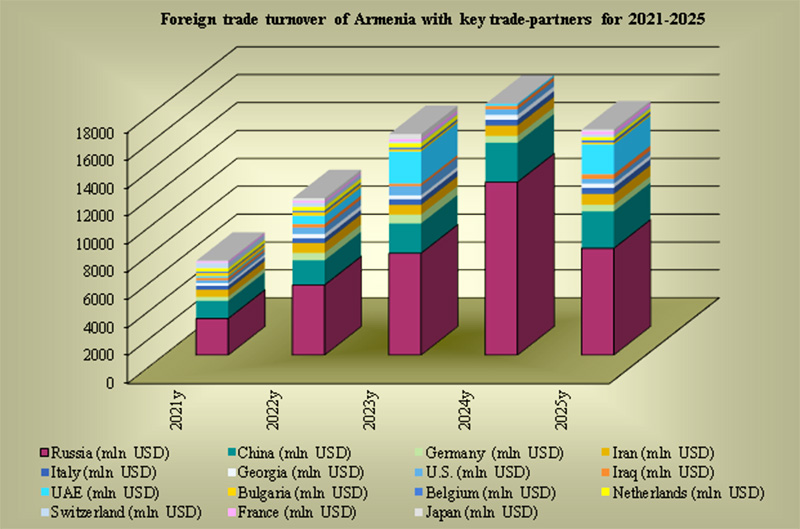
Fish farmers do not yet see the EU as an alternative to the EAEU market. Over 80% of fish and fish product exports have been going to Russia for over 20 years. Since mid-May, Russia has suspended fish imports from Armenia, creating serious problems for the industry. As a reminder, when introducing the relevant bill, Armenian Minister of Economy Gevorg Papoyan stated that industry representatives must first register with the TRASEC (Trade Audit and Expertise System of the EU) system and then contact the local authorized body, the Food Safety Inspectorate, which, after conducting the appropriate assessments, will submit an application to the EU for a special electronic code allowing Armenian fish farmers to enter EU markets. However, fish farmers claim that not a single ton of cargo has yet been shipped to the EU.