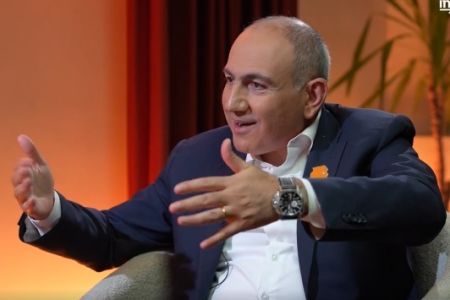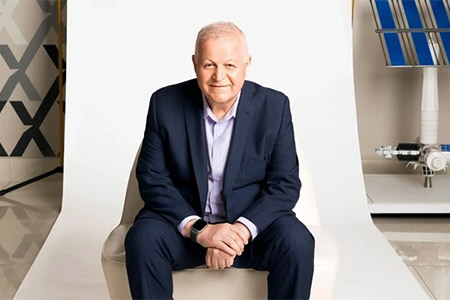



ArmInfo. As part of the Armenian government's program to facilitate the entry of Armenian enterprises into European markets, a working meeting was held at the Honorary Consulate of the Republic in Venice on July 20. The event was attended by Deputy Minister of Economy of Armenia Anushik Avetyan, Ambassador of Armenia to Italy Vladimir Karapetyan, Director of the Investment Support Fund Gohar Abajyan, President of the Venice Union of Businessmen Marco Zecchinelli, CEO Nicola Zanon, and members of the board.
According to the press service of the Armenian Embassy in Italy, during the meeting, prospects for expanding Armenian-Italian economic cooperation were discussed, and ideas and experiences on promoting Armenian products in European markets in various sectors were exchanged, as well as on strengthening trade and economic ties between the two countries and creating new business opportunities.
The delegation was then received by the Prefect of Venice, Darko Pellos. During the meeting, the importance of further developing economic and institutional cooperation between Armenia and Italy was emphasized.
As a reminder, the Russian authorized bodies - Rospotrebnadzor and Rosselkhoznadzor - imposed restrictions on the export of agricultural products and flowers from Armenia to markets in the Eurasian Economic Union (EAEU). The agencies' official statements stated that the reason for these restrictions was the identified violations. Armenia traditionally exported approximately 90% of its fresh agricultural produce to the Russian market.
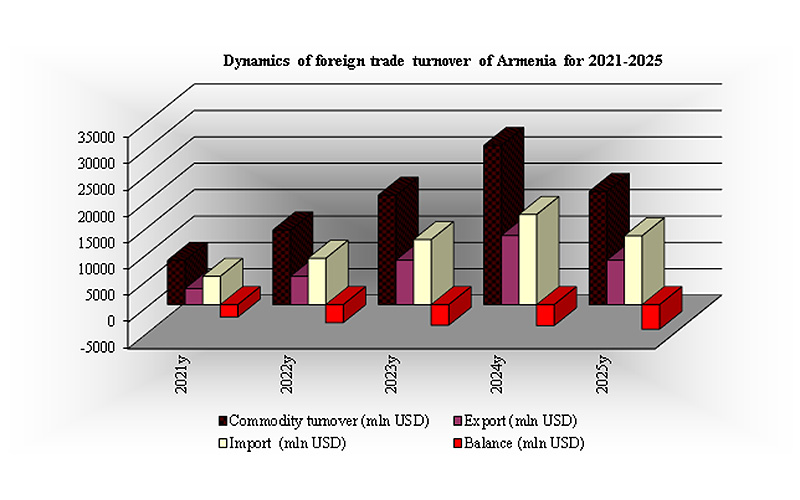
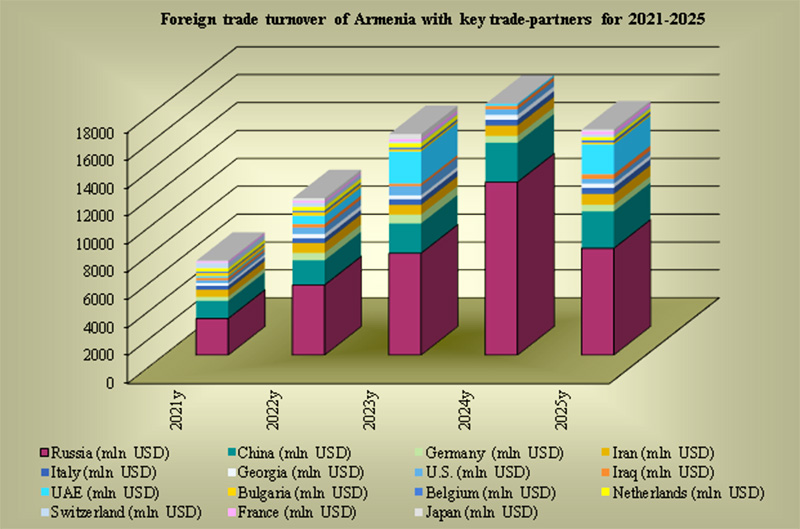
In response to the current situation and the difficulties facing Armenian producers, the Armenian government has developed several programs to support exports to European markets, including compensation for transportation costs and customs duties. It should be noted that, according to the RA Statistical Committee, foreign trade turnover between Armenia and the EU in January-May 2026 increased by 45.2%, amounting to $1.355 billion. At the same time, exports increased by 92.7% to $460.6 million, against the backdrop of import growth of 28.9% to $894.5 million.