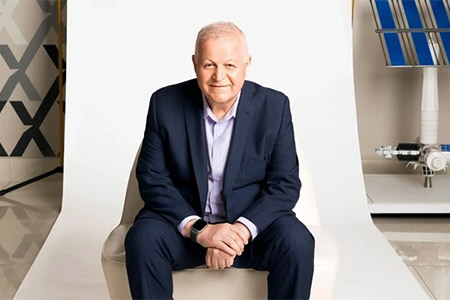



ArmInfo. Narek Karapetyan, a member of the National Assembly of the Republic of Armenia from the "Strong Armenia" opposition bloc, proposes applying Indian experience in energy storage.
On his Facebook page, the politician noted that solar power plants are the future of energy independence and reduced dependence on imported gas and gasoline. "However, there is a well-known problem: solar power plants become useless at night, and this is the main obstacle to completely replacing hydrocarbons with solar energy. A major technological breakthrough has occurred in recent months. They have begun producing batteries that accumulate solar energy and distribute it to the population in the evenings, using a resource that is very common in our country - salt," Narek Karapetyan emphasized. He added that sodium or salt batteries are very inexpensive and efficient and could solve the problem of energy independence for the Armenian state. The Indian company Reliance has invested $9 billion in this project and will be able to begin addressing this issue by early next year. "The oil era is coming to an end, the Azerbaijan era is coming to an end. All we needed to do was find large companies that would invest in developing this sector. And our head of state is nationalizing a cement plant and a gym built 40 years ago. Fortunately, he hasn't nationalized kebab shops yet," the opposition MP noted.
It's worth noting that sodium batteries are modern devices that operate on the same principle as lithium-ion batteries, but instead of rare lithium, they use readily available sodium, found in common salt. They are a promising replacement for classic lithium for electric vehicles and energy storage systems. Their advantages include being relatively inexpensive to produce, performing well in cold conditions, and being more environmentally friendly and safer than their lithium-based counterparts. However, this innovation also has its drawbacks. In particular, sodium batteries have a slightly lower energy density than lithium-ion batteries and are still in the process of being actively adopted. They are typically used in electric transport, industrial, and home energy storage.
It should also be noted that the Armenian government planned to increase the share of solar energy in the country's energy mix from 0.3% to 15% by 2030, but it is already clear that this target will be exceeded. By 2026 alone, the country has generated approximately 800 MW of solar energy. The country has significant potential for developing this type of energy: the average annual solar energy flux per square meter of horizontal surface is 1,720 kWh/m2, and a quarter of the republic's territory has solar energy resources with an intensity of at least 1,850 kWh/m2 per year. However, the lack of storage plants is hindering the development of this sector of the country's energy sector.