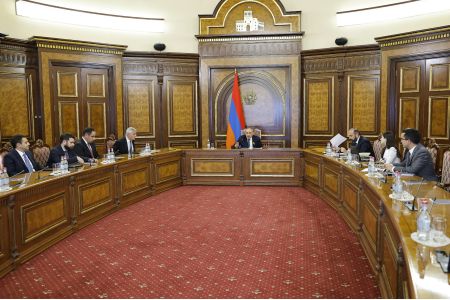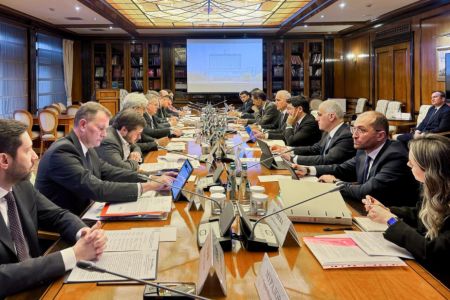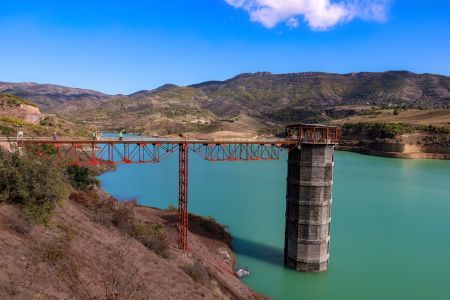


ArmInfo. AMD 650 million will be allocated to complete the construction project of the Vedi reservoir in Armenia. The decision was approved at a meeting of the RA government on July 30.
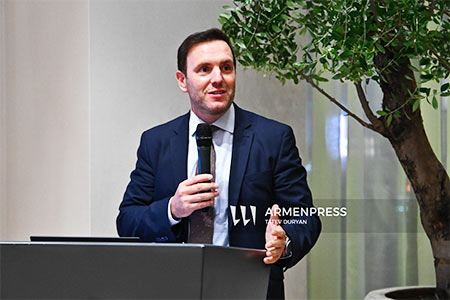
Presenting the document, RA Minister of Territorial Administration and Infrastructure David Khudatyan recalled that the project is being implemented with the financial assistance of the French Development Agency. Out of the indicated amount of 650 million drams, a significant part - about 468 million drams - will be paid to the contractor as a refund of the retained deposit, while another 117 million drams will be disbursed to the consulting company.
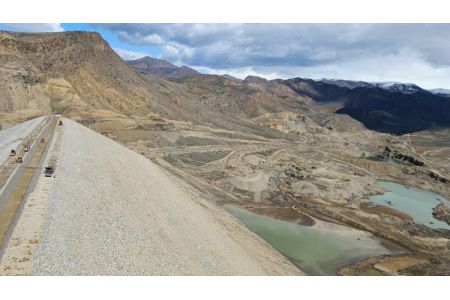
The minister noted that the construction of the reservoir is fully completed, with 12.5 million cubic meters already filled out of its design capacity of 30 million cubic meters. Testing work on auxiliary systems has also been carried out.
Congratulating those present on the completion of the work, RA Prime Minister Nikol Pashinyan noted that a large-scale project of this kind has been carried out for the first time in the history of the Third Republic. In the past, reservoirs featuring complex engineering solutions were built in Armenia, but a very long time has passed since then, and much of the expertise regarding such infrastructure projects has been forgotten. When trying to recall this forgotten knowledge, it turns out to be outdated, making it necessary to apply new approaches—something the construction of the Vedi Reservoir clearly demonstrated.
Recall, the final completion of the work is scheduled for September of this year. The total cost of the program amounted to 90 million euros, and the capacity of the reservoir is 29 million cubic meters. The reservoir was built on the right bank of the Vedi River. Its operation will ensure uninterrupted and reliable irrigation for approximately 3,220 hectares of land across 11 settlements in the Ararat Valley. Transitioning from mechanical to gravity-fed irrigation will save about 19 million kWh of electricity annually. Irrigation network losses are expected to decrease by 20-25%. The project was implemented through co-funding by the Armenian government and the French Development Agency.