

ArmInfo. According to the World Bank (WB) forecast, the poverty level in Armenia, calculated on the basis of purchasing power parity (PPP) at $8.3 per person per day (2021 PPP), will continue to decline, reaching 43% by 2028. For 2026, the country's poverty level is projected to drop to 44.9% (down from an estimated 46.4% in 2025, against 47.4% in 2024) and further to 44% in 2027. This is noted in the July WB report "Armenia's Economic Pulse: Pursuing Poverty-Reducing Growth through More Impactful Fiscal Policy"
However, as noted in this economic overview of the country, increased uncertainty, moderate growth in agriculture, a key employment sector for the poor, and possible further increases in inflation that could slightly reduce real incomes pose downward risks to the pace of poverty reduction.
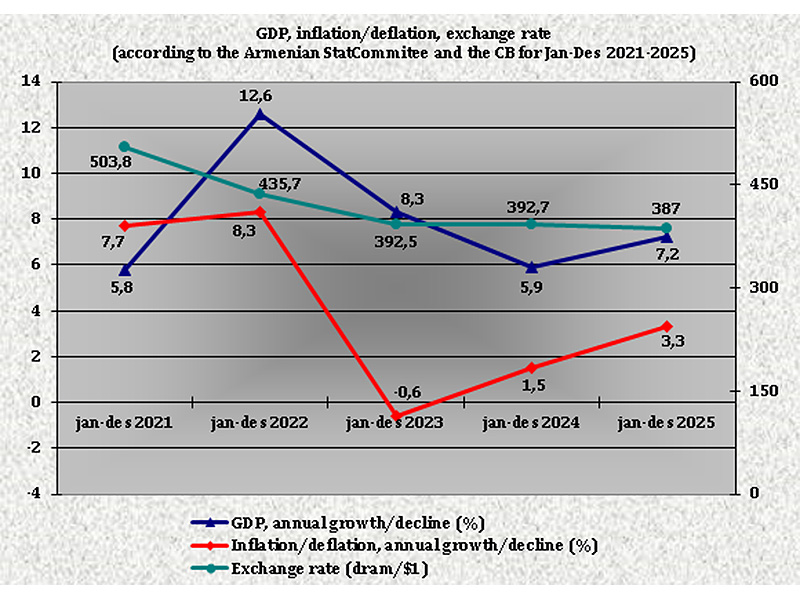
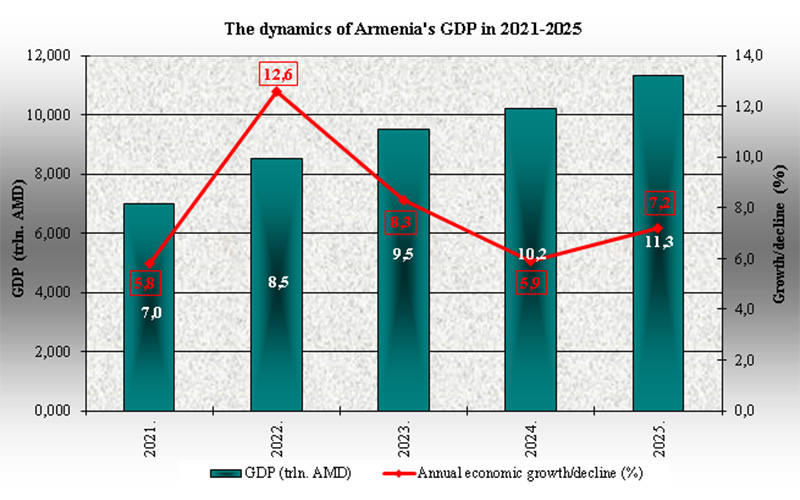
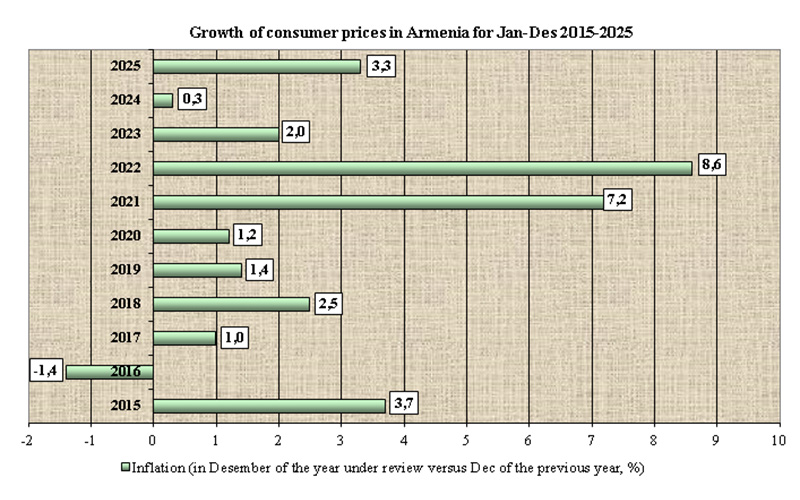
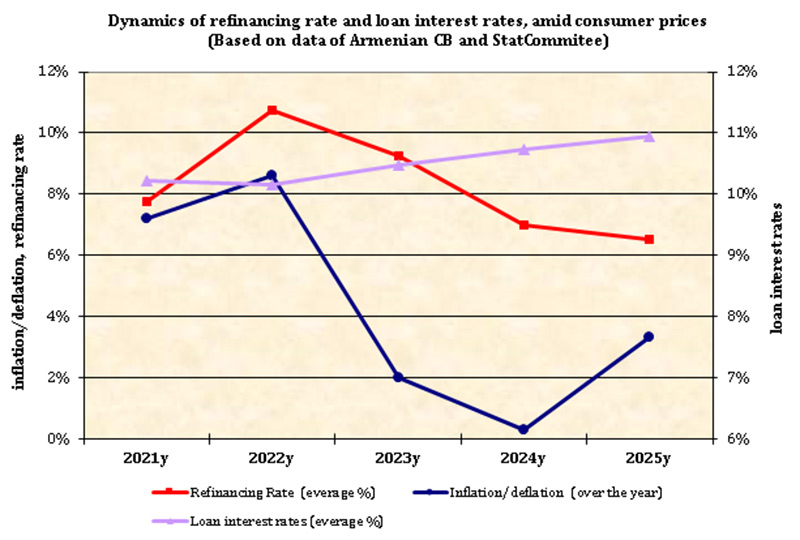
Thus, the World Bank expects that the employment level in Armenia, after increasing in 2025 from 51% to 56.1%, will decrease in 2026 to 53.4% of the working-age population (aged 15-74 years), and will remain at this level in 2027-2028. According to the World Bank forecast, economic growth in Armenia will slow down in 2026-2028 from 5.3% to 5% (from actual 7.1% in 2025). Inflation, after increase in 2026 to 4.6% (from 3.3% in 2025), will decrease in 2027 to 3.8% and further in 2028 to 3.3% (against the target of 3%, +/- 1 percentage point).
Recall, previously the poverty level for countries with upper middle incomes was calculated by the World Bank on the basis of purchasing power parity of $6.85 per person per day (PPP from 2017). As of summer 2025, as part of a planned update, this standard was replaced by a new line of $8.3 per day (based on 2021 purchasing power parity). In fact, as of June 2025, the World Bank officially moved to a new core standard adjusted for global inflation. At the same time, the thresholds for the international poverty level were also updated - from the previous $2.15 per day per person (based on 2017 PPP) to the current $3 per day (based on 2021 PPP), and the poverty level for lower middle-income countries - from the previous $3.65 per day (based on 2017 PPP) to the updated $4.2 per day (based on 2021 PPP).
It should be noted that the World Bank in its June flagship report "Global Economic Prospects" also predicted a slowdown in Armenia's GDP growth to 5.3% in 2026, 5.1% in 2027 and 5% in 2028. At the same time, the World Bank predicted that inflation would rise in 2026 under the influence of higher energy and food prices, after which it would slow down in 2027-2028 as price pressure on commodity markets weakened. "In the Europe and Central Asia (ECA) region, the inflation pass-through effect of energy prices will be more pronounced in energy importing countries with a high share of energy components in the consumer price index, such as Armenia, Georgia and Serbia. Against this backdrop, monetary policy is expected to remain tight as inflationary pressures persist. Domestic demand will remain the main driver of growth in the ECA region, although it is likely to be subdued in 2026 higher energy prices, which increase inflation and reduce real incomes of the population, as well as tighter financial conditions, as price pressures on the commodity market weaken, a gradual recovery will be observed. Net exports will continue to have a restraining effect on economic growth against the backdrop of a slowdown in activity in the eurozone, after which it will begin to gradually strengthen in 2027-2028 as it recovers," the World Bank predicted in its June report.