


Arminfo. The Central Bank of Armenia and the National Bank of Georgia signed a memorandum of understanding on cooperation in the financial sector. The goal is to strengthen the stability of the financial systems of the two countries, increase the transparency and resilience of the financial sector, and protect the legitimate interests of depositors and investors. This is stated in a message from the Central Bank of the Republic of Armenia.
The memorandum defines the procedure for exchanging information between the parties in the area of financial sector regulation and supervision, as well as cooperation in the following areas: Licensing and supervision of financial organizations; Market conduct and consumer protection; Competition and crisis management; Payment systems and the securities market; Provision of crypto-asset services and financial technologies (fintech); Monetary policy; and other areas.
The memorandum lays a solid foundation for the effective exchange of information and experience, as well as the implementation of joint programs between the central banks of the two countries.
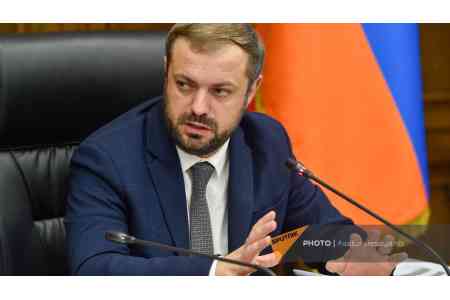
It should be noted that on September 18 in Tbilisi, a delegation of the Central Bank of the Republic of Armenia, headed by Chairman Martin Galstyan, took part in a Roundtable of the heads of regional central banks organized by the National Bank of Georgia and J.P. Morgan.
The session titled "Regional Macroeconomic Environment" brought together the heads and representatives of central banks to discuss key global and regional macroeconomic processes. The main topics of the panel discussion were: The neutral interest rate; The exchange rate as a shock absorber or anchor; Monetary policy amid large capital flows; Geopolitical risks and supply shocks.
During the discussions, Galstyan addressed the uncertainty surrounding the neutral interest rate and presented the Central Bank of the Republic of Armenia’s approach to prudent risk management to ensure price stability, which involves considering a range of possible scenarios and paying particular attention to managing risks with the most costly consequences. He also emphasized the important role of a flexible exchange rate in Armenia as a tool for absorbing external shocks. In addition, the head of the Central Bank of the Republic of Armenia pointed to the growing importance of capital flows, noting the need to distinguish between fundamental and short-term cyclical flows, as well as the targeted use of monetary, foreign exchange and macroprudential instruments.