


ArmInfo. The Central Bank of Armenia presented the results of the "Armenia Climate Risk Maps" project, implemented with the support of the Asian Development Bank (ADB). The project's goal is to develop a unified, data-driven, and practical toolkit for assessing physical climate risks in Armenia. As noted in a statement by the Central Bank of Armenia, the presentation took place yesterday.
These settlement-level maps represent climate and natural hazards specific to various areas of the country, creating a common information base for their preliminary assessment. The maps include layers related to drought, heat, floods, mudflows, landslides, hail, frost, and water availability. They can be used to examine individual risks, compare settlements, and highlight areas requiring more detailed study. The developed maps allow for the assessment of the impact of climate hazards on various communities and territories, creating an information base for risk management, public and territorial planning, investment decisions, and enhancing climate resilience.
The tool is primarily intended for financial institutions: by comparing map data with client, asset, and portfolio information, it is possible to better understand physical climate risks in lending, collateral valuation, insurance, and portfolio management processes, as well as consider possible adaptation measures.
The maps can also be used for territorial and infrastructure planning, agriculture, water resource management, and research. They provide a preliminary overview and do not replace on-site research and professional assessment of a specific property or project. The maps can be found at https://cmaps.cba.am/#8/40.26276/44.50012 .
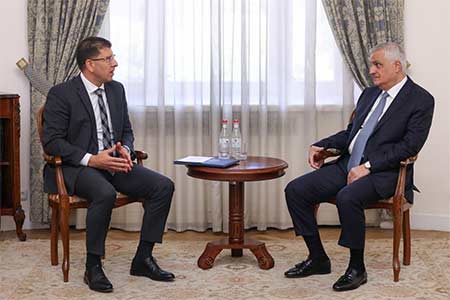
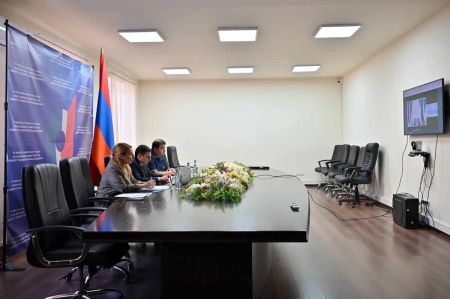
At the event, Lyaziza Sabirova, Head of the ADB Permanent Mission to Armenia, and Artak Manukyan, Member of the Central Bank of Armenia's Board, delivered welcoming speeches.
Manukyan noted that climate risks are gradually transforming into economic risks: they are no longer abstract, but are already visible in the country's realities in various manifestations and are becoming measurable indicators. He stated that the presented map allows for the use of data not only in credit decision-making but also in the development of preventive, social, and financial programs. He also emphasized that government agencies can incorporate this data into their decision-making processes to assess and prevent future risks.
"Climate risks have a significant impact on the economy and financial system. This tool will help better assess these risks and make decisions based on clear and reliable data. The Asian Development Bank will continue to support Armenia in strengthening the resilience of the financial system and developing its capacity to effectively respond to climate risks," noted ADB Resident Mission Head in Armenia Lyaziza Sabirova.
The main results of the project were presented by Ashot Petrosyan, Head of the Financial System Center at the Central Bank of Armenia, and Marine Nikoghosyan, ADB representative. The methodology for developing the maps, the data used, and the sources were also presented.
"This tool, developed with ADB technical support, combines climate and water risk data on a single platform, helping to better assess risks and make more informed decisions," explained Marine Nikoghosyan, Program Manager at ADB's Armenia Country Office.