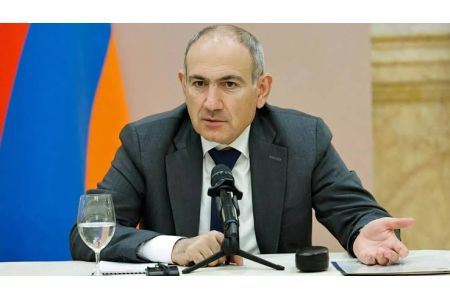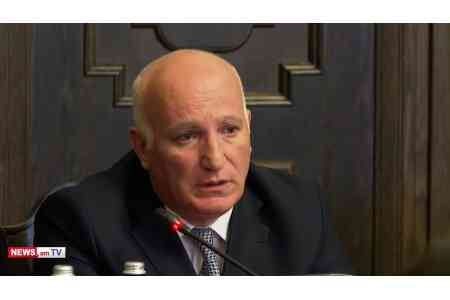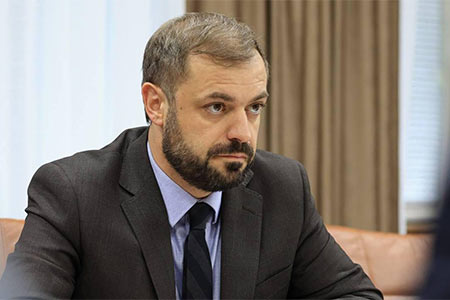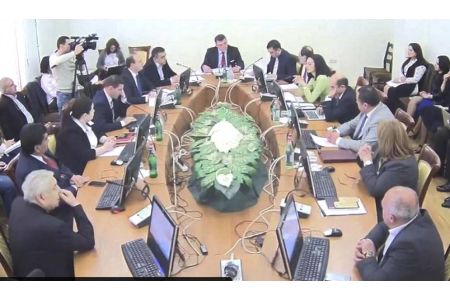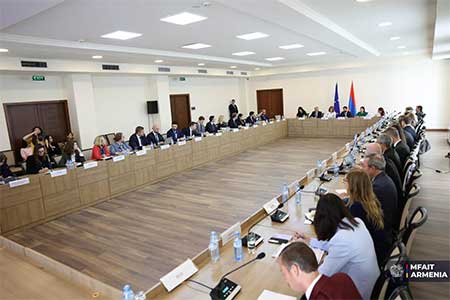


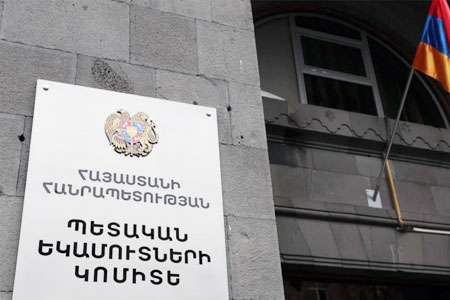
ArmInfo. A regular meeting of the Public Council, chaired by Eduard Hakobyan, Chairman of the State Revenue Committee of the Republic of Armenia, was held on October 1.
According to the agency's press service, the Public Council was established to discuss draft customs legislation. The meeting was attended by members of the Public Council, the Deputy Chairman of the State Revenue Committee, and heads of structural divisions. The Committee Chairman emphasized the importance of continuously analyzing the indicators recorded on the dialogue platform, submitting substantiated proposals, and coordinating legislative initiatives with Council members. Changes to the tax system, particularly the administrative system, were also discussed, with an emphasis on the proposals and comments of Council members and taxpayers aimed at these changes.
During the meeting, state budget revenues for January-August 2026 were discussed in the context of the impact of administrative activities on collected revenues. Specifically, 2 trillion 27.1 billion drams in taxes and duties were collected from January to August, an increase of 257.8 billion drams, or approximately 14.6%, compared to the same period in 2025. During the same period, 218.4 billion drams were refunded to taxpayers, an increase of 24.6 billion drams, or 12.7%, compared to January to August of the previous year. Significant growth was recorded for almost all types of taxes compared to the same period of the previous year: VAT, income tax, profit tax, excise tax, environmental tax, and nature use fee. [The text appears to be incomplete and likely omitted.] Among the sectors that generated the main revenues, wholesale and retail trade, mining, construction, and manufacturing were highlighted. Emphasizing ongoing efforts to digitalize governance, an increase in the share of contactless administration was noted. At the same time, based on the results of audits and analysis, the total amount presented to taxpayers in the reporting period amounted to 126.7 billion drams, which is approximately 33.1 billion drams or 35% more than in the same period of the previous year. The agenda also included the presentation and discussion of draft laws aimed at regulating issues related to the customs sector. In this context, issues of applying customs administration decisions on the classification of goods, expanding the cases of storage outside of temporary storage facilities, applying customs procedures and obtaining permits related to "refusal in favor of the state", "customs warehouse" and processing, as well as types of registration activities related to customs issues and clarification of customs declarations were addressed. At the same time, issues related to the protection of intellectual property rights initiated by customs authorities, liability for inaccuracies in customs declarations, and the assignment of authorized economic operator status were discussed.
There was also a lively discussion of a proposal submitted by a representative of a non-governmental organization – a member of the Council – to suspend an administrative act adopted based on the results of a previous inspection or re-inspection, as well as other issues and constructive proposals put forward by other Council members.
The importance of cooperation in discussing the proposals presented and resolving existing problems in the context of the continuous improvement of legislative norms in the tax and customs spheres was emphasized within the framework of dialogue between the state and society. -