

ArmInfo. Rosatom is ready to use all its available technologies and competencies to implement the project to decontaminate the site of the former Nairit chemical plant in Armenia. This was reported to TASS by the Federal Environmental Operator (FEO, a Rosatom enterprise).
"Rosatom has all the technologies and competencies to eliminate the most complex sites of accumulated environmental damage—potential environmental disasters in the future—and is ready to apply them to a wide range of tasks, including the project to render the site of the former Nairit chemical plant in Armenia safe," the FEO said.
It was also emphasized that similar projects, in particular, have already been implemented at the industrial site of the former Usolye-Khimprom. In Usolye-Sibirskoye (Irkutsk Region).
"The issue of Rosatom's possible participation in resolving the problems of the former Nairit chemical plant has been discussed since 2022. The facility is a highly complex industrial site with accumulated chemicals and waste, located near residential areas. Complex facilities require comprehensive work: site survey, technology development, safe handling of hazardous substances, and long-term monitoring," the FEO noted. In 2023, at the request of its Armenian partners, a company within Rosatom's network conducted a site survey and inventory of the accumulated waste at its own expense. Following the survey, the Armenian side was presented with the results of the survey and proposals for further work.
Rosatom's CEO, Alexey Likhachev, announced at the end of September during a meeting with Russian President Vladimir Putin that Rosatom was continuing its work on the Nairit project in Armenia.
"Rosatom is ready to continue working in this area, drawing on its accumulated experience in hazardous waste management, eliminating accumulated environmental damage, and reclaiming complex industrial sites," the state corporation confirmed to TASS. A Rosatom enterprise is currently participating in the selection process for a contractor to prepare a feasibility study for restoring the Nairit industrial site to a safe condition.
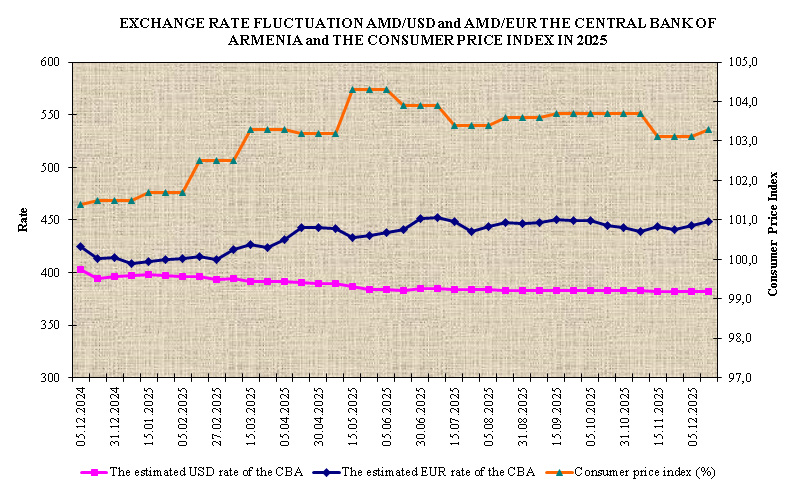
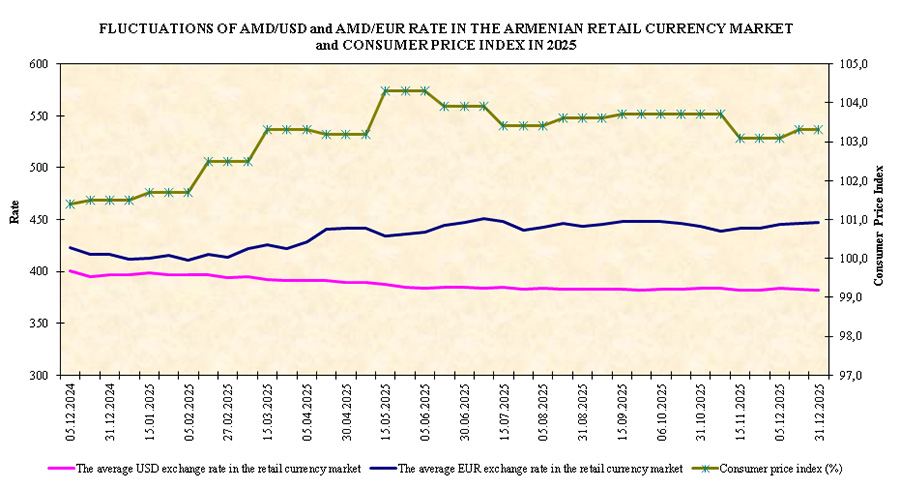
To carry out the environmental rehabilitation of the plant, amendments and additions have been made to the Armenian state budget for 2026, according to which it is planned to allocate 100,000 rubles to the "Radioactive Waste Management" program. 574 million drams, of which 57 million drams are for the first half of 2026, and 516 million drams for the first nine months of this year (calculated at an exchange rate of 1 US dollar = 382.65 drams).
Earlier, in an interview with ArmInfo, the late Academician of the National Academy of Sciences of Armenia, Academician-Secretary of the Department of Chemistry, Science and Earth, Doctor of Chemical Sciences, and Honored Scientist of the Republic of Armenia Levon Tavadyan noted that proposals to solve the existing problem had been received from the Russian side, but the issue was never resolved. The most important thing is that the initiative of our Russian colleagues offers solutions for all waste, except for the problem of disposal of ethynol varnish, of which approximately 1,200 tons have accumulated. This mixture is extremely dangerous due to its explosive nature. The academician emphasized that when the plant was built, it was built outside of Yerevan, while today the enterprise is part of the capital of Armenia, and the presence of such hazardous substances could lead to unpredictable consequences. “The shelf life of ethynol varnish, which is heterogeneous in composition and distribution, is several times longer than the established norm. The substances are located in rusty tanks and pose an extreme danger to those around them. If a fire hazard occurs, a detonation effect may occur, and it is impossible to simply burn them, just as it is impossible to remove waste due to the wear of the containers,” said Levon Tavadyan. He emphasized that the government of Armenia has proposed that the National Academy of Sciences, and in particular the Department of Chemistry and Geosciences, study this issue. "A special commission was created to study the problem, and serious discussions were held with experts at the Problems Council under the Presidium of the National Academy of Sciences and the Scientific Council on Seismology, Earthquake-Resistant Construction, and Natural and Man-Made Disasters, during which issues of decontamination of these substances and their disposal were considered," the academician noted.
It should be noted that the Nairit plant, built in the 1930s, was one of the six largest global producers of synthetic rubber, accounting for 10% of the global market. The plant is currently bankrupt and has been idle for a long time.