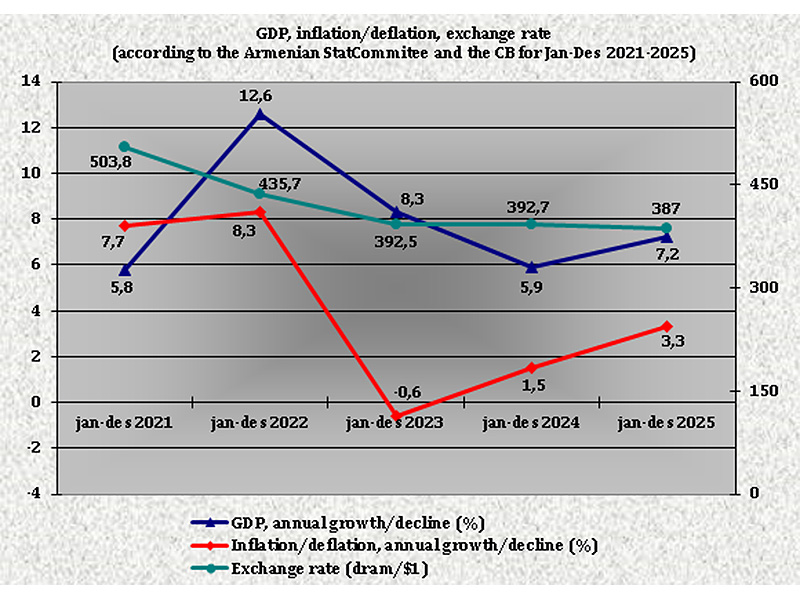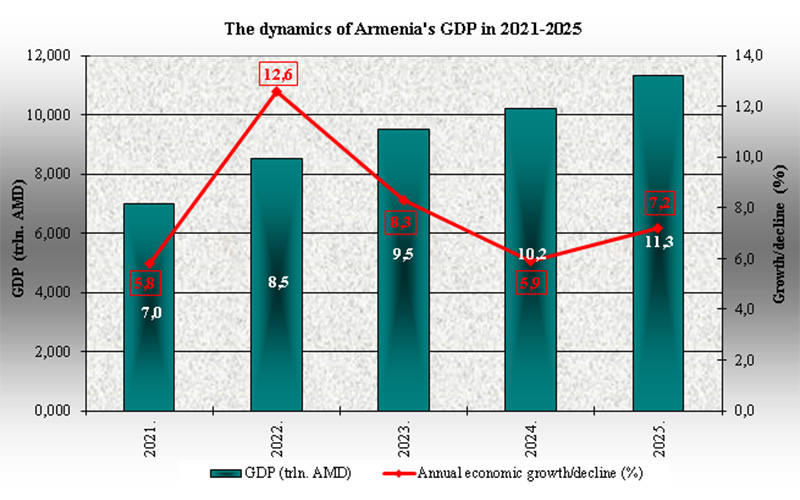



ArmInfo. Armenia's economy will grow by 5.8% in 2026. Despite the gradual normalization of domestic demand, the country's economy will maintain sustainable growth rates, and inflation will approach the Central Bank of Armenia's target level in subsequent years. This is stated in the new Regional Economic Review (Fall 2026) published by the Eurasian Fund for Stabilization and Development (EFSD), which contains forecasts for economic growth, inflation, and other macroeconomic indicators in Armenia for 2026-2029.
According to the main conclusions and forecasts for Armenia, the Armenian economy is expected to grow by 5.1% in 2027 and by 5.0% annually in 2028-2029. Moreover, strong aggregate domestic demand will remain a key driver of economic activity.
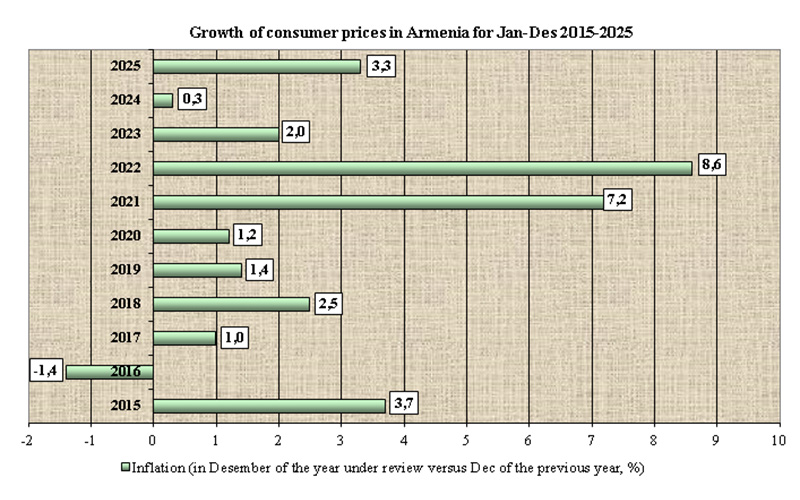
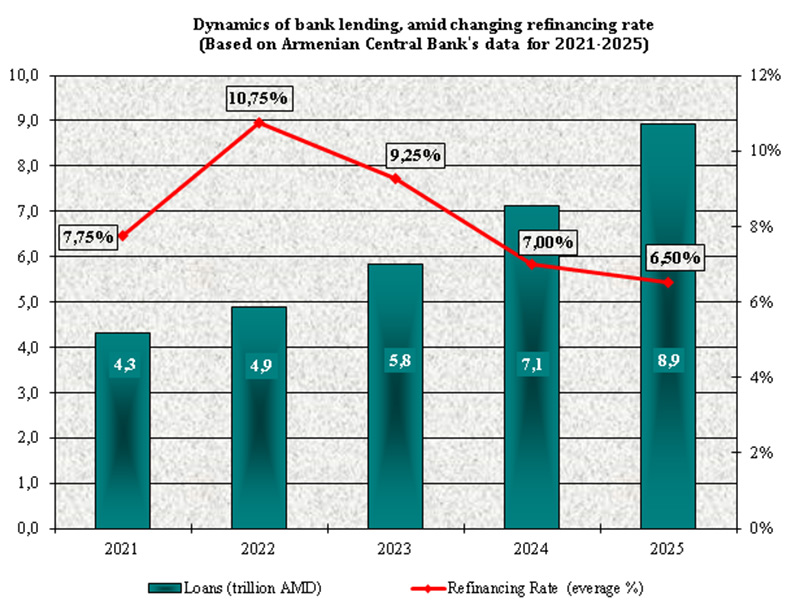
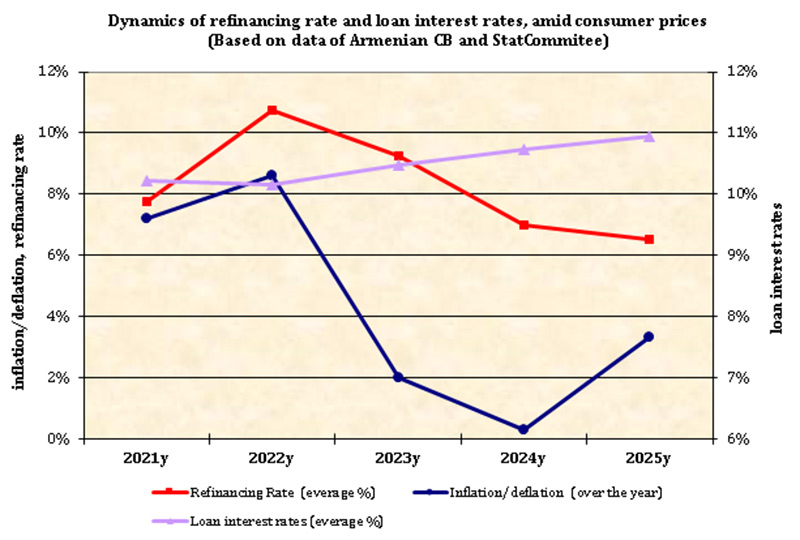
According to the forecast, despite strong private consumption, which created price pressure, a significant portion of the inflation acceleration in the first half of the year was related to supply-side factors. In June, price growth reached 5.1% y/y, after 3.3% y/y in 2025. In August, inflation adjusted to 4.4% y/y, remaining above the Central Bank of Armenia's target. The regulator, however, kept the refinancing rate unchanged at 6.5% throughout the first half of 2026. According to the EFSD analysts' forecast, inflation in Armenia will reach 4.1% by the end of 2026, remaining near the upper limit of the Central Bank's target range. In 2027-2029, it is projected to stabilize at around 3%.
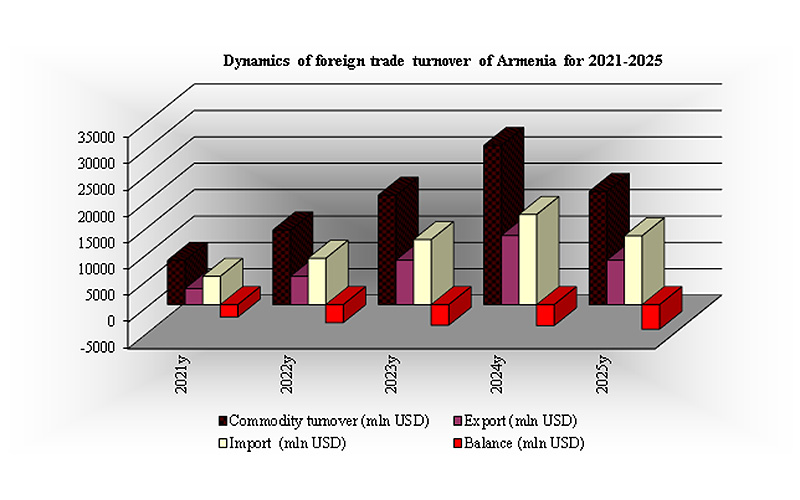
Budget execution in January-June 2026 was characterized by revenue growth and significant expenditure shortfalls, primarily capital expenditures. As a result, the budget was executed with a surplus of 1.3% of GDP. At the same time, high domestic activity continued to impact the external sector: the current account deficit remained significant amid a widening merchandise trade deficit, only partially offset by growth in services and transfers. The current account deficit in the balance of payments will remain at 5-6% of GDP in the medium term. The state budget deficit will decline from 3.5% of GDP in 2026 to 2.2% of GDP by 2029 as part of gradual fiscal consolidation.
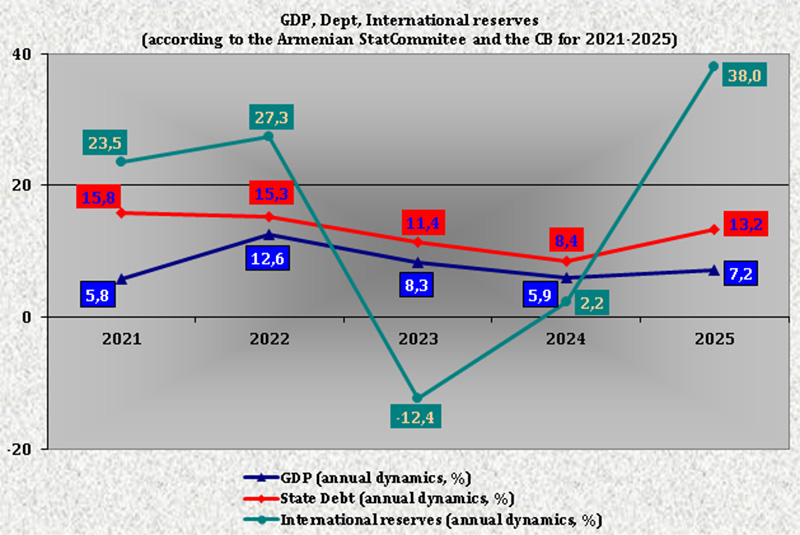
The report notes that in the first half of 2026, net capital inflows to Armenia increased to approximately $1.8 billion. At the same time, private sector foreign debt inflows increased significantly: net debt inflows excluding the public sector increased from $0.5 billion in the first half of 2025 to approximately $2.1 billion in the first half of 2026. At the same time, the cost of external financing decreased, and non-resident interest in dram-denominated assets increased. Non-residents' share of the government bond market increased from approximately 7.5% at the end of 2025 to 10.9% in June 2026, while the sovereign risk premium approached historical lows. This may reflect a combination of a favorable global financial cycle and improved country risk perceptions. Fund analysts believe that the acceleration of capital inflows supported the accumulation of international reserves. This process was accompanied by a significant supply of foreign currency and reserve accumulation: from January to June, the Central Bank of Armenia acquired $1.16 billion. At the end of June 2026, gross international reserves amounted to $5.92 billion. However, pressure for the dram to strengthen remains. Overall, the significant role of financial inflows makes Armenia vulnerable to a possible shift in global investors' risk appetite: a sharp reversal in flows could lead to a weakening of the dram, a reduction in reserves, and higher external financing costs. The sovereign risk premium is near historical lows. Spreads on Eurobonds maturing in 2031 continue to narrow, reflecting a combination of global and Armenia-specific factors. [This is likely a mistranslation.]
Meanwhile, the main sources of uncertainty for the Armenian economy are related to the dynamics of external demand and tourism flows, as well as global food and energy prices. Economic risks in Armenia are associated with a possible additional influx of labor and capital resources, as well as tourism, which could accelerate GDP growth. At the same time, a possible tightening of Russia's migration policy could have the opposite effect.
Proinflationary risks are associated with a possible change in gas supply prices from Russia or a revision of supply terms. Higher gas prices could increase inflation, lead to a weakening of the dram, and put pressure on domestic demand and the budget.
A slowdown in capital inflow or its sudden outflow could lead to an increase in the risk premium, a weakening of the dram, and an increased burden of servicing foreign currency debt.
Growth in domestic demand could be concentrated in certain sectors. A correction in the real estate and construction markets is possible. Budget expenditure shortfalls (primarily capital expenditures) cannot be ruled out.
In addition to Armenia, the review includes macroeconomic forecasts for Belarus, Kazakhstan, Kyrgyzstan, Russia, and Tajikistan, including economic growth and inflation indicators, as well as an analysis of key economic risks.
The report states that external conditions for the region's economies have become less favorable in 2026. Global economic growth will slow and not exceed 3% amid the energy and logistics shock associated with the conflict in the Middle East. Rising energy and transportation costs have increased inflationary pressure in the largest economies and raised the likelihood of a tightening of global financial conditions. Commodity market volatility remains high: in September, the price of Brent crude oil again exceeded $100 per barrel. Meanwhile, the oil market is gradually adapting to supply constraints, and in the baseline scenario, the oil deficit in 2026 will turn into a surplus in 2027.
For countries in the region, trade remains the main channel for transmitting external shocks. The impact of high commodity prices is uneven and depends on the structure of exports and imports, but in the baseline scenario, the current account balance will improve in 2026 in all countries except Tajikistan. The most noticeable improvement is expected in Kazakhstan, where the current account deficit will narrow to 1.0% of GDP from 4.1% of GDP in 2025. In Russia, the surplus will increase to 1.7% of GDP, while in Belarus and Armenia, the deficits will shrink to 1.1% and 6.7% of GDP, respectively. In Kyrgyzstan, the deficit will remain high – 22.4% of GDP, as rising global gold prices had little impact on the trade balance due to a contraction in export volumes. In Tajikistan, the surplus will shrink to 7.1% of GDP amid rising fuel import costs and restrictions on metal export volumes.
Economic dynamics are diverging within the region. GDP growth in Russia, which accounts for the bulk of the region's total GDP, is slowing to 0.6%, while excluding Russia, the region's economies will grow by approximately 4.8%. Strong domestic demand is supporting high growth rates in most Central Asian countries, but is also increasing inflationary risks.