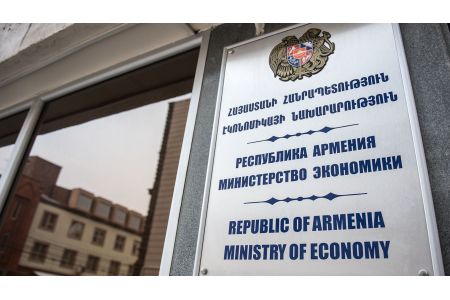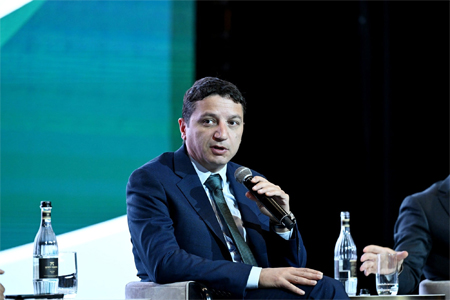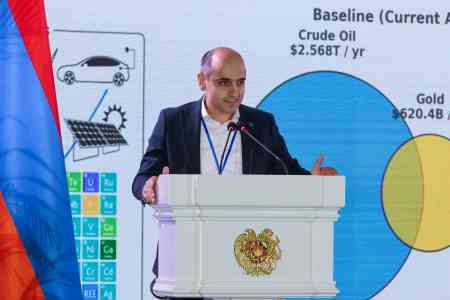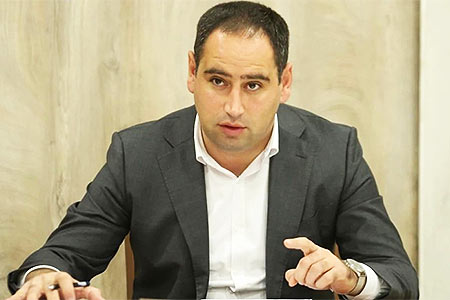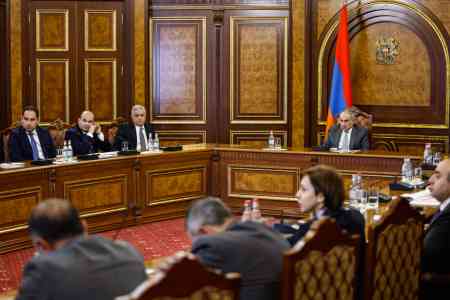



ArmInfo. The Ministry of Economy, together with the Central Bank and the Ministry of Finance, have created a working group that conducted research into the effects of Armenia's possible withdrawal from the Eurasian Economic Union (EAEU). Economy Minister Gevorg Papoyan announced this to journalists during a briefing on October 21.
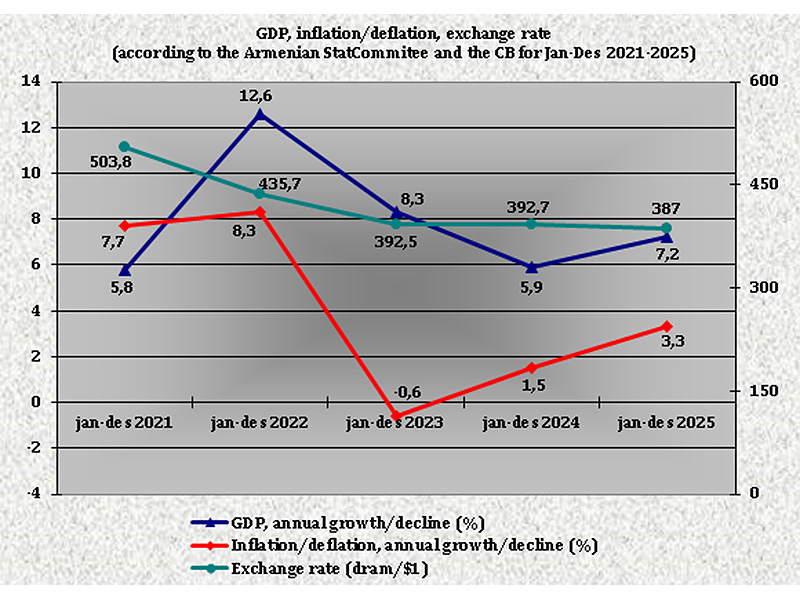
"The negative effect will not be very significant, estimated at minus 0.65%," he said.
Regarding gas price changes, citing the working group's estimates, the minister noted that, depending on the scenario, tariff increases could be 5%, 7%, or higher. When asked whether Armenia is prepared for, for example, a 70% increase, the minister noted that even a 1% price increase is undesirable. "But to say that this will have such an impact on the economy that we will not be able to recover from the consequences is not true." However, raising the gas price is strictly undesirable," Papoyan emphasized.
At the same time, the minister noted that the increase would be more acceptable if Armenia had already reached a certain stage of development, in particular, had achieved success in developing green hydrogen production, hydropower, solar energy storage systems, etc.
At the same time, he noted that even if Armenia buys Russian gas at a price below the market price, it pays the difference differently to some extent.
"We conducted stress tests, which showed that raising the gas price will not exceed the impact that the 2009 crisis had on the economy," he said.
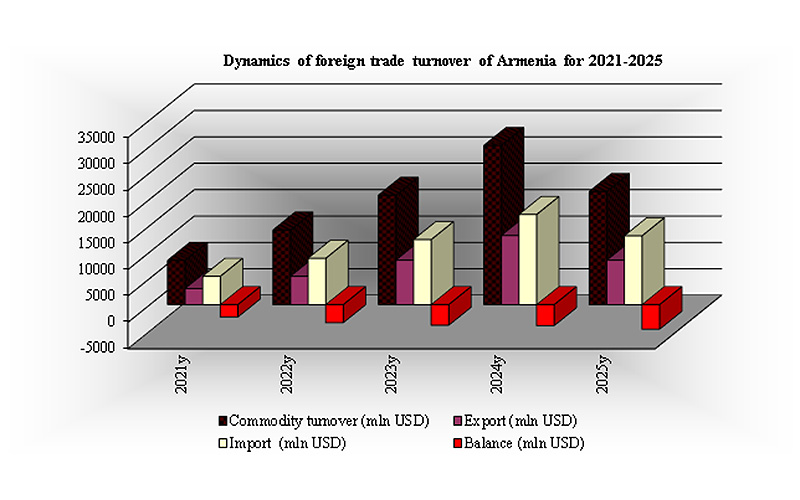
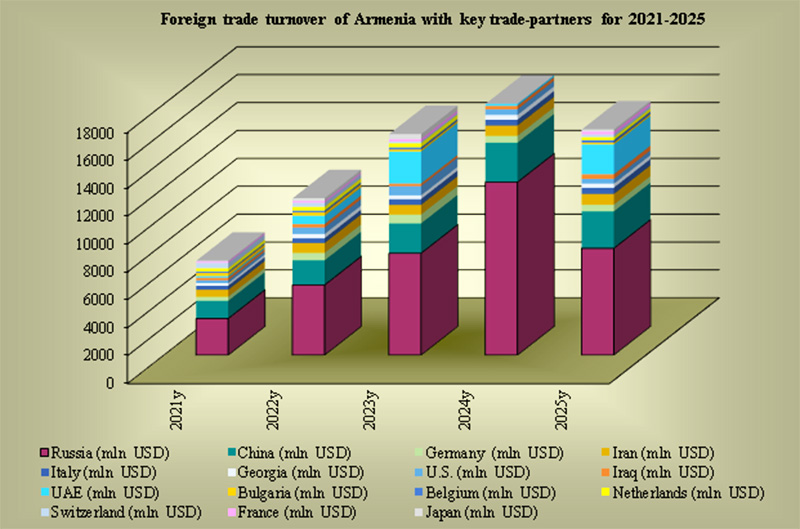
It is worth noting that before the introduction of restrictions by the Russian side, the Russian market accounted for over 80% of Armenian exports, as well as almost all imports of critical goods such as gas, wheat, flour, and etc.
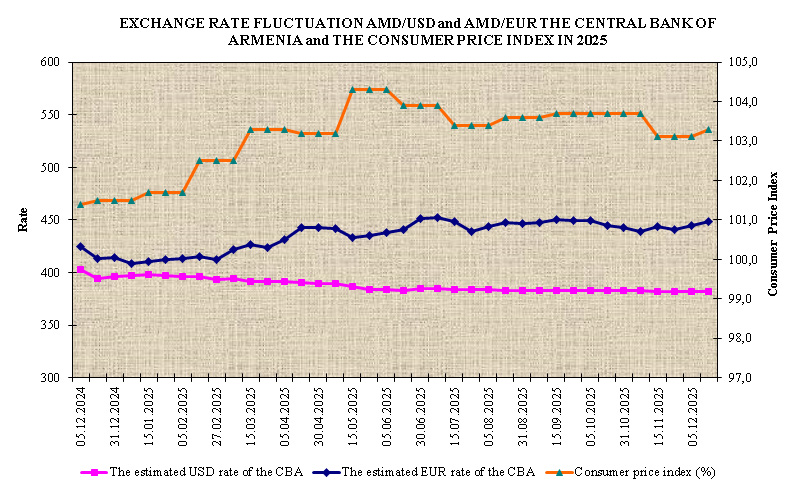
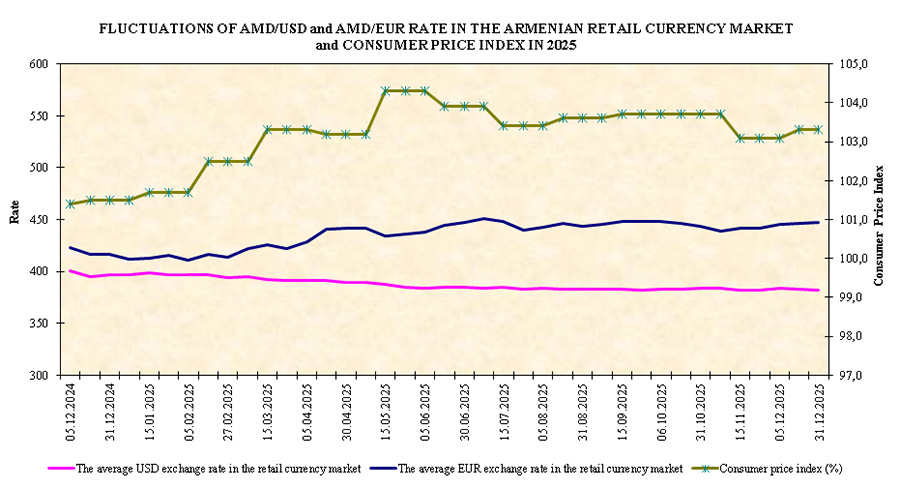
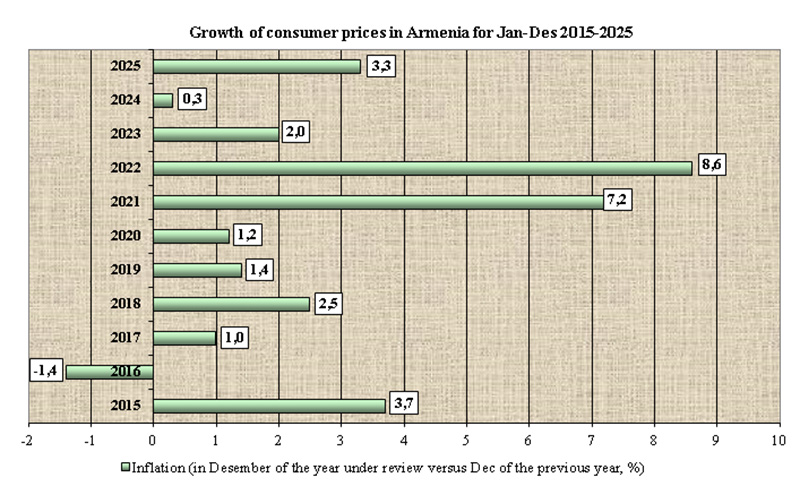
It should be noted that yesterday, a report was published on the Russian government's website entitled "On the Possible Consequences of the Suspension of the Treaty on the Eurasian Economic Union of May 29, 2014, with Respect to the Republic of Armenia," in which experts also touched on gas prices. The scenario for Armenia's gas imports from EAEU member states assumes a price of $300 per 1,000 cubic meters, while maintaining the physical supply volume. Compared to the current base price of $177.5 per 1,000 cubic meters, the price increase will be approximately 69%. The indicated price is indicative. The actual contract price for the supplied gas, taking into account market conditions on the global gas market, may be higher. Under the specified input conditions, the Republic of Armenia's gas imports in value terms, unlike those considered previously, will increase by $268.5 million, or 69%, from $389 million to $657.5 million. At the same time, this growth will be accompanied by increased costs for producers and households and will negatively impact inflation and GDP in the medium and long term, the report states.
Recall that relations between Moscow and Yerevan have deteriorated amid Armenia's integration course towards the EU. Russian Foreign Ministry spokesperson Maria Zakharova reported that Moscow warned Yerevan of the risk of terminating agreements on gas, oil products, and diamonds if Armenia joins the EU. Russian Energy Minister Sergei Tsivilev later stated that Moscow had not received a response from Yerevan. State Duma Chairman Vyacheslav Volodin recalled that Armenia receives Russian gas at a preferential price. - $177.5 per 1,000 cubic meters, while the price for Europe is $633.
The agreement on duty-free supplies of Russian gas, petroleum products, and rough diamonds to Armenia was signed in 2013 and ratified in 2014. It applies only to domestic consumption and prohibits re-export.