

ArmInfo. On November 6-7, protests against the construction of large data centers took place in several European countries. Demonstrators are demanding limits on the further expansion of computing infrastructure, citing primarily rising electricity consumption, limited power grid capacity, and water resource use. Political scientist Vahe Davtyan wrote about this on his Facebook page.
He cited Ireland as an example, where data centers would already account for 23% of registered electricity consumption by 2025.
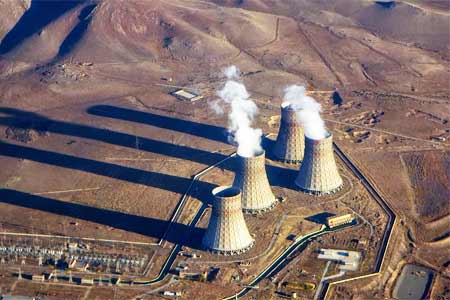
"A new group of large industrial consumers is effectively emerging, the development of which is already beginning to influence national energy policy. For Armenia, this issue is particularly relevant in the context of the implementation of the Firebird project in Hrazdan using NVIDIA computing technologies. An expansion of the complex's capacity to 300 MW has now been announced. If operating continuously at full capacity, such a facility could theoretically consume approximately 2.63 billion kWh of electricity per year, equivalent to approximately 26% of all electricity produced in Armenia in 2025. In this context, the future of Armenia's nuclear power plant is particularly important. Operation of the current power unit is planned until 2036. Meanwhile, the parameters of the new nuclear power plant have not yet been determined. The issue of power grid infrastructure is no less important. Connecting a consumer with a capacity of several hundred megawatts requires corresponding investments in substations, transmission lines, and backup capacity," the expert noted.
Under these circumstances, he raised the issue of synchronizing Armenia's energy and industrial-technological policies. On the one hand, the state supports the creation of a large computing cluster. On the other hand, a comprehensive assessment of its impact on the long-term energy balance, the need for new generating capacity, and the cost of electricity has not yet been presented. In turn, increasing solar energy production does not solve the problem of providing baseload power, as it requires additional solutions for redundancy and balancing the energy system.
"This naturally raises the question: whose interests are served by the formation of Armenia's new energy architecture? If the national energy system is not adapted to the requirements of foreign corporations, and there is no approved model for replacing existing nuclear power plants, then talking about a policy of energy sovereignty is, to put it mildly, difficult. The energy policy of a sovereign state should not devolve into infrastructure services serving the interests of foreign investors." Meanwhile, judging by current trends, Yerevan's energy policy is moving precisely in this direction," Vahe Davtyan concluded.
It should be noted that Armenia is considering the possibility of constructing a new conventional nuclear power unit with a capacity of 1,000 to 1,200 MW, along with small modular reactor options. Due to the implementation of major artificial intelligence projects (in particular, the AI plant in Hrazdan), a sharp increase in electricity demand in the country is predicted. Experts from several countries presented their projects and construction proposals, including Russia (the state corporation Rosatom proposed a VVER-1000 unit with a capacity of 1,000 MW in the format of an international consortium), as well as the United States, China, South Korea, and several European countries. In parallel, work is underway to extend the service life of the existing Armenian Nuclear Power Plant in Metsamor until at least 2036. The final choice of technology and plant model will depend on the price-quality ratio and the potential impact on tariffs for the population. The final determination of the parameters and design selection is awaited by the Armenian authorities.