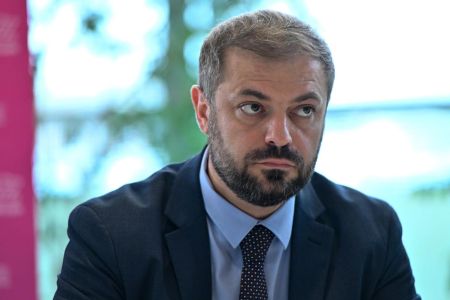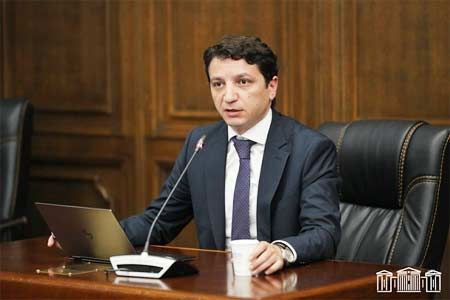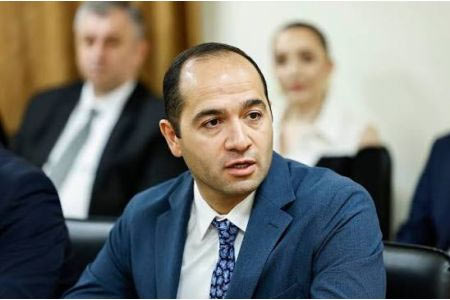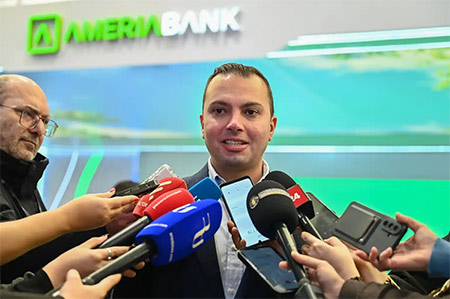



ArmInfo. Armenia needs not a consumer budget, but a budget aimed at building the country’s future. Head of the “Strong Armenia” faction Narek Karapetyan stated this in a conversation with journalists in parliament, where discussions on the draft state budget for 2027 are being held today.
Referring to the fact that Armenian Finance Minister Vahe Ovanisyan was unable to name the size of the budget deficit for 2026, Karapetyan stated that the country’s chief financial officer should know at least the main macroeconomic indicators of the state budget: revenues, expenditures and the deficit. “I have not even asked the minister any other questions yet, but only inquired about the size of the deficit, which amounts to $1.3 billion. Moreover, these figures had already been presented by our faction during a closed session. This is a serious problem about which the public should be informed,” Karapetyan stated.
He also commented on the minister’s comparison of the budget to a rocket launch. In this regard, the opposition faction leader noted that he dreams of such a budget, rather than a budget with a deficit of this kind. “If we look deeper, for example, long-term expenditures on job creation by economic entities as part of economic development account for just 0.5% of the budget. This clearly demonstrates the authorities’ priorities and indicates that we are dealing with a consumer budget, not a budget aimed at building the future. The authorities are demonstrating a consumer-oriented approach to its use,” the politician believes.
Commenting on Armenian Prime Minister Nikol Pashinyan’s statements about the growth in the number of registered jobs in the country, Karapetyan explained that not only their number matters, but also the sectors in which they are created. According to him, employment growth should primarily be ensured in those industries that bring additional benefits to the economy, promote exports and make it possible to establish production in Armenia of goods that are currently imported from other countries. “Creating jobs in such areas would produce a tenfold greater effect. People may register with various security agencies, but this does not strengthen the foundation of the state,” the head of the “Strong Armenia” faction is convinced.
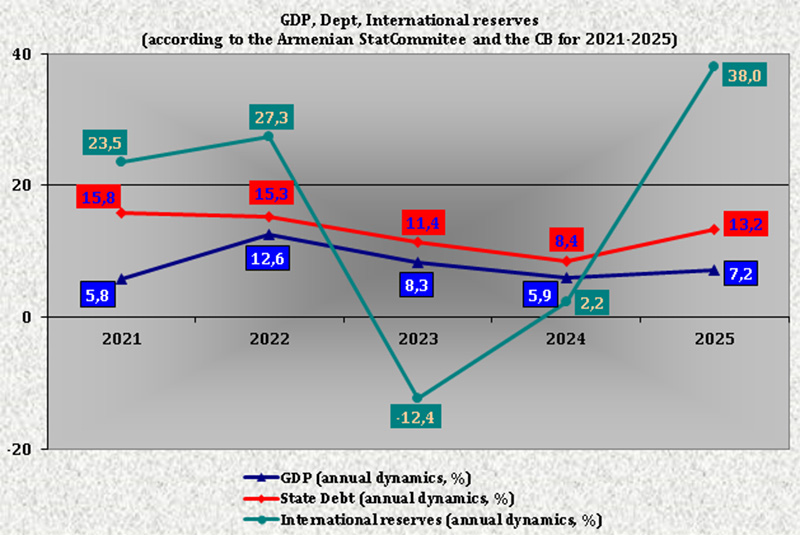
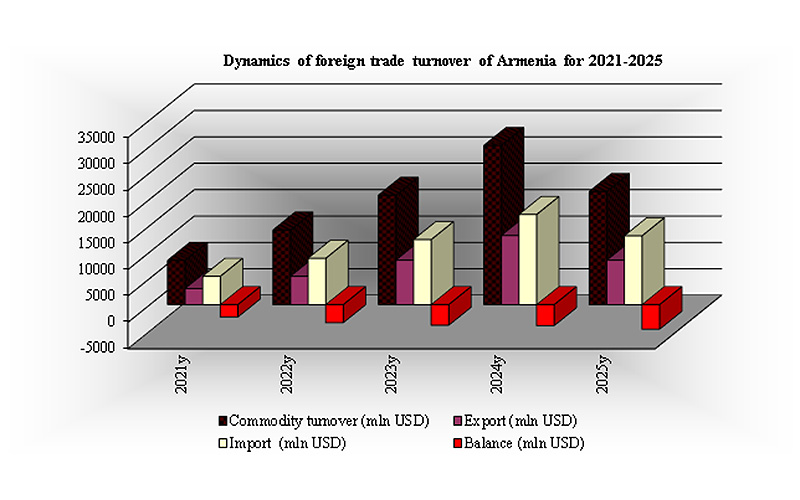
Karapetyan identified industrialization as the main proposal of their political force for resolving this issue. It should be noted that during discussions of Armenia’s draft budget for 2027, Ovanisyan, responding to the opposition’s question about the contraction of the Republic’s trade balance and the growth of the country’s deficit, stated that this did not correspond to reality. According to the minister, Armenia had not only effectively addressed the state budget deficit, but had also significantly increased its foreign reserves. In his words, as of the end of October 2026, these reserves amounted to approximately $7.2 billion, a record level nearly twice as high as the 2021 figure.
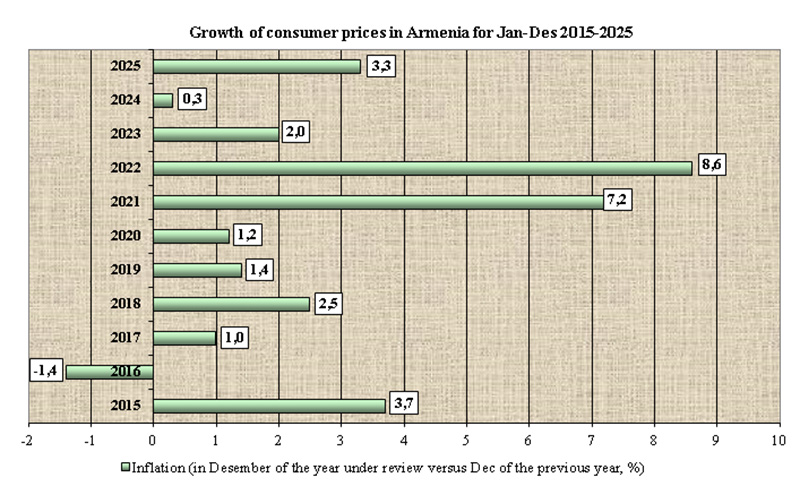
It should be recalled that Armenia’s draft state budget for 2027, approved by the government on October 1, 2026, and discussed in parliamentary committees, provides for increasing state treasury revenues to 3 trillion 604 billion drams, which represents 26.6% of GDP. Of this amount, tax revenues will account for 3 trillion 463 billion drams (25.4% of GDP). Expenditures are projected at 4 trillion 072 billion drams, while the state budget deficit will amount to 468.18 billion drams, or 3.4% of GDP (for comparison, the deficit in the 2026 budget amounted to 537 billion drams). The deficit is planned to be covered through domestic (approximately 187.5 billion drams) and external sources. The GDP deflator is set at 3.1%. Expenditures on the security sector will amount to 835 billion drams, while capital expenditures will total 761 billion drams.