

ArmInfo. Following US Vice President J.D. Vance yesterday's statement, one can conclude that Armenia's choice regarding small modular reactors has been made, and it's in favor of the United States.
According to ArmInfo news agency energy analyst Alexander Avanesov, the US Vice President announced yesterday that, as part of the nuclear energy agreement, the US will supply Armenia with small modular reactor technology worth approximately $9 billion. It is envisaged that initially equipment worth $5 billion will be supplied, with the remaining $4 billion coming from long-term contracts for fuel supplies and reactor maintenance. "This means the United States will supply Armenia with small modular reactors, which will be delivered here. The United States very rarely transfers its technology to other countries so confidently," the US Vice President stated, adding that this means more reliable energy security for both the United States and Armenia. It will also create numerous new jobs in the United States. First of all, the question arises about the funding sources. Armenia's total state budget revenue is just over $8 billion, of which it's difficult to allocate $5 billion to purchasing equipment, even in the long term. There's no hope of US government charity in this matter. Most likely, Vance indicated the project's cost, which the Armenian side will have to pay for.
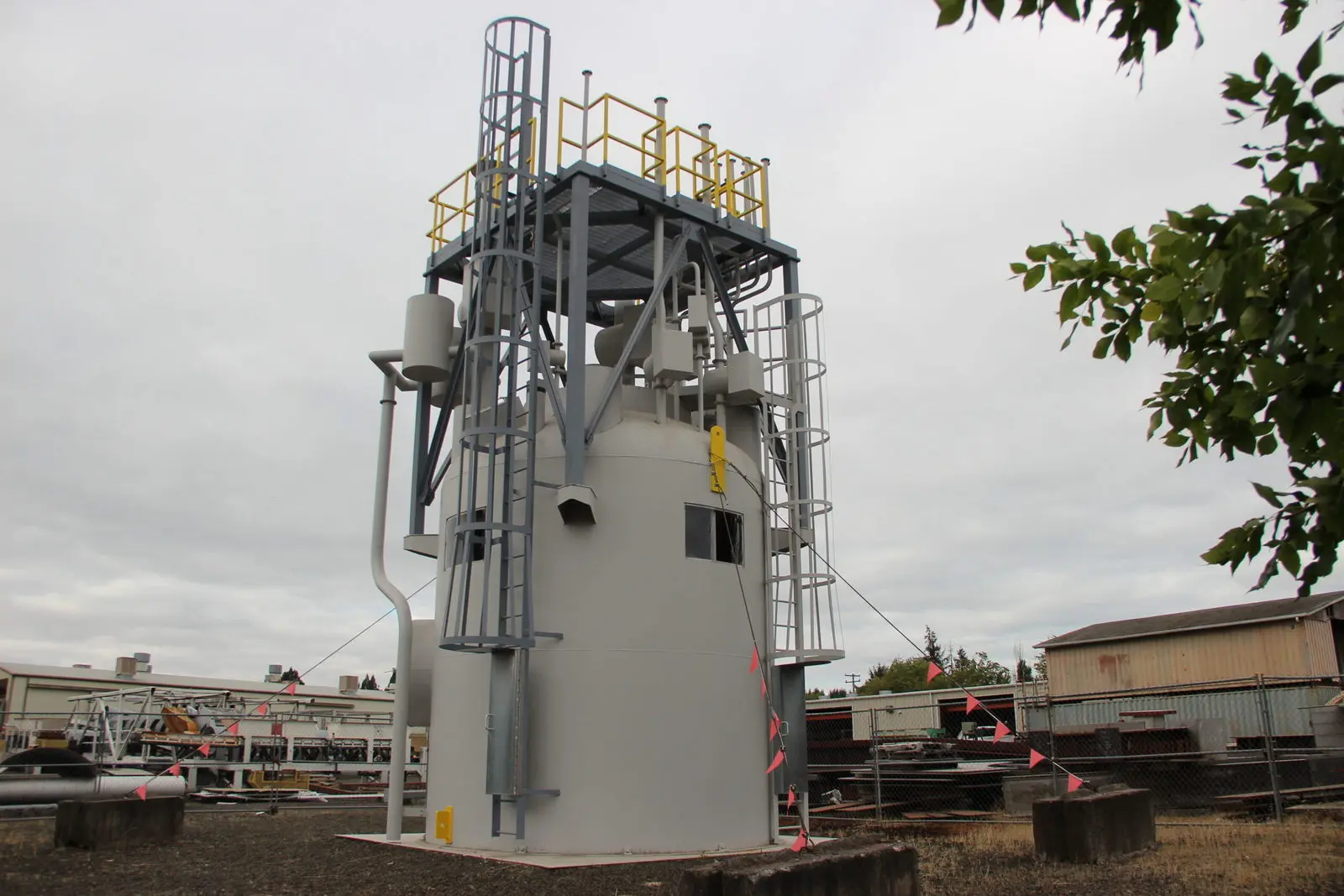
The second issue is about the logistics of fuel supply. Who will supply, by which route, at what price, and how will the new SMR affect the final tariff for Armenian consumers-all these issues require clarification. With Russia, which supplies fuel for the existing Armenian Nuclear Power Plant, the logistics of supplies are well-established. Will the supplies be made from the United States itself, which purchases uranium from the Russian Federation, or will a connection be established with the Russian company TVEL, one of the world's leading nuclear fuel companies, providing 17% of global nuclear power plant needs? If from the United States, it's easy to calculate the cost to Armenian taxpayers. But the main question remains open: what specific small modular reactor is the United States willing to offer Armenia? In general, SMRs utilize nuclear fuel more efficiently and have safety features based on passive systems-natural circulation, convection, gravity, and self-pressurization-which reduce the risk of accidents. Simply put, SMRs are safer and more efficient than older reactors. But are there any operating such reactors in the United States? The answer is clear: not yet, but the Americans are providing the technology. Oregon-based Nu-Scale Power will provide Romania with nuclear technology for an SMR project supported by the G7 Global Infrastructure Investment Partnership.
In addition to Armenia, the United States has signed framework agreements for cooperation in the peaceful uses of nuclear energy with 29 other countries. Specifically, the United States signed agreements with the Philippines (in November 2023) and Singapore (in July 2024), allowing these countries to use American nuclear energy for peaceful purposes, such as building SMR reactors or generating electricity. However, it should be reiterated that this is only a matter of technology, not the reactors themselves, tested "on the ground." As of early 2026, the United States itself has no operating commercial SMRs, despite actively developing and licensing these technologies. Large projects, such as those by NuScale Power, have faced cancellation due to high costs, but work continues, including the Janus program for military bases. Although NuScale Power received design certification, construction of the first plant in Utah was abandoned. Other projects are under development, such as the BWRX-300 from GE Hitachi.
It's worth noting that the US Department of Energy is investing hundreds of millions of dollars in SMR development, planning their active deployment. The country plans to use SMRs to achieve carbon neutrality by 2050. However, Russia and China are currently leading the way in commissioning SMRs. Russia, which has successfully operated the Academik Lomonosov floating nuclear power plant (each with a 35 MW reactor) since 2020, is also developing its land-based counterpart. Work is also underway on the RITM-200N reactor (55 MW), designed to supply power to remote regions, and the VK-300 boiling water reactor with a capacity of 250 MW.
Earlier, the Armenian side stated that a final decision on SMRs would be made within 1-1.5 years. Projects from five countries are being considered: Russia, China, the US, South Korea, and France. The country's authorities are leaning toward the idea of constructing a nuclear power plant with several small modular reactors, the total capacity of which should not exceed 600 MW. Earlier, Armenian Prime Minister Nikol Pashinyan, speaking about the advantages of SMRs, had emphasized their safety. Specifically, in the event of an accident, evacuation of the population is not required.
It is worth noting that in July 2023, the Armenian government sent a working group to the United States to study American small modular reactor technologies. Apparently, the results of that trip led to the current agreement between Armenia and the United States on nuclear energy cooperation. The project is being considered in the context of diversifying energy partners and reducing dependence on Russia, sparking discussions about geoeconomic risks.