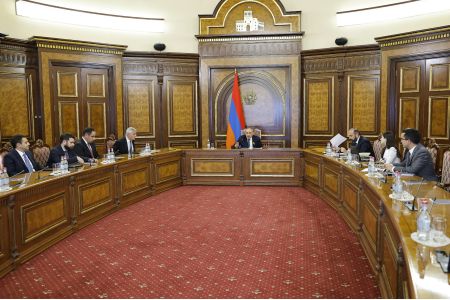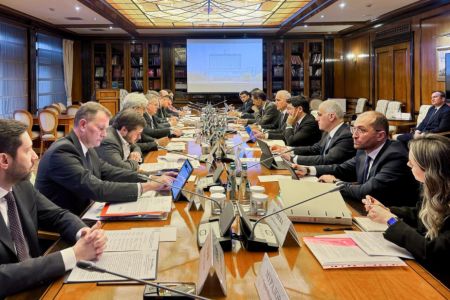


ArmInfo. Armenia has acknowledged the necessity for a small nuclear power plant, but has not yet determined who will be responsible for its construction, as stated by Armenian Prime Minister Nikol Pashinyan during a meeting with foreign ambassadors, diplomats, and think tank representatives at the Polish Institute of International Affairs.
He was responding to a question about the timeline for selecting a country to build the new nuclear power plant in Armenia, given that the current Metsamor Nuclear Power Plant is set to be closed in 10 years.
Pashinyan noted that renewable energy is opening up new opportunities for Armenia, especially given that it is the country's first opportunity to "become energy independent".
"Solar energy is developing rapidly in our country. As you know, we have a nuclear power plant, built in Soviet times. Over the past few years, we have been able to create solar energy capacity that exceeds the output of the nuclear power plant by more than double.
And given the aforementioned processes, we no longer need a large nuclear power plant. Therefore, according to our experts, we need a small nuclear power plant. We've made a preliminary decision to construct a small modular nuclear power plant. We are currently discussing this possibility with our partners. We are discussing this possibility with the United States, Russia, China, South Korea, and France. We are seeking the best offer for our country, and this process is ongoing. We haven't made a final decision yet, as we are still reviewing various proposals," the Armenian Prime Minister said.
Recall, three years ago, Maria Longhi, coordinator of US government assistance programs for Europe and Eurasia, reported that the United States was considering the construction of small modular nuclear reactors in Armenia and other Eurasian states, "seeking to strengthen their energy independence." She added that in a number of countries, including Armenia, the US is evaluating the possibility of constructing small modular nuclear reactors using American technology, which could lead to greater energy independence from both Russia and China.
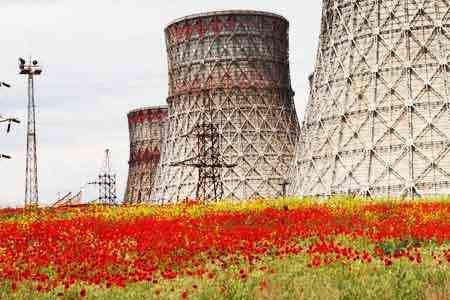
Meanwhile, a second program is currently underway at Unit 2 of the Armenian Nuclear Power Plant (ANPP) to extend its service life by 10 years, until 2036. By that time, a new nuclear power unit is scheduled to be built in the country.
Countries such as the US, Russia, South Korea, and China have expressed interest in constructing a new NPP in Armenia. Back in July 2023, the Armenian government sent a working group to the United States to review American nuclear technologies, small modular reactors, and their developments. Pashinyan has repeatedly stated that a strategic decision has been made to build a small modular nuclear power plant. "Why? One important reason is that, as experts explained, accidents at modular nuclear power plants are considered local emergencies, meaning that in the event of an accident at a nuclear power plant, there will be no threat beyond a 500-meter radius," he stated.
During Vice President J.D. Vance's visit to Armenia on February 9, an agreement was signed to continue cooperation in the development of civilian nuclear energy worth $9 billion, under which Yerevan will receive small modular reactor technology. However, on February 11, in parliament, in response to a question from NA Deputy Speaker Ruben Rubinyan about when the Metsamor Nuclear Power Plant would finally be closed and with whom Armenia would cooperate on constructing a new one, Pashinyan stated that Armenia was still considering which nuclear power plant to construct. He stated that the Metsamor Nuclear Power Plant's operational life could be extended until 2046. Previously, it was assumed that this lifespan would extend until 2036. He added that a decision on a new plant could be made during this time.
It should also be noted that, according to the Strategic Plan for the Development of the Energy Sector of the Republic of Armenia (until 2040) and the schedule for its implementation, Armenia plans to increase the capacity of solar and wind power plants to a total of at least 2,000 MW by 2040. As a result, the share of electricity generated using renewable energy sources in gross final electricity consumption in 2030, including large hydroelectric power plants, will reach about 50%, and by 2040 - about 60%.