

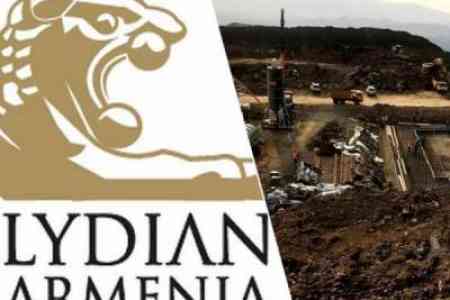
ArmInfo. Instead of establishing a dialogue with the environmental community to explain its mission, the gold mining company Lydian Armenia has apparently adopted the principle of "its own inviolability" through legal protection. "From now on, the company will consistently defend its rights and the rights of thousands of stakeholders in the Amulsar project," as noted in the company's statement.
It should be noted that Lydian Armenia, which has only recently resumed construction and development of the Amulsar gold mine after a long "forced environmental hiatus," has filed a second lawsuit against Nazeli Vardanyan, the well-known environmental lawyer and attorney, once again demanding "to refute defamatory statements" in her public statements. According to the company, these statements don't correspond to reality. According to the company's management, they are aimed at denigrating Lydian Armenia's business reputation, discrediting the Amulsar project, and violating the interests of citizens of the Republic of Armenia, given the economic importance of the Amulsar project for the further development of the country and the surrounding settlements. "The initiative to file this lawsuit is not an end in itself. As a responsible company, we are obligated to protect the rights of the thousands of stakeholders in the Amulsar project and believe that the right to freedom of speech does not imply disseminating false information, misleading the public, or violating the rights of others," the company's statement reads.
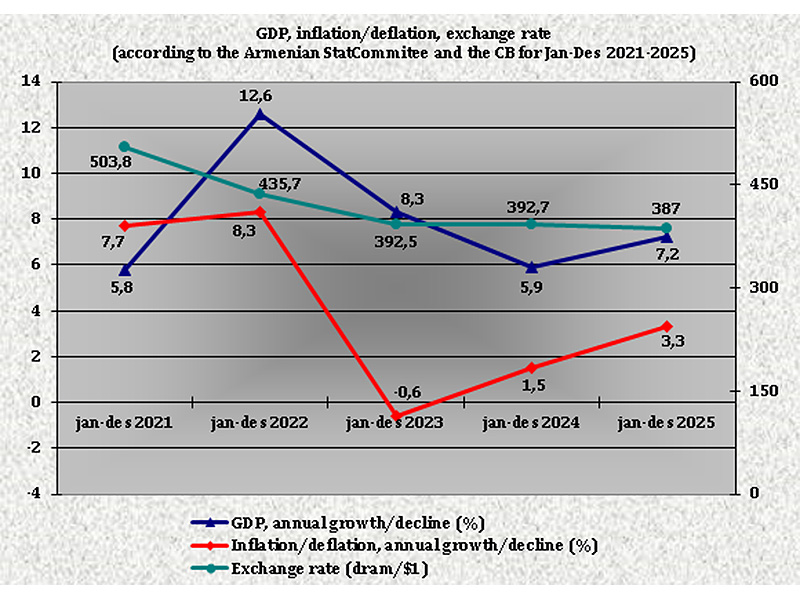
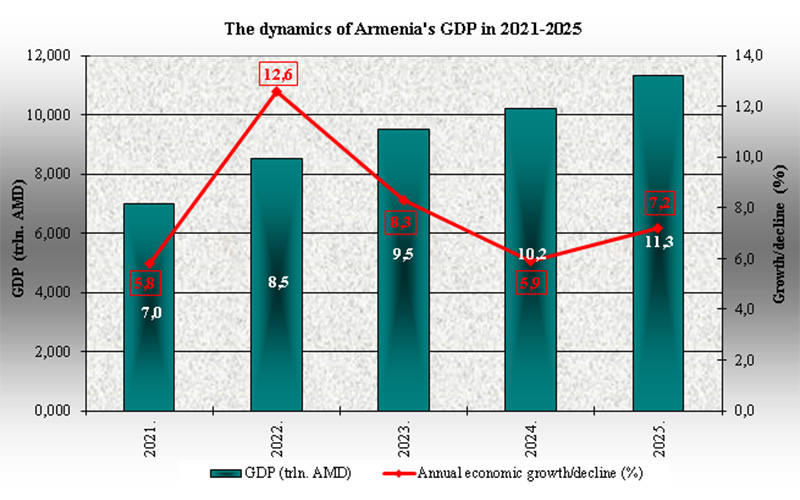
Recall, that Nazeli Vardanyan, in her speeches, has disagreed with the argumentation of the Fitch Ratings rating agency regarding Armenia's economic growth in 2026-2027, expressing disagreement with the statement that Armenia's GDP growth will remain above 5.0%, also be supported by the opening of the Amulsar gold mine, contributing 1.25% to GDP increase. She called this "fictitious pre-election figures." Moreover, according to Nazeli Vardanyan, "Amulsar has no reserves. 0.7 grams of gold per ton is nothing; it is not mined in an ordinary country (with such a low concentration - Ed.). If there is less than a gram of gold, mining is completely ineffective," she stated. "Let them calculate and see what the income and expenses will be, what will be left for the state. Nothing will be left. It is a bankrupt organization, in the process of bankruptcy. All of its assets, property, financial resources, all income and raw materials that it will receive in the future belong to two financial corporations. I don't know what they're counting on? Even if these figures are correct, if they receive them, everything will belong to these two corporations, not the state," Vardanyan said.
In her opinion, there is a ruling by the Ontario Provincial Court in the Amulsar case, according to which the company Lydian International is in bankruptcy proceedings and all of its assets, future raw materials and funds are fully owned by the American company Orion Mine Finance and the Canadian company Oscisco Gold Royalties. They owe these companies money, which they must repay." The environmental lawyer does not believe that the deposit will be exploited, but the damage caused is very significant. "During the explosions, a yellow-orange cloud rose, people breathed in this air, and in the future, people will talk about the diseases that were contracted." She also recalled that the Bern Convention Secretariat's declaration of the presence of Red Listed animals and plants in the area violates the convention, and any activity must cease. "No one is paying attention to this. One day they'll explain it all," Nazeli Vardanyan said. It should be noted that Nazeli Vardanyan has long been critical of Lydian Armenia's environmental policy and was among the first to effectively suspend its operations in 2019, which led to the company's painful restructuring of liabilities, including capital restructuring.
After a long break, the company resumed operations at the Amulsar gold mine last autumn to finish construction of various infrastructure. This came after receiving budget guarantees totaling $150 million from the Armenian government last February. According to the agreement signed between the RA Ministry of Economy and Lydian Armenia CJSC, 12,503 shares, equivalent to 12.5% of the company's common shares, with a par value of 5,000 drams, were transferred to the ownership of the Republic of Armenia. The government's explanation of the loan guarantee document states that "In order to discuss the risks associated with the provision of a budget guarantee, BDO Advisory CJSC conducted a study to assess the financial solvency (sustainability) of the company.
"According to the BDO report, the Company's shares (currently 87.5% of the Company's shares) and the Company's permit are pledged in exchange for a loan agreement signed on November 30, 2015, pursuant to the "Share Pledge Agreement" signed on December 3, 2015 and the "Subsoil Use Rights Pledge Agreement" signed on December 22, 2015, the Company's immovable and movable property, as well as all metallic materials to be sold by the Company, in any form and condition, which were mined, produced, extracted or otherwise recovered within the framework of the Company's "Amulsar" project, including ore or any other product obtained as a result of further crushing, processing or beneficiation thereof, including crude and refined gold, which is owned by the Company.
Under these circumstances, the government deemed it appropriate to accept subsequent collateral issued in favor of commercial banks as collateral for the loan obligation secured by the guarantee, as a means of securing the recourse claim arising from the payment of the budget guarantee, the draft government decision stated.
The government, considering the risks associated with providing a budget guarantee, weighed them against the positive impact such a guarantee could have on the mining industry and the socio-economic development of the Republic of Armenia, as assessed by the Ministry of Economy, and taking into account the price of gold on the international market, initiated the provision of a budget guarantee in the amount of up to USD 150 million to attract loan funds from the existing banking system of the Republic of Armenia with a repayment term of up to five years.
Moreover, as a precondition for issuing the guarantee, it is stipulated that it will be provided if, within six months of the effective date of the resolution, the company submits to the Ministry of Finance a report on the market value of balance sheet assets included in the company's financial statements, approved by an independent audit firm, confirming that the guarantee amount does not exceed 20% of the market value of balance sheet assets included in Lydian's financial statements at the time of the guarantee application and issuance.
As previously reported, the total cost of the Amulsar project is $370 million. The mine life is 10 years and 4 months, with an average annual gold production rate of 200,000 ounces. The deposit holds the second- largest reserves in Armenia. According to the company, the deposit contains approximately 73,733 kg of gold with an average grade of 0.78 grams per tonne, as well as 294,367 tons of silver with an average grade of 9.29 grams per tonne. It is located in the southeast of the country, 13 km from the resort town of Jermuk, between the Arpa and Vorotan rivers.
It should be noted that as of September 2023, the majority shareholder (87.5%) of Lydian Armenia CJSC is United Gold Arm III, a company registered in the offshore British Virgin Islands. The ultimate beneficiary of the Armenian company is businessman and Australian citizen Justin Michael Dibb, who has nearly 20 years of experience in the African mining industry through his company, Allied Gold Corp Limited. The company manages a portfolio of three production assets and development projects located in Cote d'Ivoire, Mali, and Ethiopia. The company's portfolio includes the Sadiola gold deposits, the Cote d'Ivoire Ti complex, and the Kurmuk project. According to independent experts, the new "court dialogue" policy adopted by Lydian Armenia is linked not only to the "unsuccessful" experiences of previous years, but also to the fact that the company is no longer bound, as it was previously, by public commitments to numerous direct and indirect shareholders and does not list its shares on stock markets, as it once was. The company's primary "third-party controller" is essentially the state, which, to a greater or lesser extent, is experiencing a "conflict of interest" between its business partner, Lydian Armenia, and the general public.