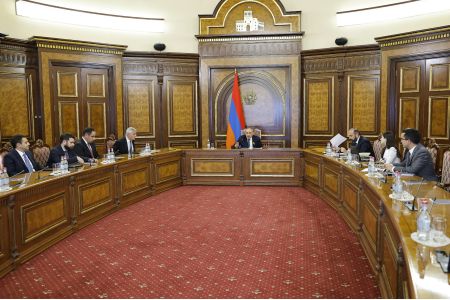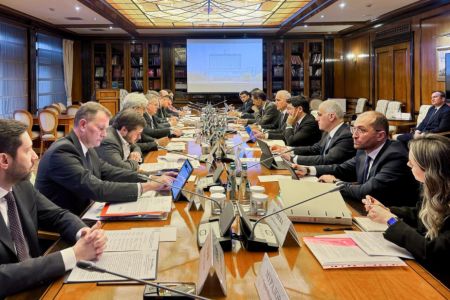


ArmInfo.The fourth meeting of the joint Armenian-Russian Coordination Committee for the Armenian Nuclear Power Plant (ANPP) Unit 2 life extension project was held in Yerevan.
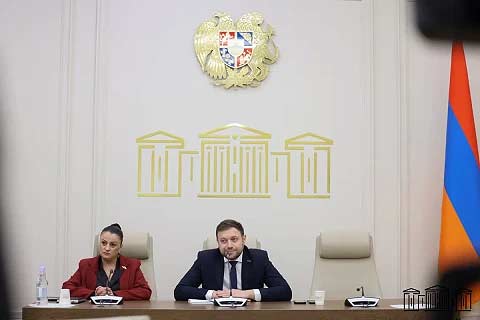
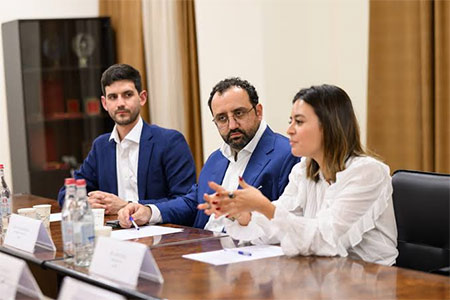
As reported by the plant's press service on March 9, the Armenian delegation was led by Narek Apitonyan, Deputy Minister of Territorial Administration and Infrastructure, and the Russian delegation was led by Kirill Kamarov, First Deputy Director General of the Rosatom State Corporation and Director of Development and International Business.
During the meeting, the parties discussed in detail the work and activities already implemented within the framework of the second life extension program for Unit 2 of the NPP. They also discussed upcoming programs, technical solutions, and avenues for further cooperation aimed at the safe, reliable, and efficient operation of the plant.
The meeting was also attended by Eduard Martirosyan, Director General of ANPP CJSC, and heads of industry organizations.
The discussions provided an important opportunity to assess the progress of work already completed and clarify further steps aimed at the successful implementation of the project.
The meeting reiterated the effective cooperation established between the Armenian and Russian sides and confirmed the parties' commitment to continue working together to ensure the long-term and safe operation of the Armenian Nuclear Power Plant.
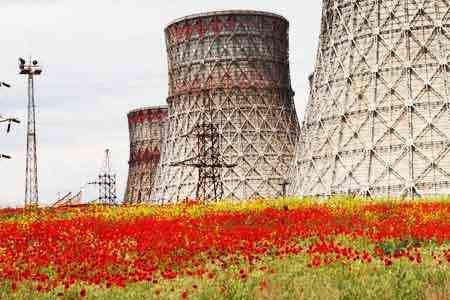
As a reminder, Unit 2 of the plant will be shut down for five months of scheduled maintenance in April of this year. During this period, major work will be carried out to extend the service life of Unit 2 for another 10 years, until 2036. The Government of the Republic of Armenia has allocated $165 million for the entire extension program, $57.5 million of which is under the responsibility of Rosatom State Corporation, with the remainder being implemented by the ANPP itself. The parties intend to continue efforts to enhance the plant's safety. Specifically, they plan to transition to a new range of design-basis accidents, the very ones that must be included in safety systems. Work will also be carried out to improve the ANPP's fire safety and modernize the auxiliary circulation pump systems. Considerable attention will be paid to materials science studies, as the plant will be operated well beyond its intended lifespan, requiring inspection of the reactor vessel metal.