

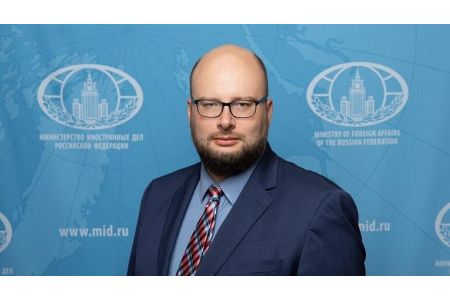
ArmInfo.Russia has proposed a high-capacity nuclear power plant project to Armenia that could meet the republic's energy needs for a century to come. Mikhail Kalugin, Director of the Fourth Department of the CIS Countries at the Russian Ministry of Foreign Affairs, stated this in an interview with TASS.
"Rosatom State Corporation proposed a high-capacity plant to Armenia that, if the Armenian leadership had its way, would meet the country's energy needs for decades, if not a century, to come. At the same time, it would ensure low electricity prices for end consumers, which, among other things, would significantly boost the country's industrial growth," the diplomat emphasized.
He emphasized that Russia is a global leader in nuclear technology and is always willing to share its developments and experience in such a vital area for the republic as energy. At the same time, the Russian side is also willing to share technologies in the field of digitalization. "Today, our country is one of three countries in the world with the most advanced solutions," Kalugin noted. He added that foreigners note Russia's advanced online banking, as well as "achievements in digitizing government services and healthcare."
"And these are just a few examples of what the 'Russian proposal' entails," said the director of the Russian Foreign Ministry's department. Speaking about the future of bilateral relations, he added that Moscow is committed to mutually enriching cooperation with Yerevan.
"This is precisely the model embedded in the integration associations that our countries share-the EAEU, the CIS, and the CSTO. We have always interacted with Armenia on an equal footing, never imposing a cultural code or demanding that we compromise our identity or historically important symbols. We value and respect the connection of the Armenian diaspora with their 'small homeland,'" Kalugin concluded. On April 2, Russian Deputy Prime Minister Alexei Overchuk stated in an interview with TASS that Yerevan could face a national energy shortage if it does not decide to build a new nuclear power plant by the end of 2026.
As a reminder, three years ago, Maria Longhi, coordinator of US government assistance programs for Europe and Eurasia, reported that the United States was considering the construction of small modular nuclear reactors in Armenia and other Eurasian states, "aiming to strengthen their energy independence." She added that in a number of countries, including Armenia, the US is evaluating the possibility of creating small modular nuclear reactors built using American technology, which could lead to greater energy independence from both Russia and China.
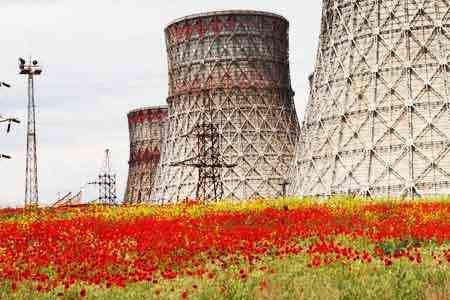
Meanwhile, a second program is currently underway at Unit 2 of the Armenian Nuclear Power Plant (ANPP) to extend its service life by 10 years, until 2036. By that time, a new nuclear power unit is scheduled to be built in the republic.
Countries such as the US, Russia, South Korea, and China have expressed interest in building a new NPP in Armenia. Back in July 2023, the Armenian government sent a working group to the United States to review American nuclear technologies, small modular reactors, and their developments. Pashinyan has repeatedly stated that a strategic decision has been made to build a small modular nuclear power plant.
Notably, during Vice President J.D. Vance's visit to Armenia on February 9, an agreement was signed to continue cooperation in the development of civilian nuclear energy worth $9 billion, under which Yerevan will receive small modular reactor technology. However, on February 11, in parliament, responding to a question from Deputy Speaker Ruben Rubinyan about when the Metsamor Nuclear Power Plant would finally be closed and with whom Armenia would cooperate on the construction of a new one, Pashinyan stated that Armenia is still choosing which nuclear power plant to build. According to him, the Metsamor Nuclear Power Plant's operational life could be extended until 2046. Previously, this lifespan was expected to extend until 2036. According to him, a decision on the construction of a new power plant may be made during this time.
It should also be noted that, according to the Strategic Plan for the Development of the Energy Sector of the Republic of Armenia (until 2040) and the schedule for its implementation, Armenia plans to increase the capacity of solar and wind power plants to a total of at least 2,000 MW by 2040. As a result, the share of electricity generated using renewable energy sources in gross final electricity consumption, including large hydroelectric power plants, will reach approximately 50% in 2030, and approximately 60% by 2040.