

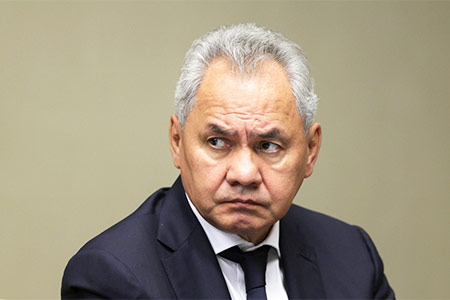
ArmInfo.Armenian authorities are currently negotiating the supply of foreign fuel and are carrying out uncoordinated work with Western contractors. This was stated by Russian Security Council Secretary Sergei Shoigu.
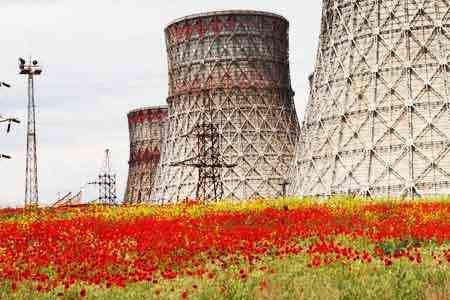
"I remember well the monstrous energy crisis Armenia experienced in the 1990s and how, despite the country's dire situation, we helped restart the Armenian Nuclear Power Plant, which currently accounts for 30% of the country's energy balance. Now, the Armenian authorities are negotiating the supply of foreign fuel and are carrying out uncoordinated work with Western contractors. This could not only result in the loss of guarantees but also lead to a catastrophe," Shoigu said in a comment released by his press service.
As a reminder, the Armenian Nuclear Power Plant (ANPP) was shut down for five months of scheduled maintenance in May of this year. During this period, with the assistance of specialists from the Russian state corporation Rosatom, the main work on the second life extension program for Unit 2 of the ANPP will be carried out. $65 million in savings from the first extension program will be used to address this issue. It should be added that the Armenian authorities previously announced a conceptual decision to build a nuclear power plant with small modular reactors. However, they did not specify which country the reactors would be. Experts in this field cautiously speculate that the Armenian authorities intend to build American-style reactors, given that the United States has not yet built such reactors anywhere on Earth. It is worth noting that three years ago, Maria Longhi, coordinator of US government assistance programs for Europe and Eurasia, reported that the United States was considering the option of building small modular nuclear reactors in Armenia and other Eurasian states, "seeking to strengthen their energy independence."
She added that in several countries, including Armenia, the United States is evaluating the possibility of developing small modular nuclear reactors using American technology, which could lead to greater energy independence from both Russia and China. Meanwhile, a second program is currently underway at Unit 2 of the country's existing Armenian Nuclear Power Plant (ANPP) to extend its service life by 10 years, until 2036. By that time, a new nuclear power unit is scheduled to be built in the republic. Countries such as the United States, Russia, South Korea, and China have expressed interest in building a new NPP in Armenia. Back in July 2023, the Armenian government sent a working group to the United States to review American nuclear technologies, small modular reactors, and their developments. Pashinyan has repeatedly stated that a strategic decision has been made to build a small modular nuclear power plant. Notably, during Vice President J.D. Vance's visit to Armenia on February 9, a $9 billion agreement was signed to continue cooperation in the development of civilian nuclear energy, under which Yerevan will receive small modular reactor technology. However, on February 11, in parliament, responding to a question from Deputy Speaker Ruben Rubinyan about when the Metsamor Nuclear Power Plant would finally be closed and with whom Armenia would cooperate on building a new one, Pashinyan stated that Armenia was still choosing which nuclear power plant to build. He stated that the Metsamor Nuclear Power Plant's operational life could be extended until 2046. Previously, it was expected to last until 2036. He added that a decision on building a new plant could be made during this time. It should also be noted that, according to the Strategic Plan for the Development of the Energy Sector of the Republic of Armenia (until 2040) and the schedule for its implementation, Armenia plans to increase the capacity of solar and wind power plants to a total of at least 2,000 MW by 2040. As a result, the share of electricity generated using renewable energy sources in gross final electricity consumption, including large hydroelectric power plants, will reach approximately 50% in 2030, and approximately 60% by 2040.