

ArmInfo.Aramazd Ghalamkaryan, Chair of the Water Committee of Armenia, along with committee staff and partners from the Ministry of Environment, the Yerevan Municipality, and the Asian Development Bank (ADB), conducted a study visit to Japan, where the Armenian delegation participated in the "Armenian-Japanese Partnership for Sustainable Lake Management and Sustainable Urban Development" experience exchange program.
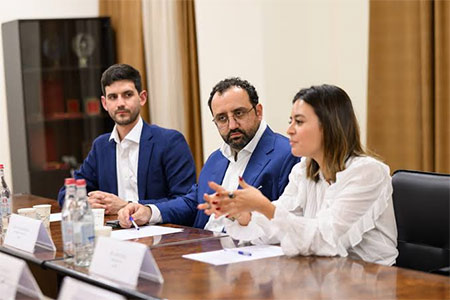
According to the Water Committee's press service, the visit was organized by the ADB with financial support from the Government of Japan, with on-site coordination provided by the Infrastructure Development Institute of Japan. During the trip, the Armenian delegation examined Japan's expertise in water resource and system management, water infrastructure development, wastewater treatment, and sustainable lake conservation.. The Armenian delegation met with representatives of relevant government agencies, local governments, and specialized organizations in Japan.
At the Japanese Ministry of Land, Infrastructure, Transport, and Tourism (MLIT), the Armenian delegation met with Vice Minister Kojima Masaru and discussed state water resources management policies and water infrastructure development programs, as well as river and watershed management systems and approaches.
At the Japanese Ministry of the Environment, a meeting was held with Masako Ogawa, Deputy Director- General of the Global Environment Agency. Discussions focused on Japan's policies and programs for protecting lake and water ecosystems, improving water quality, preventing pollution, and achieving sustainable environmental management.
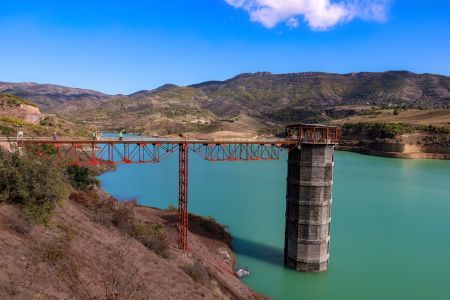
During the visit, Ghalamkaryan and the Armenian delegation presented the reform priorities of Armenia's water sector, water infrastructure development programs, and current challenges and planned initiatives concerning Lake Sevan and Lake Yerevan.
The delegation also traveled to Shiga Prefecture to study the management and preservation practices of Lake Biwa, Japan's largest freshwater lake. They explored practical solutions for preserving the lake's ecosystem and water quality, as well as methodologies for water sampling and laboratory research.
During the field visits, the delegation The delegation observed Lake Biwa's conservation programs, including weekly sampling routines across 51 monitoring points and the management of reed conservation zones, which play a vital role in maintaining habitats and breeding grounds for fish and other aquatic organisms. Particular attention was paid to decentralized wastewater treatment facilities used in rural and remote communities.
During the meetings, opportunities for further collaboration in deepening Armenian-Japanese professional cooperation, the exchange of experience, the application of innovative technologies, and sustainable water resource management were discussed. "Studying Japan's best practices, effective management mechanisms, and innovative solutions is of great importance for the development of Armenia's water sector, as well as the efficient use and sustainable management of water resources," the statement reads.