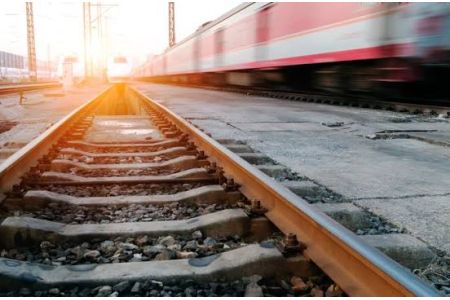



ArmInfo. Russia will have the right to demand compensation from Armenia if it unilaterally revises its obligations under the South Caucasus Railway (SCR).
This is "not a free asset of a Russian company," but an enterprise withover 30 billion rubles in investment, as stated by Russian Economic Development Minister Maxim Reshetnikov, when commenting on the Armenian Prime Minister's remarks regarding the SCR.
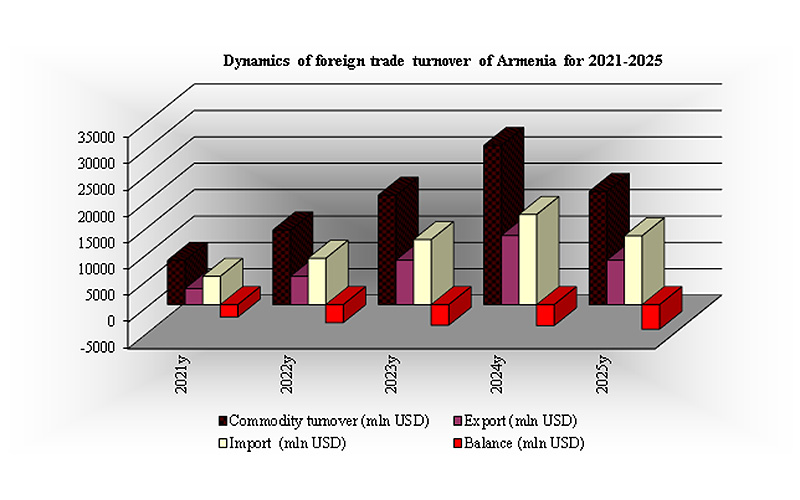
At the same time, Reshetnikov noted that the Armenian Prime Minister's remarks regarding the South Caucasus Railway serve as "an opportunity to recall the significant advantages that Armenia's economy gains through its participation in the EAEU as a general rule, and trade with the Russian Federation in particular." "Armenia has been a member of the EAEU since 2015. Through its participation in the Union, Armenian goods meeting EAEU standards receive unhindered access to the markets of Russia, Belarus, Kazakhstan, and Kyrgyzstan. Over the period of EAEU membership (from 2015 to 2025), Armenian exports to member states grew more than 13 times—from $240 million to $3.2 billion," Reshetnikov stated, according to the Ministry of Economic Development.
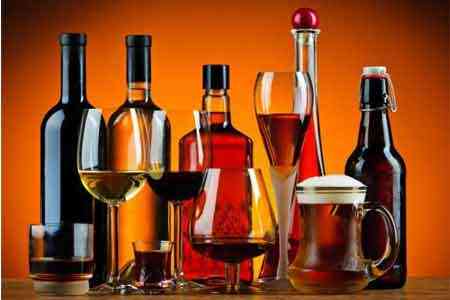
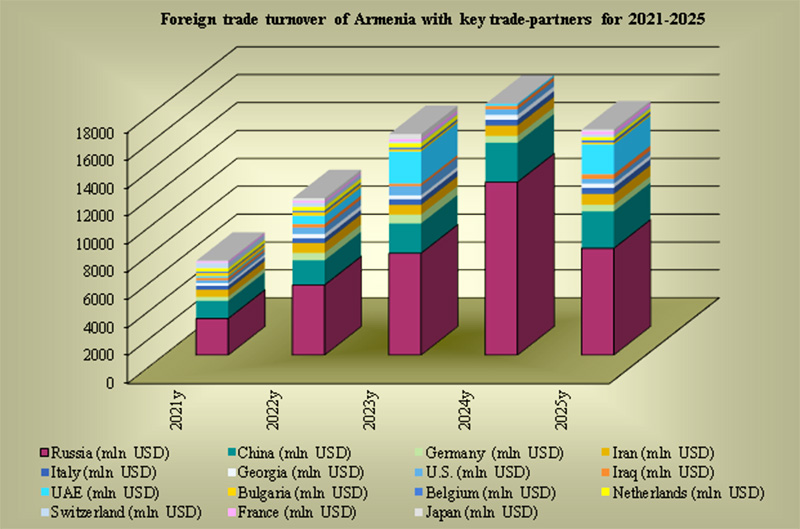
According to him, more than 80% of traditional Armenian exports—food, agricultural products, and alcohol—are shipped to EAEU countries. "Integration into the Union protects Armenian producers: thanks to unified quality and logistics standards, these goods remain in demand within the Union. Meanwhile, entering alternative markets would require a lengthy restructuring of supply chains and entail high commercial risks," Reshetnikov emphasized. He also stated that if these supplies are assessed in terms of their economic impact on the markets of other union countries, their significance cannot be considered significant. "Armenia's share of Russia's total trade turnover with the world does not exceed 0.9%. For other EAEU countries, this figure is even lower (for Belarus - 0.3%, Kazakhstan - 0.05%, Kyrgyzstan - 0.02%). It will not be difficult for us to replace Armenian supplies," the head of the Russian Ministry of Economic Development emphasized.
According to him, the EAEU is not only a key sales market but also the main supplier of essential resources for the Armenian economy. "Within the Union's common gas market, Russia supplies gas to Armenia at $177.5 per thousand cubic meters. Compared to current "European" gas prices, which currently exceed $600 per thousand cubic meters, this can only be described as a subsidy. This amounts to approximately $1 billion per year. It's unlikely that anyone outside the Union could offer Armenia such terms," Reshetnikov noted.
He added that "when talking about joining the European Union and searching for alternatives to the EAEU, we must first and foremost consider the economic situation 'on the ground.'" Reshetnikov noted that, according to expert estimates, if Armenia loses access to the EAEU market as a full member, its exports to the union's countries will decline by more than 60%. "This will occur due to the restoration of customs and other types of border controls, the end of automatic recognition of Armenian documents for goods, and an increase in logistics costs. And thanks to reduced duties (30%) on gas, Armenia saves $120 million annually. This is a real alternative to Armenia's membership in the EAEU, the consequences of the decisions that the Armenian leadership has openly announced," the minister warned.
"The situation with South Caucasus Railways must be viewed in the same spirit. This is not a free asset of a Russian company, but an enterprise in which we have already invested more than 30 billion rubles, purchased new rolling stock, and are developing infrastructure based on contractual obligations." If these obligations are unilaterally revised and our investor suffers damage, we will have grounds to demand compensation. The idea that Russia should pay Armenia extra in such a situation is unfounded," the head of the Russian Ministry of Economic Development emphasized. At the same time, Reshetnikov noted that the Eurasian integration project itself "is developing successfully – between 2015 and 2025, mutual trade between the union countries more than doubled, from $45.6 billion to $95.1 billion, and in the first five months of this year, mutual trade between the union countries increased by another 8% (reaching $39.3 billion). "Armenia's share of mutual trade between the union countries does not exceed 3.4% ($3.2 billion). Therefore, from an economic perspective, the idea that without Armenia there would be no EAEU is, to put it mildly, an exaggeration. Looking back at history, it's important to emphasize that the Eurasian integration project successfully existed and developed without Armenia—in the format of the Single Economic Space and the Customs Union, established in 2010 by Belarus, Kazakhstan, and Russia. If Armenia pursues its course toward joining the European Union, it will exist and develop without Armenia," Reshetnikov stated.
Yesterday, Armenian Prime Minister Nikol Pashinyan did not rule out the possibility of going to arbitration over the operation of South Caucasus Railways, a Russian Railways concession. He added that the country's authorities hadn't demanded anything from the Russian side for 30 years, but now they will demand $2 billion per year for the lease of Armenian railways.
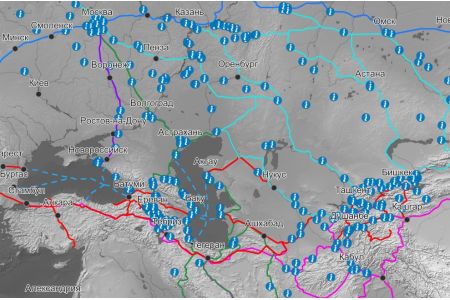
Recall, in February 2008, Armenia's railway infrastructure was transferred to the concession management of South Caucasus Railways for 30 years, with the right to extend it for another 10 years.