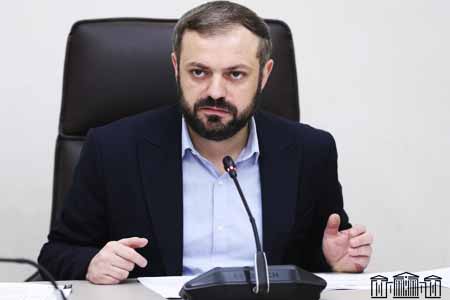


ArmInfo. President Ilham Aliyev's statement that Azerbaijani specialists have studied the possibility of laying new power transmission lines across Armenia to secure electricity supplies fits entirely into the logic of the venture known as TRIPP. Moreover, this initiative is a risky venture exclusively for Armenia. Energy security expert Vahe Davtyan holds this view.
In his article, he highlights that while the interests of Azerbaijan (access to Nakhchivan, gas supply diversification) and Turkey (unhindered connection to Azerbaijan's transport network, expansion into the Caspian Sea) are clear—as are the interests of global stakeholders like the US, notably in restricting the European Union's independent access to Central Asia—Armenia stands to gain little.
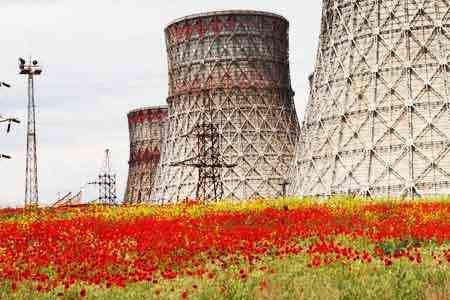
"And what will Armenia get from the TRIP? It turns out, electricity from Azerbaijan. Read: loss of energy sovereignty. Sovereignty that Armenia still possesses. And above all, thanks to the nuclear power plant. Aliyev's statement says: "Today, the main source of energy in Armenia is the nuclear power plant, the management of which is not in the hands of the Armenian side." Firstly, I would advise Aliyev's assistants to study this issue in more detail before preparing theses. Since 2013, after the departure of INTER RAO, the Armenian Nuclear Power Plant has been completely under the control of the Armenian side. Secondly, the importance of the nuclear power plant for Armenia is not limited to its role as a source of electricity. Moreover, the main source is thermal power plants - more than 40% of electricity production, compared to approximately 30% from nuclear power plants. The importance of the nuclear power plant is much broader. Armenia is the only country in the region that is developing the nuclear energy sector. And this is a problem for Baku. Then, again, the old thesis: "NPP "It is outdated and poses a potential threat to the entire region." This rather tasteless song has been playing out since 1994. Meanwhile, the IAEA, the leading international institution in this field, has repeatedly positively assessed the operation of the Armenian NPP, as well as the ongoing modernization work on the second power unit.
An agreement was also reached with the IAEA to extend the operating life of the power unit until 2036. Moreover, provided the appropriate work is carried out, the power unit has the technical potential to extend its operating life for another ten years—that is, until 2046. And this, provided the right energy policy and diplomacy are implemented, is a completely realistic prospect," noted Vahe Davtyan.
He added that Aliyev's attacks on the nuclear power plant in Armenia and promises to supply electricity to Armenia through TRIP should be considered primarily at the political level. First, dismantling Armenia's "peaceful atom" will deprive Armenia not only of a source of stable electricity production but also of access to nuclear technologies, which have long since moved beyond clean energy. Second, inspired by the successes in Artsakh, Aliyev considers the nuclear power plant one of the most important pillars of Armenia's national security. A pillar that must be dismantled. Third, the construction of a nuclear power plant in Azerbaijan is only a matter of time. Baku has already officially announced the possibility of including nuclear energy in the country's energy balance.
For Azerbaijan, this is gradually becoming a necessity, given its ambitions to export "green" electricity to Europe via the Black Sea cable. It should be noted that, according to the EU, nuclear energy is classified as a low-carbon, transitional energy solution. "In short, Aliyev's motives are clear. And what is Yerevan doing? Firstly, the lack of an adequate response is surprising. For example, a simple and clear: 'Armenia is a sovereign state and determines the structure of its own energy balance.' But there is another, much more serious problem here. The situation that has developed around the Armenian Nuclear Power Plant in recent years in itself contributes to such rhetoric from Baku. Yes, Armenia's strategic energy development plan until 2040 includes a provision on the 'peaceful atom.' However, in practice, the situation in the sector is approaching a dead end. Not in operational terms, but strategically. Official Yerevan announces its decision to build a small modular reactor. Signs a corresponding agreement with Washington. Even falsifies the statement of US Vice President J.D. Vance about the expected $9 billion in American investment in Armenia's nuclear energy sector. However, just a few days after Vance's official visit, Pashinyan announces the possibility of extending the life of the Armenian NPP until 2046. years. If this were the basis of a consistent policy line, the statement itself would be strategically correct. But nothing of the sort. Then, again, statements about the construction of a modular reactor. Again, a search for partners - from France to South Korea. What do we get as a result? Correct: a clear observation of strategic uncertainty.
Meanwhile, if the service life of the existing power unit is extended until 2036, then at least this is already something concrete. Meanwhile, if the service life of the existing power unit is extended until 2036, then today, at the very least, a specific technology should have been selected, the main partners identified, and a preliminary feasibility study developed, since the entire process from design to licensing, concluding agreements, construction, and commissioning can take 7-10 years. Another important circumstance: the liberalization of the electricity market allows private traders who have received a state license to import electricity and sell it on the domestic market. All this together suggests one thing: Armenia lacks a clear strategic policy in the field of "peaceful atom." And this is precisely what gives Baku has ample opportunity to use rhetoric aimed at expanding energy supplies. Therefore, the question isn't just who will build the next power line. The issue goes much deeper. Who will determine the future structure of Armenia's energy system? Yerevan?" the expert emphasized.