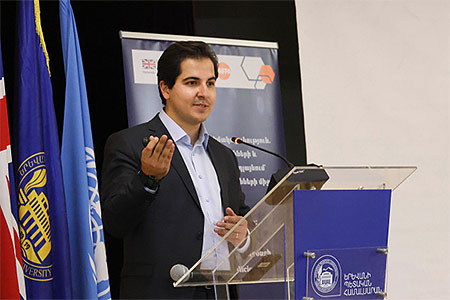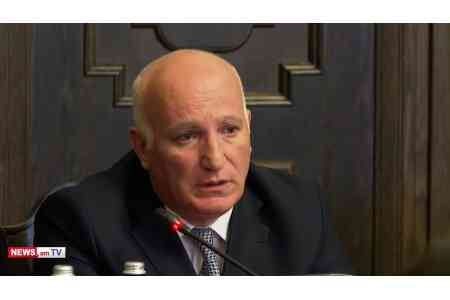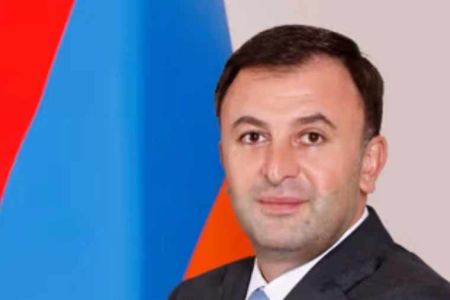



ArmInfo. Discussions about the possible introduction of a visa regime with Russia amid Armenia's rapprochement with the EU potentially harbor risks for the Armenian tourism sector. This opinion was expressed by Vahe Davtyan, leading researcher at the Caucasus Studies Sector of the Institute of China and Contemporary Asia of the RAS / Southern Federal University, PHD in Political Sciences.
The expert recalled that Armenia retains its status as one of the most popular tourist destinations for Russians. Moreover, the Russian factor remains not just the largest for Armenian tourism, but essentially system-forming. Davtyan noted that during the first seven months of 2026, 1.24 million tourists visited the republic—about 6% more than the previous year, with Russia accounting for 40% or 491,500 people.
"The number of Russian tourists grew by more than 38,000. Thus, Russia provided approximately half of the total growth in tourist visits to Armenia. Dynamics of recent years: 2019—1.89 million tourists; 2022— 1.67 million; 2023—a record 2.32 million, including about 1.14 million Russians (49.1%); 2024—2.21 million, including 937,800 Russians (42.5%); 2025—2.26 million, including 921,700 Russians (40.7%). In 2025, the total tourist flow exceeded the pre-pandemic level by almost 20%. However, the Russian record of 2023 has not yet been recovered," the expert mentioned.
.According to him, 2024 was particularly significant, with the number of Russian tourists falling by 17.5%, or nearly 200,000 people. Overall tourist flow, however, decreased by only 4.7%, as some of the losses were offset by other markets. Davtyan noted that, from a regional perspective, Armenia's dependence on Russian tourism is even more pronounced.
"In 2025, Georgia received 6.86 million international visits. Russia accounted for 1.58 million, or about 23%. Azerbaijan was visited by 2.57 million foreigners, with Russian citizens providing about 614,000 visits, or 23.9%. In Armenia, the share of tourists from Russia reached 40.7%," he noted.
The expert acknowledged that national statistical methodologies differ somewhat, but the proportions are clear: Armenia's dependence on the Russian market is nearly twice as high as that of its neighbors. According to him, while having a smaller overall tourist flow, Armenia receives about one and a half times more Russians than Azerbaijan. Meanwhile, the markets following Russia—Georgia and Iran—together account for only about 21% of visits.
"Therefore, discussions about the possible introduction of a visa regime with Russia amid Armenia's rapprochement with the EU potentially harbor risks. If the Russian tourist flow decreases by even the same 17.5% as in 2024, Armenia will lose about 160,000 visits per year. This accounts for over 7% of the current tourism market—without taking into account the accompanying decline in revenues for hotels, restaurants, transport, trade, and the rental sector.
An even more painful blow could be the potential restriction of direct air travel. For Armenia, which shares no common border with Russia, aviation remains the primary channel for delivering Russian tourists," Davtyan said.
In conclusion, he stated that political decisions made under the slogans of geopolitical diversification and European integration carry a very concrete price tag. "It will be measured in foreign exchange earnings, jobs, small business revenue, and taxes," the expert summarized.