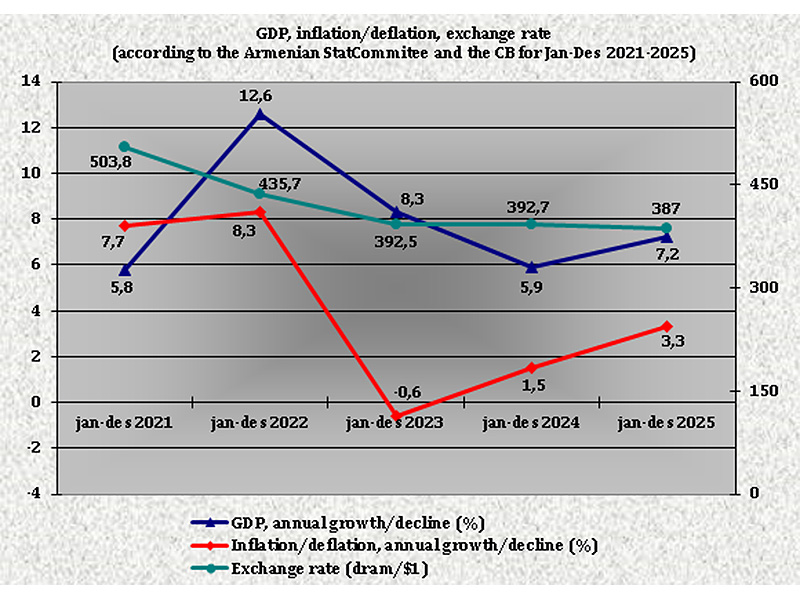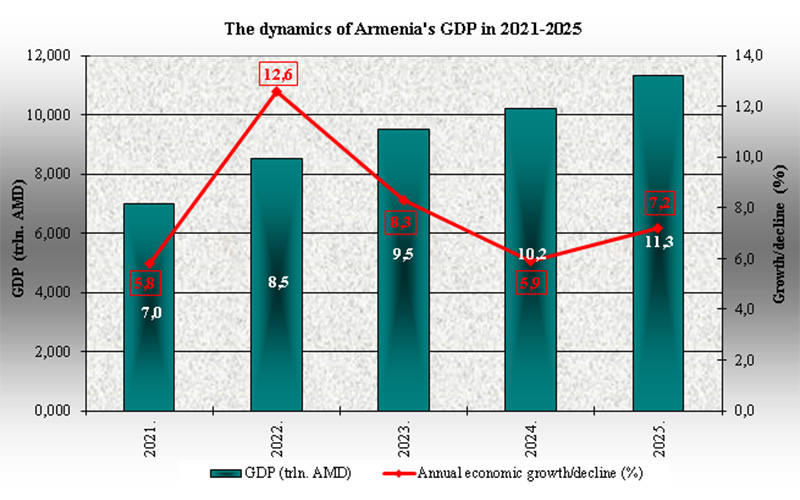


ArmInfo. S&P Global Ratings affirmed Armenia's long-term and short-term sovereign credit ratings for foreign and local currency obligations at 'BB-/B', maintaining the positive outlook on the long-term ratings. S&P Global Ratings expects Armenia's GDP growth to slow to 4.9% in 2026 (from 7.1% in 2025), followed by an acceleration to 5.1% in 2027. Exports are expected to recover from a double-digit decline to 2.2% growth in 2026, accelerating to 3.7% in 2027. This is noted in a statement from S&P Global Ratings, which presents the rationale for this credit action.
In particular, it notes that despite the current account deficit, Armenia's gold and foreign exchange reserves increased by approximately 46% year-on-year in June 2026, reaching a record $5.9 billion, significantly strengthening the country's external reserves and reducing balance of payments vulnerabilities. The Civil Contract party's continued parliamentary majority facilitates economic policy continuity and could provide the government with greater scope for structural reforms and fiscal consolidation. Geopolitical uncertainty could delay the signing and implementation of the peace agreement with Azerbaijan, while further normalization of relations could stimulate transit and trade.
The "Positive" rating outlook reflects Armenia's potential to build resilience to external stress, supported by the systematic accumulation of external reserves and ongoing progress in normalizing relations with Azerbaijan. According to S&P Global Ratings, these factors combined could reduce balance of payments vulnerabilities and geopolitical risks over time.
Factors constraining Armenia's sovereign ratings include its still significant, albeit weakening, exposure to material geopolitical and external security risks, its developing institutional system, moderate per capita income, and balance of payments vulnerabilities. The ratings are supported by Armenia's prudent economic policies, strong growth prospects, and declining public debt.
S&P Global Ratings analysts believe that despite efforts to deepen ties with the EU and other Western partners, Armenia's significant economic and energy dependence on Russia continues to limit its strategic flexibility.
In their opinion, despite the progress achieved, the path to official signature and implementation of a peace agreement remains uncertain. Several key issues remain unresolved, including border delimitation and security arrangements. Politically sensitive constitutional reform in Armenia, ongoing since 2019, may continue to be a source of domestic uncertainty. While the Civil Contract's parliamentary majority should facilitate the implementation of its planned policy, the loss of a constitutional majority could complicate the adoption of amendments. S&P Global Ratings analysts are inclined to believe that the government will likely first attempt to secure opposition support, although the current political environment makes this difficult. If parliamentary consensus is unable to be reached, the next step will likely be a referendum.
The TRIPP (Trump Route for International Peace and Prosperity) initiative could strengthen regional ties and support trade and investment in the medium term. While the framework agreement establishes the basic principles of governance and sovereignty within the initiative, its implementation is in its early stages: the project scope, financing, and precise terms of the concessions are still subject to final approval.
According to S&P Global Ratings analysts, Armenia's relations with Russia have become more strained amid Yerevan's reassessment of its approaches to security and foreign policy. In 2024, the government suspended Armenia's participation in the CSTO, expressing dissatisfaction with the bloc's response to security issues in the region. At the same time, Armenia deepened its engagement with the EU and the US, seeking to diversify its diplomatic ties and security partnerships. The diversification of Armenia's international relations has increased tensions with Moscow. Russia has warned that deeper integration with the EU could be difficult to reconcile with Armenia's membership in the EAEU.
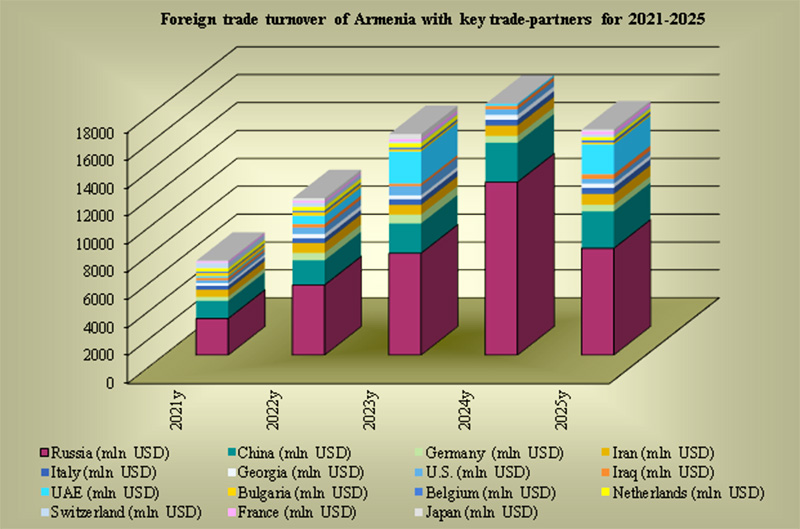
Recent restrictions on Armenian food imports to Russia (as well as flowers and alcoholic beverages) and warnings regarding energy supplies indicate the risk of spillover of political tensions into Armenia's real economy. Armenia remains closely linked to the Russian economy in trade, remittances, tourism, and energy imports. Analysts believe this dependence limits the country's strategic flexibility and will likely slow the pace and scope of further diversification, although S&P Global Ratings' baseline scenario anticipates a significant deterioration in bilateral relations.
Armenia's expected real GDP growth to slow to 4.9% in 2026 (from 7.1% in 2025) is partly due to weakening consumer demand and a decline in exports due to Russia's restrictions on certain Armenian goods. Although exporters are likely to redirect their products to alternative markets (including the EU), this episode highlights the country's continued dependence on the Russian market and the vulnerability of certain export sectors. Nevertheless, strong investment activity should support growth. S&P Global Ratings expects economic growth to average 5% annually in 2027-2029, driven by consumer and investment activity.
Armenia's external economic indicators continue improving
S&P Global Rating analysts, while noting that Russia's expanded import restrictions could impact Armenia's exports by approximately 2% of GDP, nonetheless believe: "However, export diversification and robust performance in the tourism sector should somewhat mitigate this impact."
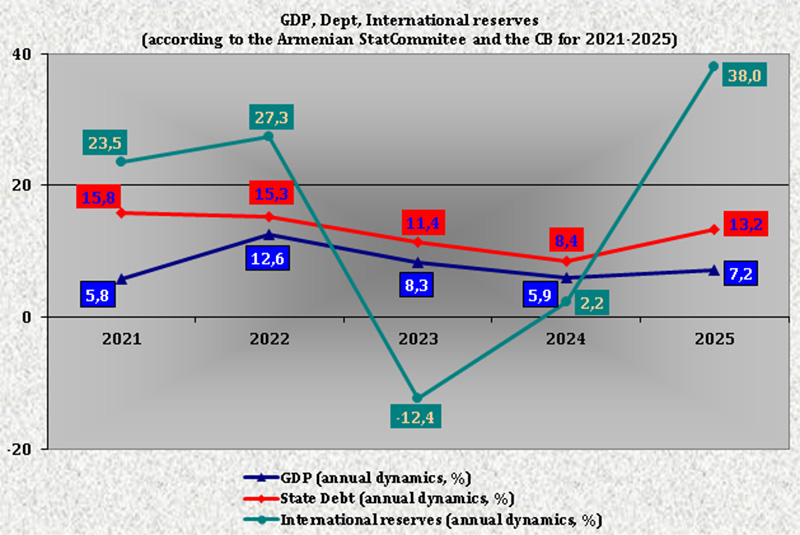
Armenia's international reserves increased by approximately 46% year-on-year to a record $5.9 billion in June 2026, strengthening the country's external reserves despite heightened geopolitical risks.
Armenia's position as a net external creditor remains resilient to geopolitical and defense risks thanks to growing reserves and a moderate level of net external debt, reducing the country's vulnerability to external risks.
S&P Global Rating expects the general government budget deficit to be below target in 2026. State budget revenues in the first half of 2026 increased by 14.7% year-on-year, driven by higher taxes on goods, services, and income tax. Current expenditures increased by 16.1%, driven by higher spending on social benefits, subsidies, and wages. Nevertheless, the state budget achieved a surplus of approximately 0.6% of GDP in the first half of 2026 (compared to a deficit of 0.4% of GDP in the first half of 2025), driven by higher revenues and a reduction in capital expenditures of approximately 28% per annum.
S&P Global Rating also expects capital expenditure growth to accelerate in the second half of the year. However, the agency forecasts the state budget deficit to narrow to nearly 4.2% of GDP in 2026, below the 4.5% of GDP target.
As in previous years, the deficit will be financed through domestic bond issuance, borrowings from international financial institutions, and external debt. S&P Global Rating does not expect Armenia to return to the Eurobond market until 2027.
Armenia's medium-term state budget plan envisages a gradual reduction in the budget deficit from 4.5% of GDP in 2026 to 3.5% in 2027 and 2.8% in 2028 through revenue mobilization, improved tax administration, and expenditure prioritization, while maintaining high levels of capital and social spending. S&P Global Rating expects fiscal consolidation to continue in the medium term, but at a slightly higher pace than the government's planned pace (averaging 3.3% of GDP in 2027-2029), taking into account the potential for underperformance of planned capital expenditures.
Given high nominal GDP growth and S&P Global Rating's fiscal forecasts, public debt (excluding liquid assets) is expected to remain broadly stable at just above 40% of GDP over the medium term. The main fiscal risks will be related to the government's ability to maintain revenue growth while meeting structural spending demands, particularly in defense, healthcare, and infrastructure. Furthermore, potential government intervention in the operations of Electric Networks of Armenia CJSC could create contingent fiscal liabilities depending on the form of this intervention and the amount of compensation payments. Nevertheless, S&P Global Rating expects that prudent financial management, continued access to domestic and external capital markets, and sustainable nominal GDP growth will ensure public debt stability in the medium term.
Attempts to diversify export markets only partially offset short-term impact
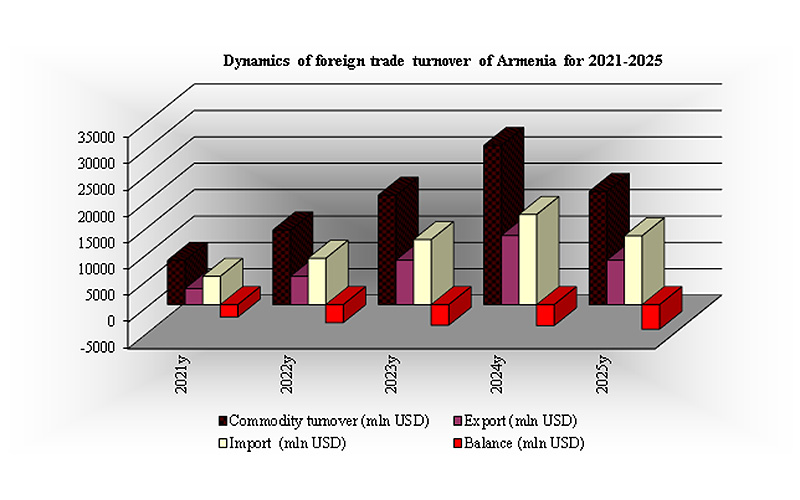
Russia has been consistently tightening restrictions on imports of certain goods from Armenia. Since the end of April 2026, the restrictions have expanded from mineral water and alcohol to include flowers, fish products, and a wide range of fresh fruits and vegetables, which together account for approximately 2% of GDP. Armenia's exports are highly concentrated: Russia accounts for 80% to 98% of the various products affected by the restrictions. Since agricultural supplies occur during the summer-fall harvest season, S&P Global Rating expects this impact to intensify in the second half of 2026, putting pressure on agricultural production, rural incomes, and export revenues. Despite support for producers and efforts to diversify export markets (including the EU), S&P Global Rating analysts believe these measures only partially offset the short-term impact. The risk of further trade restrictions remains a negative factor for the rating agency's baseline scenario.
Despite Russia's trade restrictions, S&P Global Rating forecasts a moderate narrowing of the current account deficit to 8% of GDP in 2026 (from 8.7% in 2025), reflecting weakening domestic demand and resilience in services exports, particularly in tourism and information and communications technology (ICT). Tourist arrivals are expected to grow by nearly 15% in the first half of 2026, with Russia (40%), Georgia (15%), and Iran (8%) leading destinations. S&P Global Rating expects improved air connectivity, competitive pricing, and growth in the tourism sector to support strong tourism revenues. Over the medium term, the current account deficit is projected to gradually narrow to nearly 6% of GDP as domestic demand normalizes, export diversification progresses, and tourism receipts continue to grow. S&P Global Rating analysts expect the current account deficit to continue to be financed by net foreign direct investment, external borrowing, and other private capital inflows.
International reserves provided an important buffer against geopolitical tensions in the region.
Armenia's international reserves strengthened significantly in 2026, providing an important buffer against heightened geopolitical tensions in the region. Armenia's total international reserves reached a record $5.9 billion by July 2026, exceeding the same period last year by almost 46%. This growth was driven by the issuance of government Eurobonds, foreign currency purchases by the Central Bank, and significant financial and capital inflows from abroad. S&P Global Rating expects the country's international reserves to remain generally stable.
S&P Global Rating analysts believe that Armenia's external economic indicators have significantly improved over the past few years, thanks to the gradual appreciation of the national currency, the growth of external reserves, and increased current account balances (CABs). Narrow net external debt, measured as a share of standard-setting revenues, declined from nearly 109% in 2020 to approximately 50% in 2025. Absent additional external stress factors, S&P Global Rating expects a gradual improvement in external economic indicators over the forecast horizon due to reserve accumulation and a prudent approach to external debt raising, which will further reduce Armenia's vulnerability to external risks.
Armenia's banking sector remains well capitalized and highly profitable.
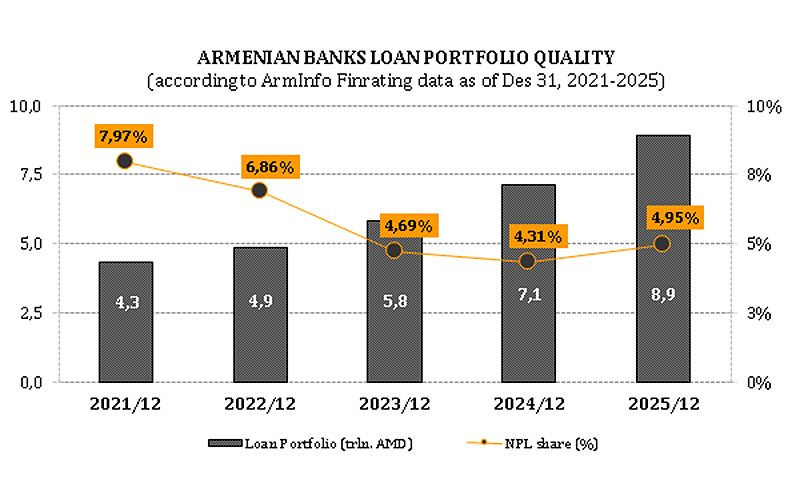
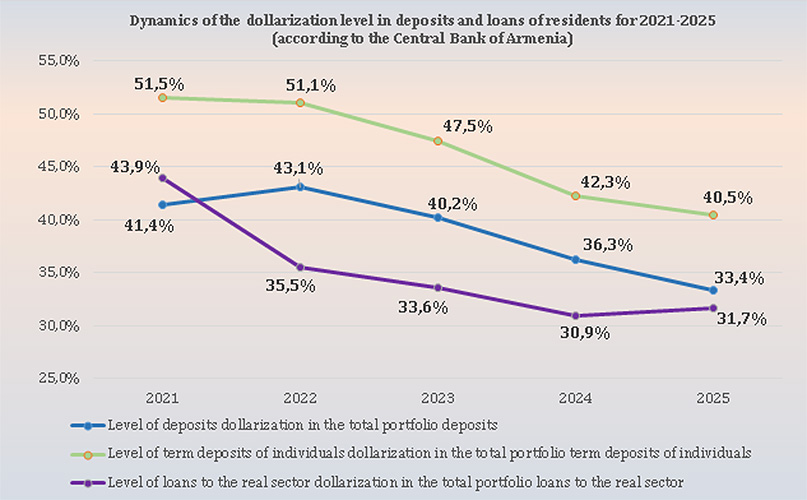
This is supported by high net interest income and robust economic growth. Credit growth remains strong, driven primarily by consumer and mortgage lending, although tightening macroprudential measures and the gradual phasing out of mortgage tax breaks have begun to dampen housing demand, particularly in Yerevan. While rapid credit growth has led to increased private sector debt, S&P Global Ratings analysts believe the associated risks are manageable at this stage, given banks' substantial capital buffers, resilient asset quality, and expectations that profitability will remain high despite a gradual normalization of indicators from recent peaks. As a precautionary measure, the Central Bank increased its countercyclical capital buffer by 0.25 percentage points, with the new norm of 2% effective February 2027. The gradual de-dollarization of bank balance sheets has further reduced currency risks, and banks' increasing reliance on funding from non-residents and international financial institutions is unlikely to lead to a significant deterioration in financing conditions. High geopolitical uncertainty remains the main risk for the banking sector.