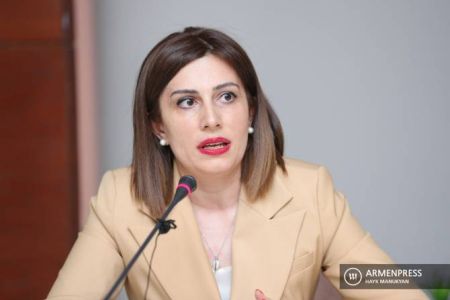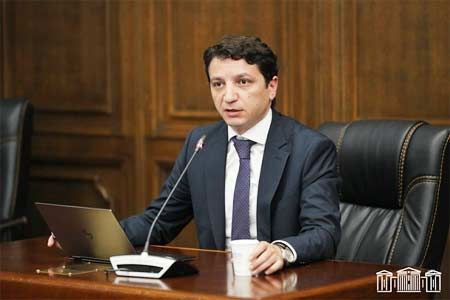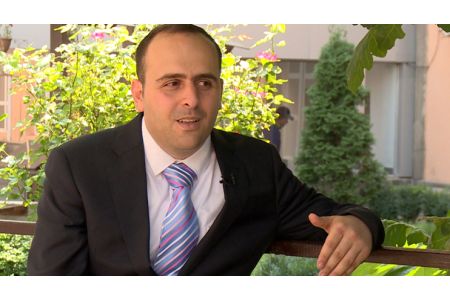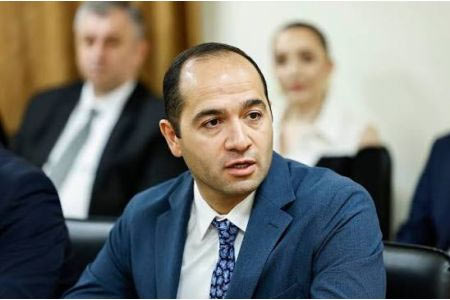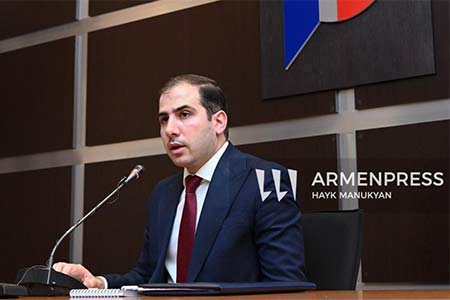



ArmInfo. Our goal is not to replace the EAEU with the EU, but to increase the volumes of exports of Armenian products to these markets. Armenia’s Minister of Economy Gevorg Papoyan said this to journalists during a briefing.
He noted that he sees no contradictions in the fact that next year the state is aiming to increase exports of Armenian-origin goods both to the EAEU and the EU, the Middle East, China, the United States, India, etc.
, the Economy Minister emphasized.
Papoyan noted that this year Armenia substantially increased exports to the EU, while in the EAEU there has been a decline in certain product groups, whereas some have not been affected by the restrictions.
In response to journalists’ remark that the Ministry of Economy assists only large producers in exporting to the EU, and that many face problems with supplies in this direction, he noted that everything depends on the quality of the products manufactured. At the same time, he criticized the approach of some producers: if a product is of poor quality and unsuitable for export abroad, then it can be sold in Armenia. In this regard, the minister stated that quality control systems would soon be introduced under which such producers would be deprived of the opportunity to sell their products on the domestic market.
It should be noted that during the Euronews summit on EU enlargement, Armenian Prime Minister Nikol Pashinyan stated that Armenia could officially apply to join the EU in 2027 or 2028. He called EU membership a strategic choice for protecting democracy.
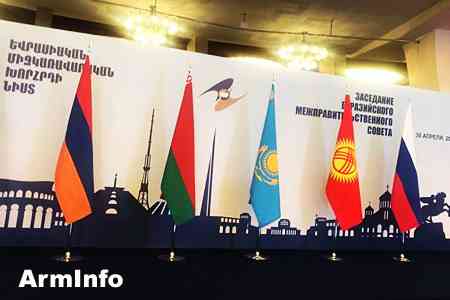
It should be recalled that earlier, the leaders of the EAEU countries adopted a joint statement saying that at the next meeting of the Eurasian Intergovernmental Council in December 2026, the participants would discuss the possible consequences of suspending the Treaty on the Eurasian Economic Union with regard to Armenia.
It should be recalled that relations between Moscow and Yerevan have become strained amid Armenia’s integration course toward the EU. Thus, since the end of May this year, Russian authorized bodies—the Federal Service for Consumer Rights Protection and Human Welfare (Rospotrebnadzor) and the Federal Service for Veterinary and Phytosanitary Surveillance (Rosselkhoznadzor) - have gradually introduced restrictions on supplies from Armenia to Russia and the EAEU market of fresh agricultural products, flowers, fish, fish products, as well as dairy products. At the same time, Armenia traditionally directed approximately 80–90% of the export volumes of these product groups to the Russian Federation. Due to the difficult situation in which Armenian producers and exporters have found themselves, the government is developing support programs to stimulate exports to the EU and other countries. In particular, this involves covering transportation costs and customs duties to enter new markets.
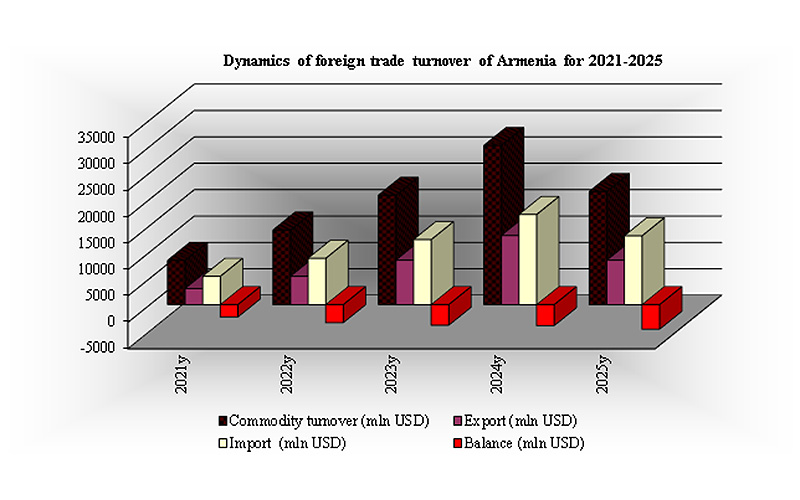
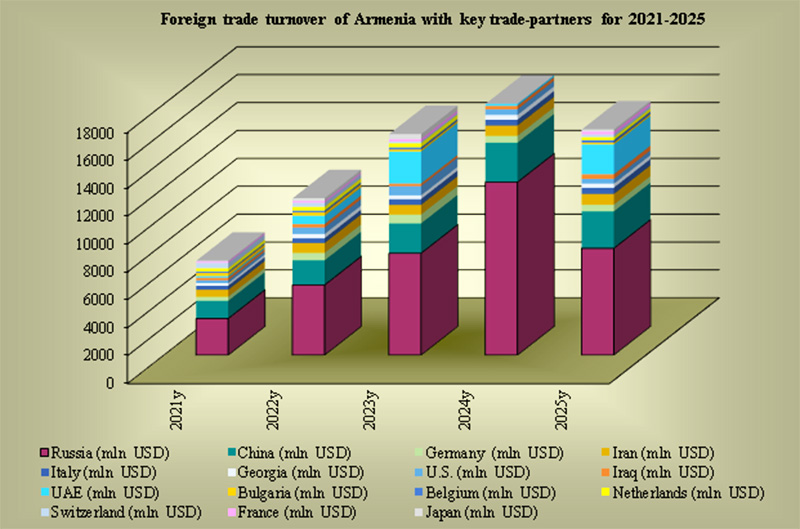
Thus, the following picture emerged in mutual trade with Russia in January–September 2026: trade turnover decreased by 19.4% to $4 billion. Exports amounted to $1.8 billion, down 11.3% year-on-year, while imports totaled $2.2 billion, declining 25.2% year-on-year.
Trends with the EAEU countries are also not encouraging. Mutual trade during the reporting period decreased by 17.4% to $4.3 billion. Exports fell by 10.7% to $2 billion, against a 22.4% decline in imports, which amounted to $2.3 billion.
Trade turnover with the EU increased by 49.1% in January–September, reaching $2.7 billion. Export shipments grew by 51.2% to $717.2 million, while imports increased by 48.4% to $2 billion.