


ArmInfo. Armenian farmers will be able to use excess mudflow and flood waters for irrigation free of charge. The National Assembly of the Republic of Armenia will discuss amendments to the Water Code and the National Water Program in their second reading at its plenary session on February 10.
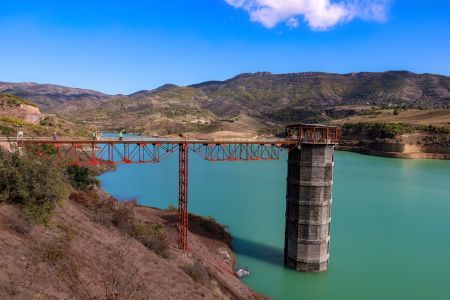
According to Aramazd Ghalamkaryan, Chairman of the RA Water Resources Committee, if there is sufficient precipitation and snow cover, the government will allow water users to use water free of charge for irrigation of 85,000 hectares of land. The government's decision will be based on data from the Center for Hydrometeorology and Monitoring. It is planned that water will be supplied for irrigation of 45,000 hectares of land in the Ararat region and 40,000 hectares in the Armavir region. The speaker noted that the adoption of the bill is necessitated by the fact that regulation of flood prevention caused by river overflows, the leaching of saline soils, and the provision of moisture to irrigated lands is vested in the government. At the same time, during spring river overflows, preventive measures are required, the primary one being the release of water accumulated in reservoirs and other hydraulic structures. This process largely coincides with the period of leaching of irrigated saline soils and the provision of moisture to irrigated lands.
Aramazd Galamkaryan noted that due to water shortages and the impact of climate change on water resources, the ecological balance of surface water resources is disrupted and often diminishes, which can lead to water depletion. In this regard, if technical capabilities are available, there is a need to replenish the waters of a river basin or reservoir with sufficient surface water resources and transfer surface water resources to another territory within the framework of the issued water use permits with the maximum possible volume of water transport infrastructure.