

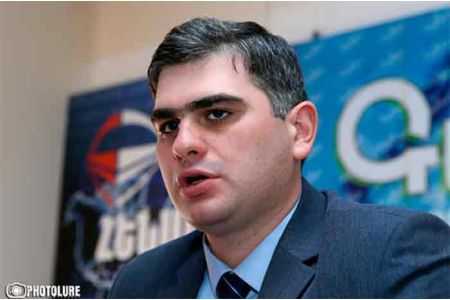
ArmInfo. The main reason for the sharp rise in liquefied gas prices in Armenia is the events surrounding Iran. Economist Suren Parsyan told ArmInfo, commenting on the acute shortage of liquefied gas in Armenia, where at least half of the vehicle fleet actively uses this fuel.
He noted that the country primarily imports liquefied gas from Russia and some from Iran. Given the well- known events in the Middle East, supplies of this fuel from Iran have either been completely stopped or sharply limited by the Iranian side. Armenia's dependence on liquefied gas supplies from Russia has now increased sharply.
The economist noted that oil and gas prices on global markets have currently risen significantly. Moreover, Qatar, a major player in the global liquefied natural gas market, has halted supplies, leading to a shortage of this fuel both globally and in Armenia. In this situation, Russian companies are much more willing to sell liquefied natural gas to Asian countries at significantly higher prices than, for example, to Armenia. "We must understand that certain changes have occurred in the liquefied natural gas market, and Armenia is facing external effects and shocks," emphasized Suren Parsyan, also pointing to problems at the Upper Lars checkpoint on the Georgian-Russian border, which are due to the limited availability of this crossing. Georgian authorities announced the closure of the checkpoint for three days due to deteriorating weather conditions, which is directly impacting prices in Armenia.
The economist noted that given the very limited storage capacity for liquefied natural gas in the republic, this is also impacting pricing. Essentially, supplier companies supply liquefied gas only to their own gas filling stations, bypassing others.
Against this backdrop, as Suren Parsyan noted, the Competition Protection Commission, which is responsible for monitoring the situation and taking appropriate steps to protect competition, is simply inactive. "They claim that there are supposedly about 100 companies operating in the market selling liquefied gas, and all of them are competitive. But, excuse me, the situation needs to be monitored not on an annual basis, but rather when problems arise at the Upper Lars checkpoint, in order to assess the behavior of individual players in the republic's domestic market. As a result, due to improper assessment and calculation methods, significant price fluctuations in liquefied gas are periodically observed," the economist said.
The expert also pointed to the country's government's statements regarding the possibility of importing this type of fuel from Azerbaijan, but this is very difficult to implement for objective and subjective reasons. Furthermore, Armenia itself has virtually no large company capable of organizing large-scale fuel shipments that could be stored. All these factors, as Suren Parsyan emphasized, have led to the situation facing Armenian transport companies and other consumers in the country.
Overall, the expert emphasized, the issue of energy prices is one of the most sensitive. Armenia is heavily dependent on gas imports, and here political factors are far stronger than market ones. If gas prices rise, this will immediately impact both production costs and household spending. However, this is not an inevitable economic consequence of rapprochement with the European Union, but rather a negotiating lever. Armenia can mitigate this impact to some extent by diversifying its energy sources, developing renewable energy, and expanding its gas import options from Iran.
It is worth noting that Armenia has seen a sharp increase in liquefied natural gas (LPG) prices since March 2026, with the price rising by 60-70% in April, reaching 300 drams per liter.